Meaning
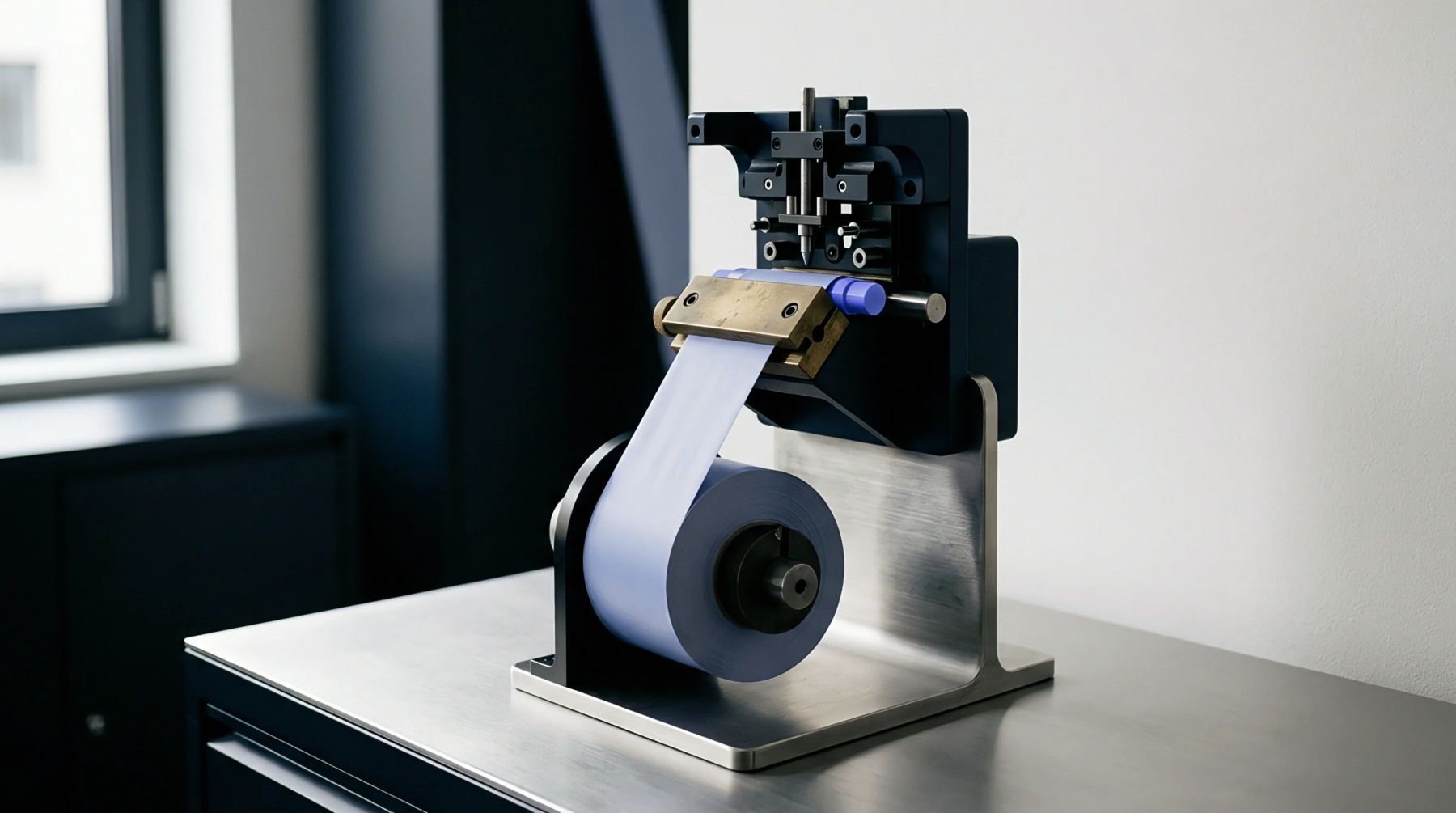
Diffusionless, shear-dominant phase transformations convert a parent crystal lattice into a metastable, highly strained supersaturated solid solution through coordinated, military-style atomic shifts. A martensite transformation occurs without chemical partitioning, proceeding at speeds approaching the velocity of sound in the host metal whenever an alloy cools below a critical start temperature. In battery component manufacturing, this mechanism determines the high hardness and core fatigue strength of deep-drawing dies, continuous cutting slitters, and cold-rolled stainless steel casing strips.
The term describes displacive transformations driven by undercooling or mechanical strain, stopping short of diffusion-controlled nucleation and growth processes such as pearlitic, bainitic, or precipitation reactions.
Kinetics and Driving Force
Undercooling below the equilibrium transformation temperature builds the massive chemical free energy difference required to initiate the displacive lattice shear. A martensite transformation does not depend on time, advancing strictly as a function of falling temperature as successive energy barriers are overcome across individual crystal grains. The transformation start temperature marks the precise boundary where the thermodynamic chemical driving force balances the elastic strain energy generated by the sudden shape deformation of the unit cell.
Carbon atoms remain trapped within the newly formed body-centered tetragonal structure, creating severe interstitial distortion that blocks dislocation motion and maximizes bulk hardness.
Strain Induction
Mechanical deformation applied above the martensite start temperature but below the deformation threshold temperature forces the parent austenite phase into martensite via mechanical work. This strain-induced martensite transformation increases work hardening rates in austenitic stainless steel battery cans, enabling deep-drawing operations without wall thinning or premature tearing. In high-precision electrode slitters, uncontrolled surface deformation during improper grinding operations can induce localized brittle martensitic layers that chip during service.
Maintaining precise temperature control during manufacturing runs prevents unplanned phase transformation inside structural tooling components.
Process Heat Treatment
Component specifications require precise quenching rates to suppress intermediate diffusion reactions and achieve one hundred percent martensite conversion throughout thick sections. Quenched tool steels remain brittle until a subsequent tempering cycle relieves internal shear stresses and precipitates fine carbides, restoring fracture toughness. Retained austenite fractions are monitored via X-ray diffraction, as uncontrolled transformation of retained phases during service causes dimensional distortion in precision punching dies.
Quality assurance teams reject tool steel lots that fail to achieve target Rockwell C hardness levels following prescribed quench and temper protocols.