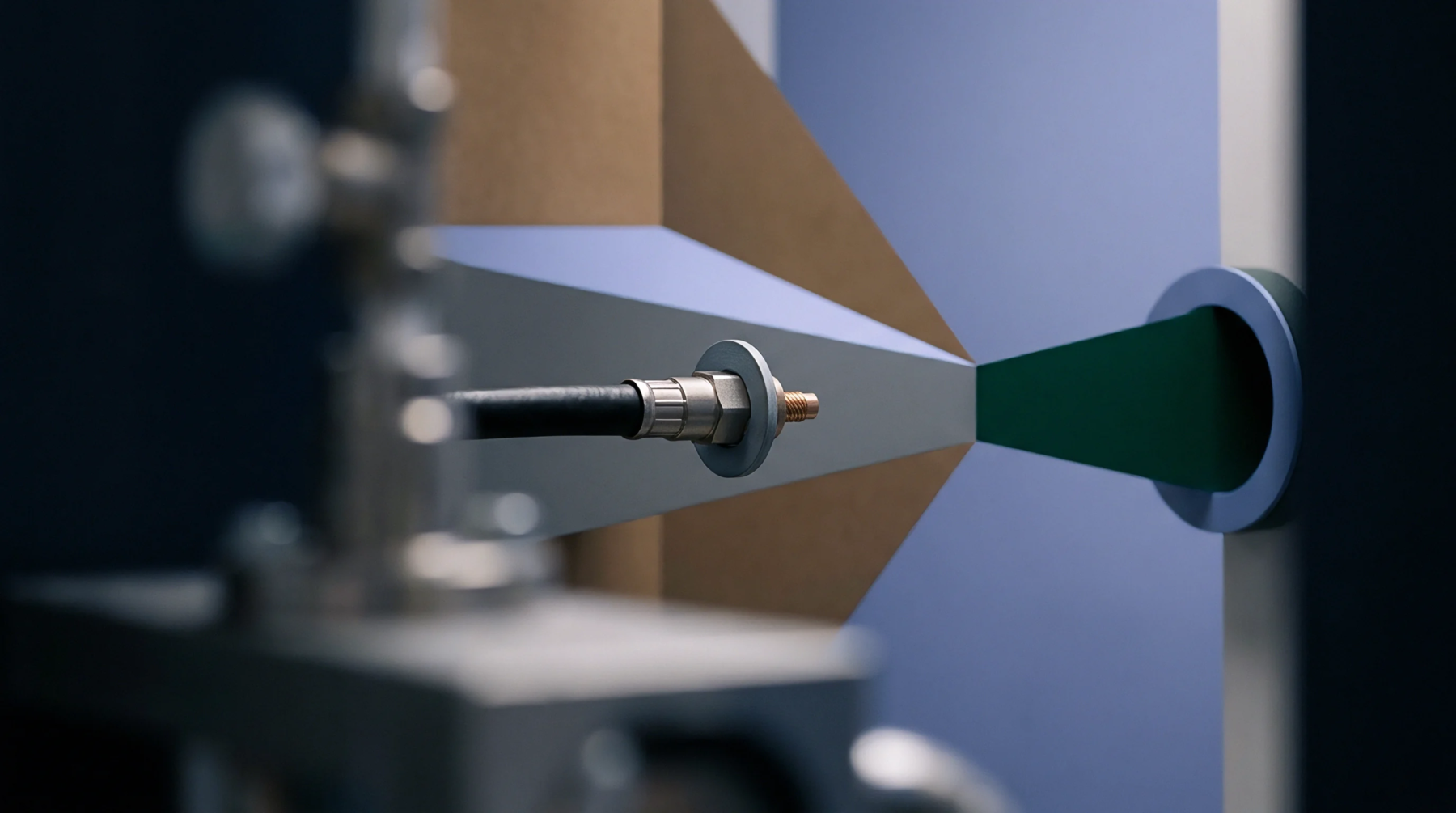
Ultrasonic Testing Protocols for Liquid Cooling Plate Joint Verification
High-frequency ultrasonic C-scan imaging verifies internal cooling plate joints by mapping acoustic impedance mismatches to prevent coolant leaks and bursts.
Interfacial contact conditions where adjacent material surfaces touch under intimate physical proximity without achieving true atomic, metallurgical, or chemical adhesion present a severe failure risk in structural and thermal joints. In battery cell assembly and pack enclosure manufacturing, kissing bonds occur across solid-state welds, adhesive joints, and brazed cooling plate interfaces. The opposing substrate faces remain in tight mechanical contact, often held closed by residual assembly stresses, yet the joint exhibits minimal or zero mechanical shear strength.
Standard low-frequency ultrasonic testing frequently misses these defects because acoustic waves pass through the compressed interface with little to no reflection. The concept stops applying to macroscopic joint gaps or gas-filled delaminations where physical separation between adjacent faces is large enough to create an acoustic impedance void.
Compressive residual stresses, improper surface chemical cleaning, or insufficient joining temperatures prevent the formation of metallic bonds or adhesive polymer cross-linking across the interface. Under these boundary conditions, kissing bonds develop when surface oxide layers, organic residues, or microscopic contaminant films remain trapped between the substrates during processing. The applied manufacturing clamping pressure forces the high points of both surfaces together, creating a continuous acoustic boundary that easily transmits low-amplitude linear sound waves.
Molecular bonding across the microscopic interface remains absent, leaving the joint incapable of transferring tensile or shear stresses across the unbonded plane. Mechanical friction between the dry, unbonded surfaces masks the underlying defect under static compression, creating a deceptive illusion of joint structural integrity.
Conventional linear ultrasonic inspections struggle to identify dry intimate interfaces due to the absence of a distinct acoustic impedance gap. Sound waves travel across the tightly touching faces almost as efficiently as through a monolithic material, producing negligible reflected echoes on standard time-domain sweeps. Advanced non-destructive testing approaches deploy non-linear acoustic techniques, high-frequency acoustic microscopy, or high-amplitude ultrasonic pulses to stress the interface dynamically during measurement.
Under high dynamic strain, the unbonded interface separates slightly or chatters, generating second-harmonic sound frequencies and non-linear signal distortions that expose the missing bond. Thermal stress testing combined with active thermography also uncovers these flaws, as the unbonded boundary introduces an unexpected thermal resistance barrier under high heat flux.
Automotive and grid battery specifications treat intimate unbonded joints as critical structural defects subject to immediate part rejection. Procurement contracts for welded busbars, structural battery enclosures, and brazed liquid cooling systems require suppliers to validate joining processes through destructive mechanical peel and lap-shear testing. Naming specific joining parameters, such as surface preparation cleanliness levels, atmospheric purge quality, and dynamic weld energy thresholds, limits the conditions that allow these dry bonds to form.
Quality clauses mandate periodic cross-sectional metallographic examination to verify genuine grain growth or complete adhesive curing across interface boundaries. Shipments showing non-linear acoustic distortion values indicating unbonded structural contact undergo mandatory quarantine and secondary shear verification. Fabricators failing to document active surface preparation controls face warranty claims for downstream structural enclosure ruptures.
High-frequency ultrasonic C-scan imaging verifies internal cooling plate joints by mapping acoustic impedance mismatches to prevent coolant leaks and bursts.
Expertise is a utility, not a secret. sentiention™ publishes its working knowledge as open reference: intelligence layer covering the materials it sources, the markets it enters, and the reference that serves both.