Meaning
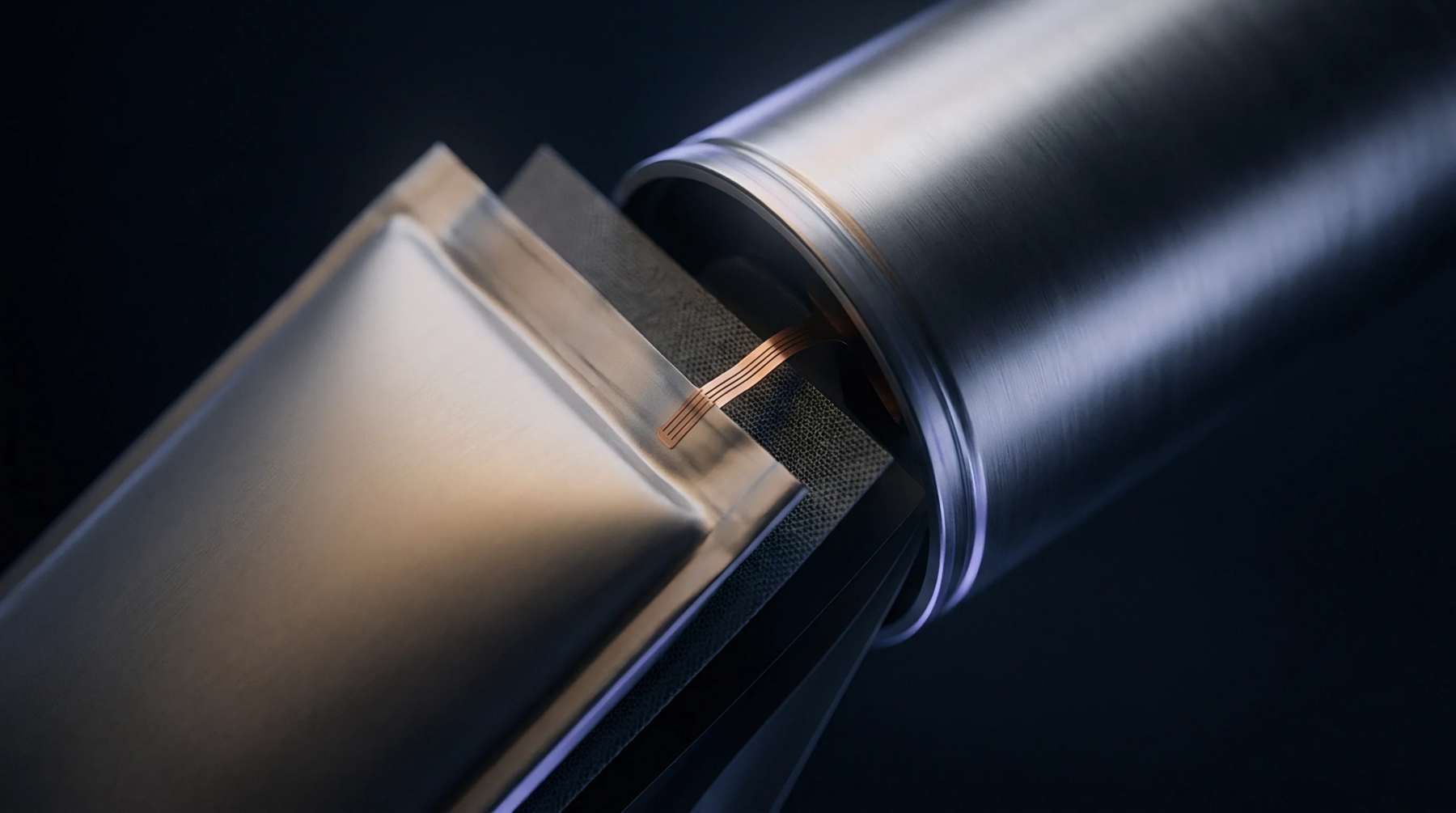
High-frequency sound waves evaluate internal cell structures during manufacturing through an ultrasonic scan. Piezoelectric transducers transmit acoustic pulses into rolled jelly rolls or stacked pouch components, capturing reflections from density variations. Acoustic impedance mismatches highlight micro voids, delamination sites and electrolyte saturation gaps without opening the housing.
This diagnostic method stops applying when component thickness exceeds penetration limits or acoustic attenuation dampens the return signal below the noise floor.
Defect Resolution
Ultrasonic energy travels through metallic foils and polymer separators, returning time-of-flight data that signal processing software translates into cross-sectional maps. Engineers inspect these echo amplitudes to locate contaminant particles trapped between active material layers during electrode winding. Production lines deploy the testing hardware directly after calendering and sealing stations to intercept defective cells before formation cycling begins.
Rejecting compromised units early prevents internal short circuits during subsequent thermal stress testing.
Signal Attenuation
Acoustic velocity depends on material density, so variations in separator porosity alter baseline transit times across the active area. Transducer alignment requires mechanical precision because angular deflection distorts the reflected waveform and masks minor anomalies. Operators calibrate the equipment using reference standards containing artificial flat-bottom holes to establish baseline sensitivity thresholds.
Acoustic coupling gel or water immersion bridges the transducer faceplate and the outer casing, eliminating air gaps that would otherwise reflect the entire acoustic output.
Acoustic Inspection
Manufacturing quality audits rely on these non-destructive examinations to verify electrode stacking alignment and pouch sealing integrity. Automated inspection stations measure echo decay rates to quantify bonding strength between current collectors and tab welds. Facility managers analyze defect distribution trends across production batches to isolate worn die cutters or misaligned rollers.
Establishing rigorous acoustic acceptance criteria minimizes field failures caused by localized mechanical stress inside finished energy storage modules.