Meaning
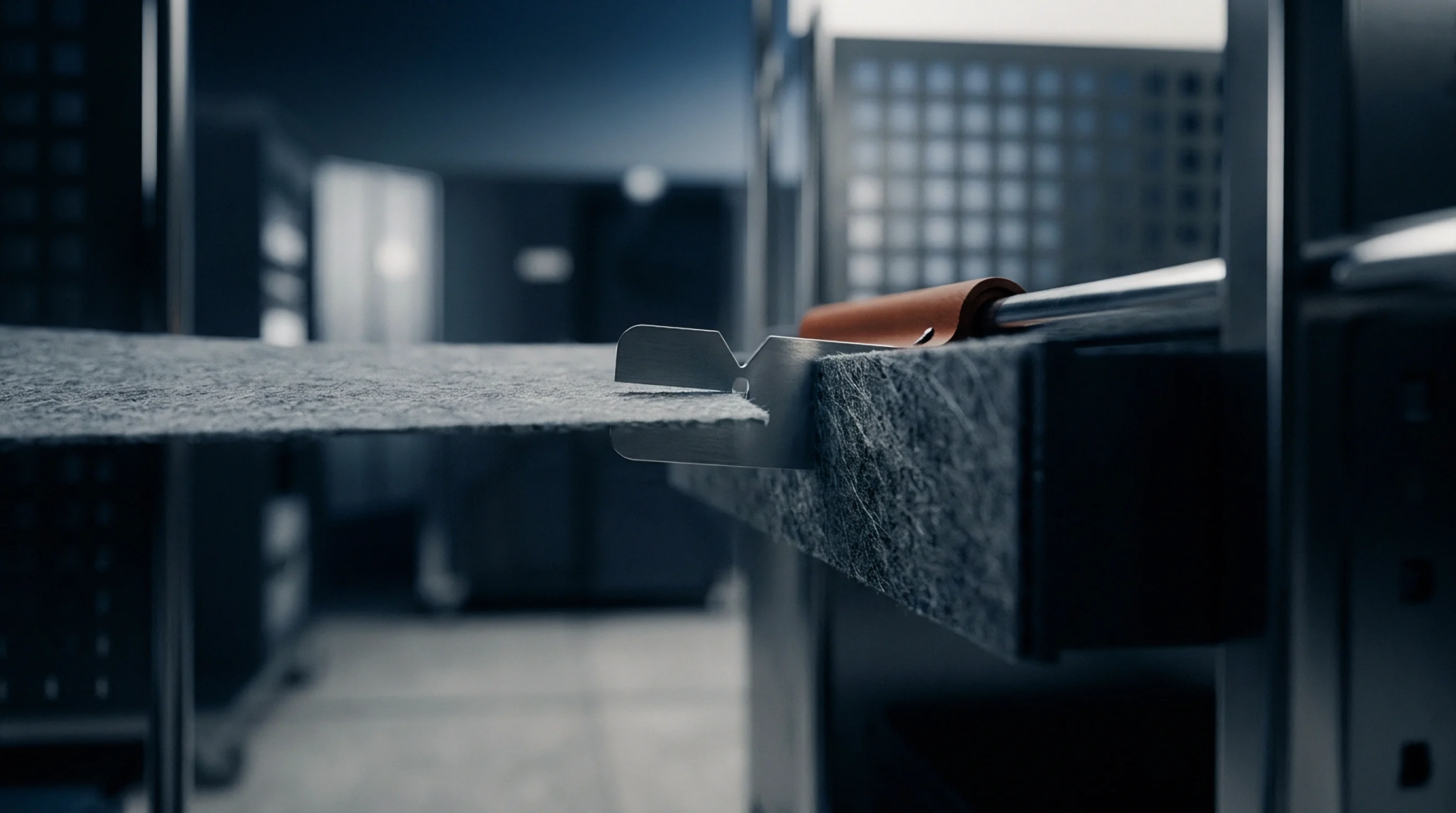
Physical protrusion protruding upward from the cut edge of metal foil during slitting represents anode burr height in lithium-ion cell manufacturing. Uncontrolled foil shearing creates microscopic metallic spikes that pierce porous separators during winding or stacking operations. Purchasing contracts enforce strict limits on this dimension to prevent internal short circuits and subsequent thermal runaway events.
Procurement teams reject battery-grade copper and aluminum coils exceeding fifty micrometers at incoming quality inspection.
Slitting Precision
Mechanical shear blades degrade over time and produce jagged copper edges during high-speed foil conversion. Machine operators monitor blade clearance and overlap parameters to maintain clean edges without excessive deformation. High burr formation forces manufacturers to scrap entire master rolls and increases fabrication costs across the production line.
Separator Puncture
Sharp metal projections penetrate polyethylene and polypropylene separator membranes under normal mechanical compression inside the prismatic casing. Localized electrical contact bypasses the electrolyte barrier and generates rapid self-discharge within the finished electrochemical cell. Electrochemical performance degrades severely when microscopic debris creates internal resistance anomalies prior to formation cycling.
Inspection Protocol
Optical microscopy and pneumatic gauge systems measure edge profiles on sample coupons drawn from processed coil batches. Quality assurance engineers establish sampling frequencies based on historical slitters wear rates and raw material hardness variations. Automated laser scanners detect oversized protrusions instantly and halt downstream assembly before defective electrodes enter winding machines.