Meaning
Gas release during the formation phase of lithium-ion batteries indicates the progress of solid electrolyte interphase assembly on the anode. Ethylene evolution is the specific discharge of hydrocarbon gas resulting from the reduction of ethylene carbonate at the graphite interface. This compound represents the primary volatile byproduct generated when sacrificial solvent molecules accept electrons at low potentials.
Quantifying the volume of this gas reveals the efficiency and coverage of the newly formed protective layer.
Interphase Dynamics
The reduction of ethylene carbonate occurs via a two-electron process that yields both solid lithium ethylene dicarbonate and gaseous ethylene. When this reaction proceeds uniformly, it creates a cohesive barrier that prevents further solvent co-intercalation into the graphite layers. If the graphite has structural defects, the gas release continues beyond the initial formation cycles.
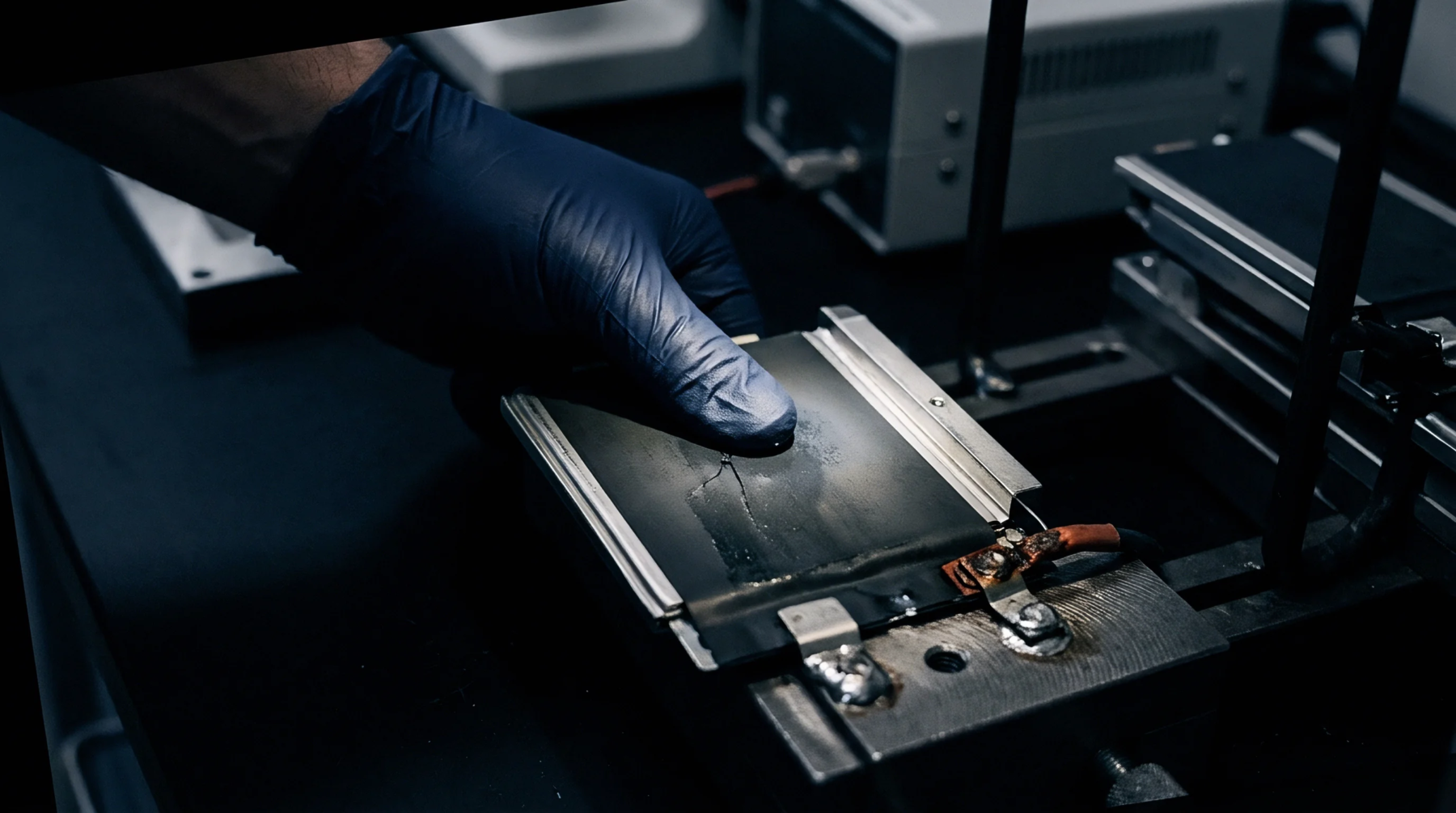
This persistent generation leads to pouch expansion and localized dry spots in the electrode assembly.
Analytical Detection
In-situ pressure sensors and gas chromatography track the rate of gas generation during electrochemical testing. Gas chromatography enables researchers to isolate ethylene evolution from carbon dioxide signals produced by moisture contaminants. This high-resolution separation relies on a gas-tight extraction syringe or an inline capillary interface to feed the carrier gas stream directly into the detector.
Automated analysis routines then plot gas concentration against the cell voltage profile to identify the onset potential of reduction.
Pouch Failure
Uncontrolled gas buildup causes pouch swelling. This swelling increases cell thickness. Thickness changes disrupt pack compression.