Meaning
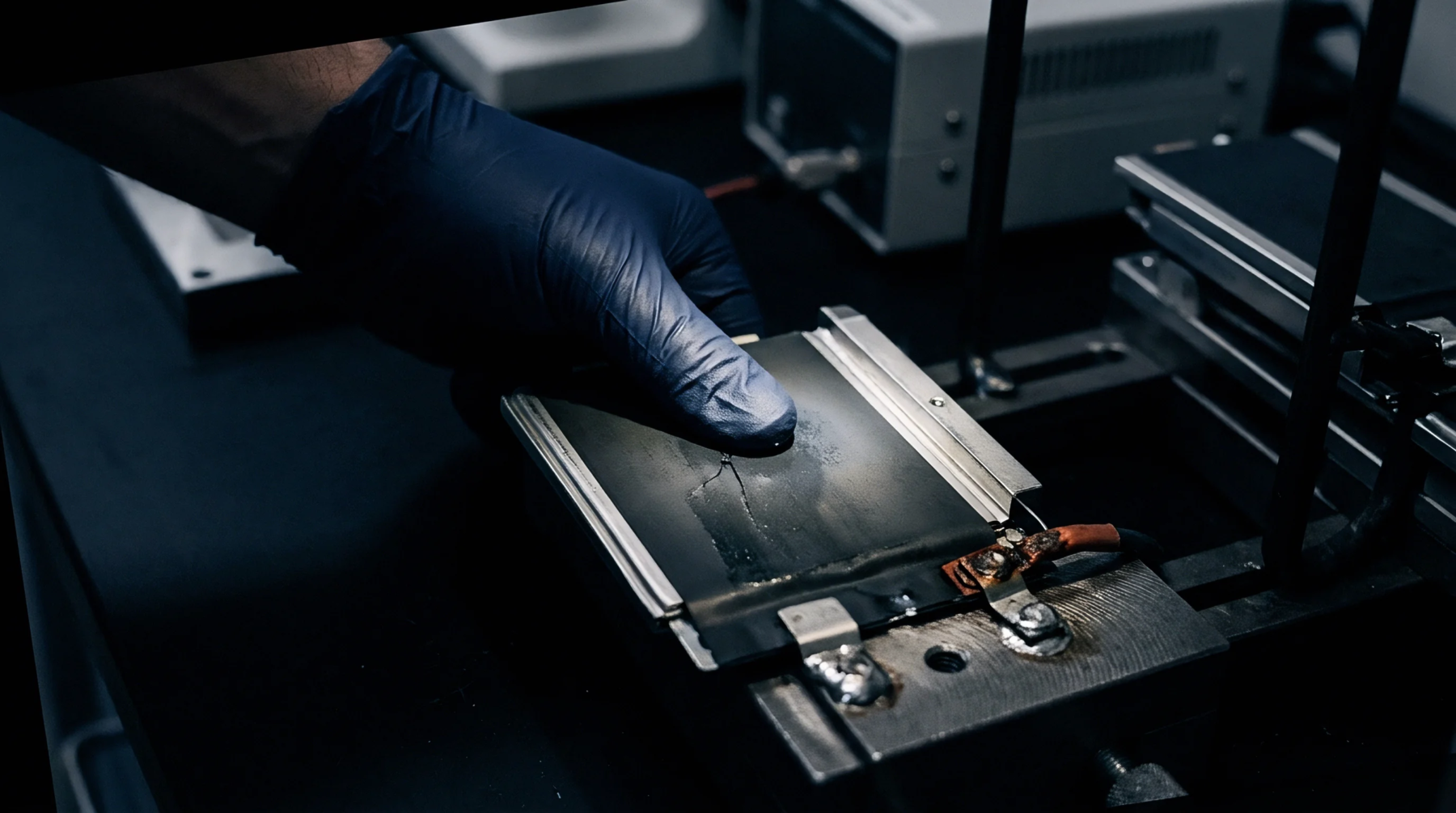
Mechanical clamping fixtures maintain uniform compressive force across planar cell faces during initial electrochemical activation steps. Pouch and prismatic cells require formation pressure plates to restrain swelling driven by gas generation and internal material expansion during initial charge cycles. The fixtures preserve intimate contact between active layers, preventing gas pocket isolation and separator deformation while the solid electrolyte interphase forms.
The boundary of application covers factory formation equipment and stops when cells transition to module assembly or unconstrained aging racks.
Mechanical Restraint
Calibrated springs or pneumatic actuators exert controlled surface loads across cell broad faces. Without precise force regulation, gas evolution during initial charging forces electrode sheets apart, creating dry patches that reduce operational capacity. Pressure application forces evolved gas bubbles out of micro-porous electrode structures toward designated degassing pouches.
Interfacial Contact
Uniform pressure distribution ensures even current density across the entire active area. Localized pressure drops lead to preferential lithium plating, whereas excessive compression damages porous polymer separators. Automated loading systems regulate clamping force within tight tolerances throughout heating and cooling cycles.
Thermal Dissipation
Integrated heating elements or fluid channels within metal platens maintain exact temperature profiles across clamped cells. Temperature uniformities prevent localized kinetic variances during interphase formation. Stainless steel or aluminum alloy construction provides both mechanical rigidity and high thermal conduction paths.
Heat transfer efficiency directly dictates formation step duration and cell-to-cell consistency across large manufacturing batches.