Meaning
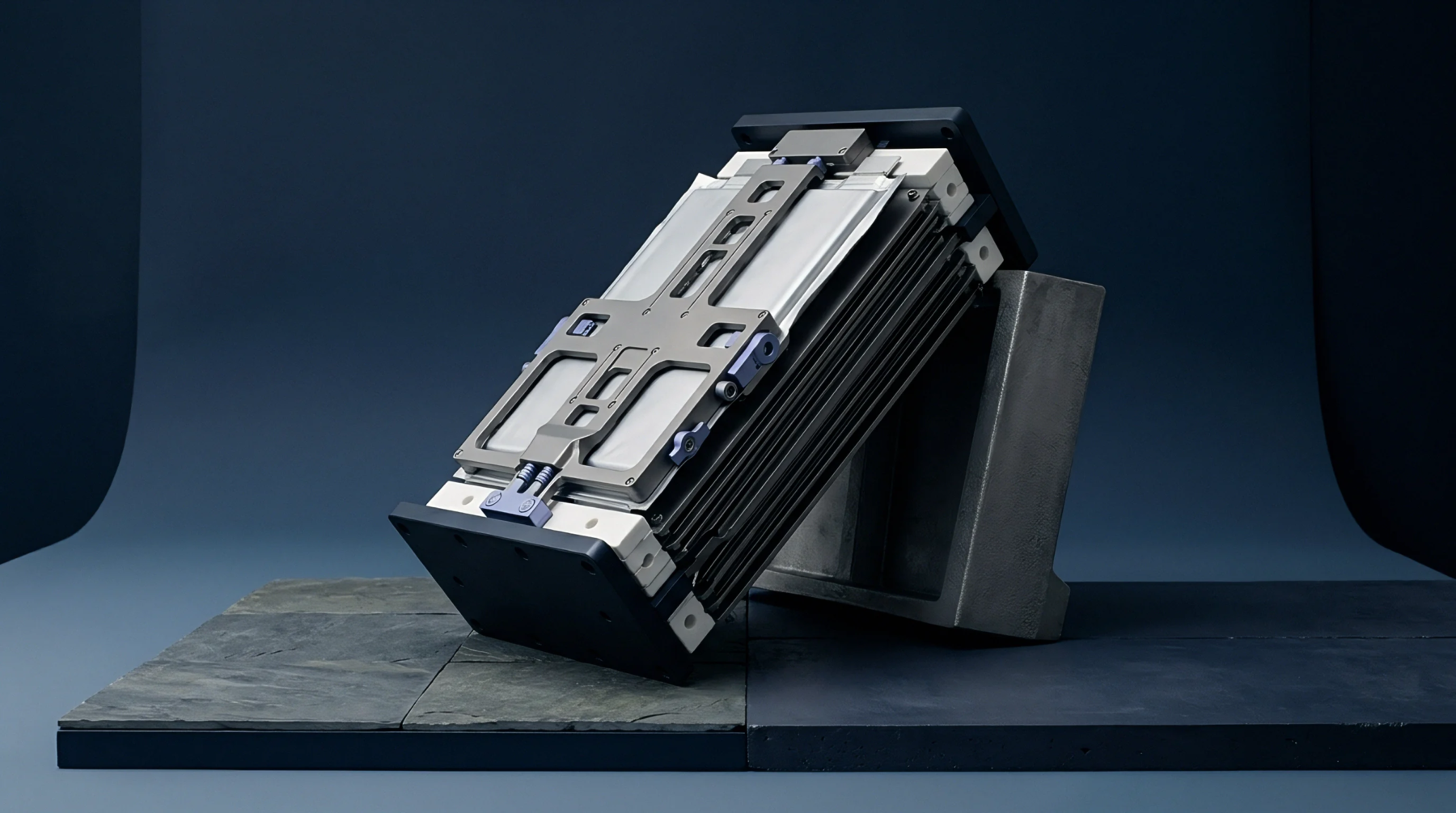
Mechanical compression applied to electrochemical cells during module assembly to maintain electrode contact and optimize performance represents a fundamental parameter in battery pack engineering. This mechanical force, known as initial preload pressure, is established when the cells are secured within their structural frames. Sourcing specifications for elastomeric compression foam depend directly on this target pressure value.
The setting dictates the starting stress state of both the active materials and the surrounding housing before any electrical cycles occur.
Compression Mechanics
Securing the cells at a precise initial preload pressure prevents physical movement and vibration damage during operation. Elastic foam pads or spring-loaded brackets are compressed to a predefined thickness to exert this force. If the starting pressure is too low, the active material layers may delaminate during expansion.
Such separation increases internal resistance and leads to uneven current density.
Electrical Behavior
Optimizing the pressure profile across the cell face ensures uniform lithium-ion transport during rapid charging. Maintaining the initial preload pressure within the manufacturer’s recommended range minimizes the growth of lithium dendrites on the anode surface. This mechanical constraint stabilizes the solid-electrolyte interphase layer.
Consistent current distribution across the electrode surface prolongs the operational life of the cell.
Degradation Rate
Cell thickness increases permanently over years of operation due to chemical degradation and gas generation. The initial preload pressure must be low enough to prevent the swelling cells from crushing themselves or the module endplates at the end of life. Designers use non-linear mechanical models to simulate how this pressure increases over thousands of cycles.
Choosing the correct starting compression ensures the module housing remains intact throughout the vehicle’s service life. When this mechanical design balance is achieved, the rate of capacity fade slows down and the pack maintains its driving range for a longer period. This optimization directly influences the warranty commitments and financial reserves of the automobile manufacturer.