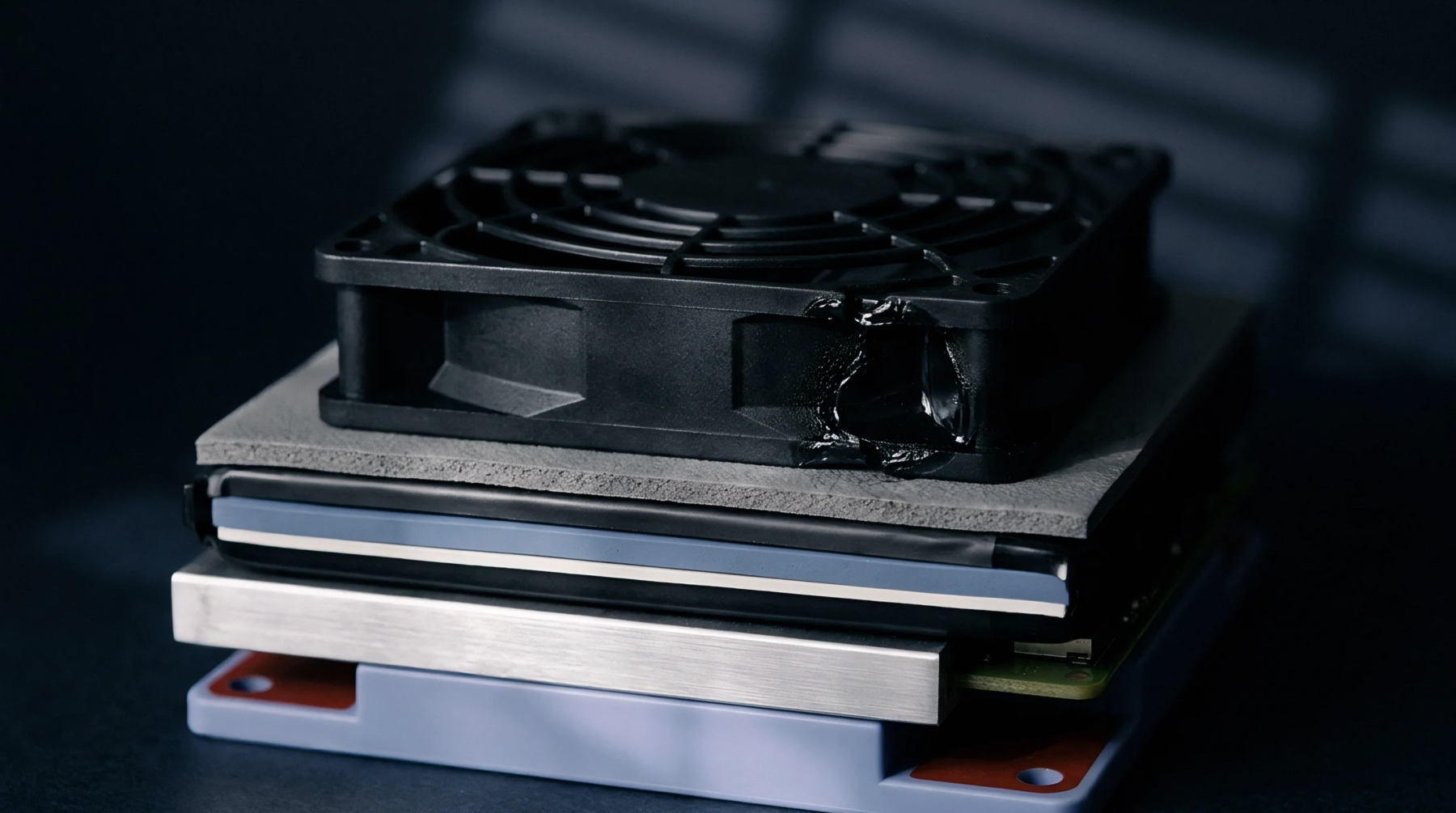
Ultrasonic Testing Protocols for Liquid Cooling Plate Joint Verification
High-frequency ultrasonic C-scan imaging verifies internal cooling plate joints by mapping acoustic impedance mismatches to prevent coolant leaks and bursts.
Advanced ultrasonic inspection systems that employ multi-element transducers driven by electronically controlled time delays deliver dynamic beam steering, focusing, and sector scanning for industrial battery examination. In cell production facilities and pack assembly plants, phased array instrumentation inspects complex geometries, deep weld tracks, and layered internal structures without physically manipulating the sensor body. Individual piezoelectric elements arranged in linear, annular, or matrix configurations fire in calculated sequences, generating constructive interference wave fronts tailored to inspect targeted depths and angles.
This technological approach evaluates busbar laser welds, structural pack framing, hermetic cell can closures, and multi-layer pouch seal boundaries. The category stops applying to conventional single-element transducers that rely on static, fixed-focus acoustic beams and manual mechanical positioning.
Electronic delay patterns applied to individual transducer elements shape the synthesized acoustic wave front through constructive and destructive wave interference. When using phased array equipment, pulsing the outermost elements ahead of the center elements focuses sound energy at a specific subsurface depth inside the battery structure. Sweeping the time delays across the element array shifts the propagation angle dynamically, generating a broad sector scan that sweeps through material volumes from a stationary position.
Reflected acoustic echoes return to the array elements, where incoming signals are digitized, time-corrected, and synthesized into real-time cross-sectional images of the inspected component. Rapid multi-angle sweeping detects non-perpendicular cracks, internal porosity, and lack of side-wall fusion that standard perpendicular acoustic probes miss entirely.
Data density generated by high-frequency multi-element arrays places demanding requirements on industrial computing systems and data transmission channels. Wedge wear and uneven couplant thickness introduce phase shifts that distort the synthesized sound beam, generating geometric artifacts that can be mistaken for internal voids. Element pitch and operating frequency govern inspection resolution, with finer pitch arrays reducing grating lobes that otherwise introduce spurious ghost echoes into the imaging field.
High-frequency arrays suitable for micron-scale battery foils suffer heavy acoustic attenuation when penetrating thick structural enclosures or composite pack covers. Complex multi-layer stacks, such as alternating separator and electrode assemblies, cause multiple internal reflections that complicate phase alignment algorithms, necessitating dedicated focal law calibration routines.
Automotive battery contracts specify multi-element acoustic imaging to validate the mechanical and electrical integrity of critical joining operations. Laser-welded busbar joints connecting thousands of cylindrical or prismatic terminals must meet strict weld pool depth and width dimensions verified by automated sectorial scanning data. Procurement specifications outline element counts, active aperture sizes, angular sweeping ranges, and defect size detection thresholds for all inline array systems.
Sourcing teams mandate that vendors submit digital scan files containing uncompressed raw acoustic data to prove full weld penetration across every production lot. Components failing minimum fusion depth requirements or showing lack of fusion defects larger than contractual limits trigger immediate production stops and joint quality reviews. Non-destructive examination documentation missing focal law calibration logs is invalid for production part approval processes.
High-frequency ultrasonic C-scan imaging verifies internal cooling plate joints by mapping acoustic impedance mismatches to prevent coolant leaks and bursts.
Expertise is a utility, not a secret. sentiention™ publishes its working knowledge as open reference: intelligence layer covering the materials it sources, the markets it enters, and the reference that serves both.