Meaning
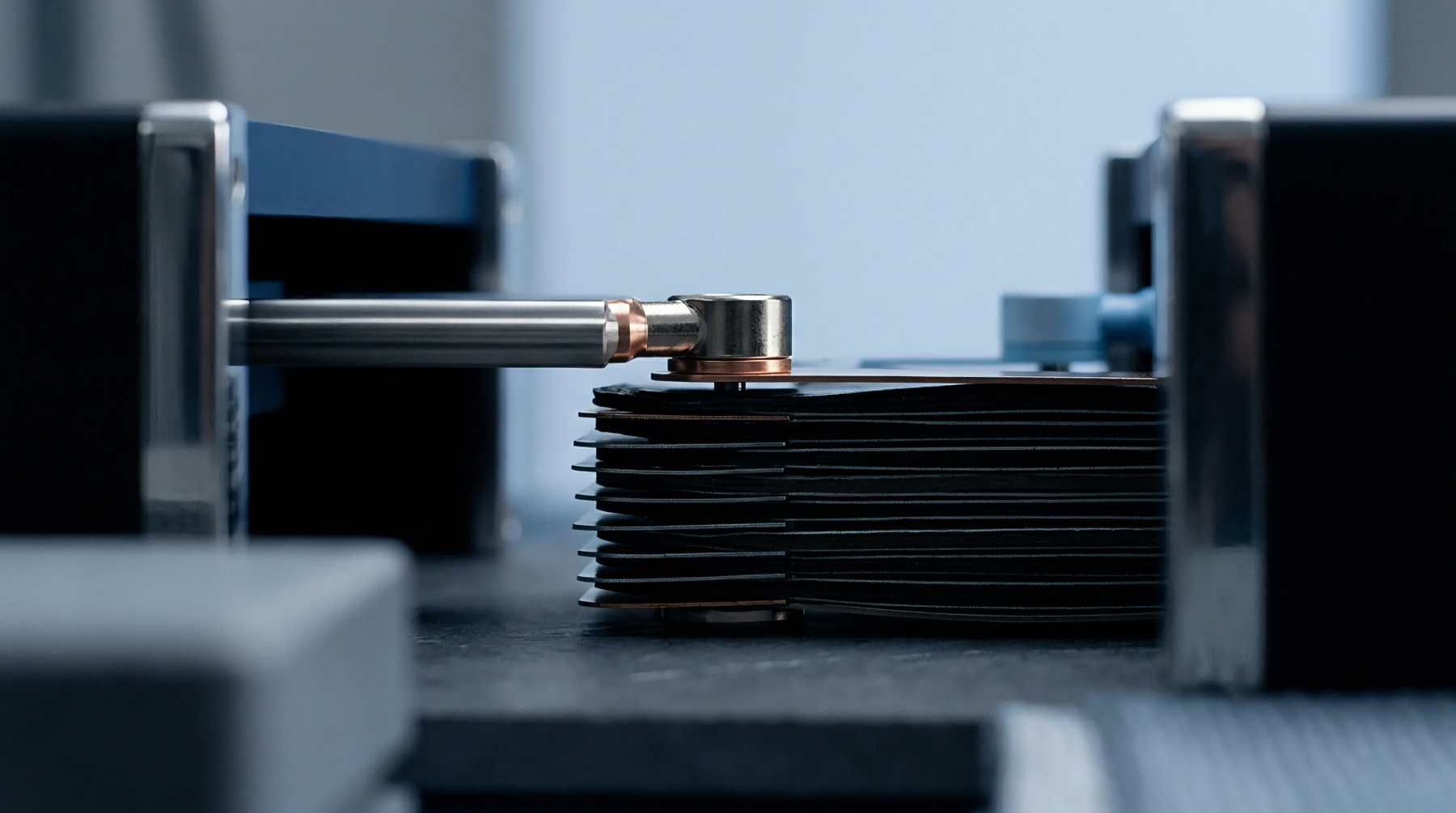
Geometric condition ensuring that the pressing surfaces of a machine are aligned within the same mathematical plane to achieve uniform force distribution. Maintaining platen coplanarity is necessary during the lamination of solid-state battery layers or the calendering of electrodes. If the surfaces are not aligned, one side of the material receives more force than the other, leading to uneven density and internal stress.
Pressure Uniformity
Accurate measurement of this property often involves using pressure-sensitive films that change color based on the load applied across the surface. Because platen coplanarity affects the thickness of the final product, it is a factor in maintaining the tight tolerances required for high-speed automated assembly. A deviation of just a few microns can cause measurable variations in the electrochemical performance of the finished cells.
Equipment Alignment
Wear over time or improper installation can degrade the precision of a press. Routine checks for platen coplanarity involve using dial indicators or laser alignment tools to verify that the surfaces remain parallel under full load.
Product Consistency
Uniformity in the compression step ensures that every cell in a production run has the same internal resistance and energy density. High levels of platen coplanarity minimize the number of rejected units and improve the overall efficiency of the manufacturing line.