Meaning
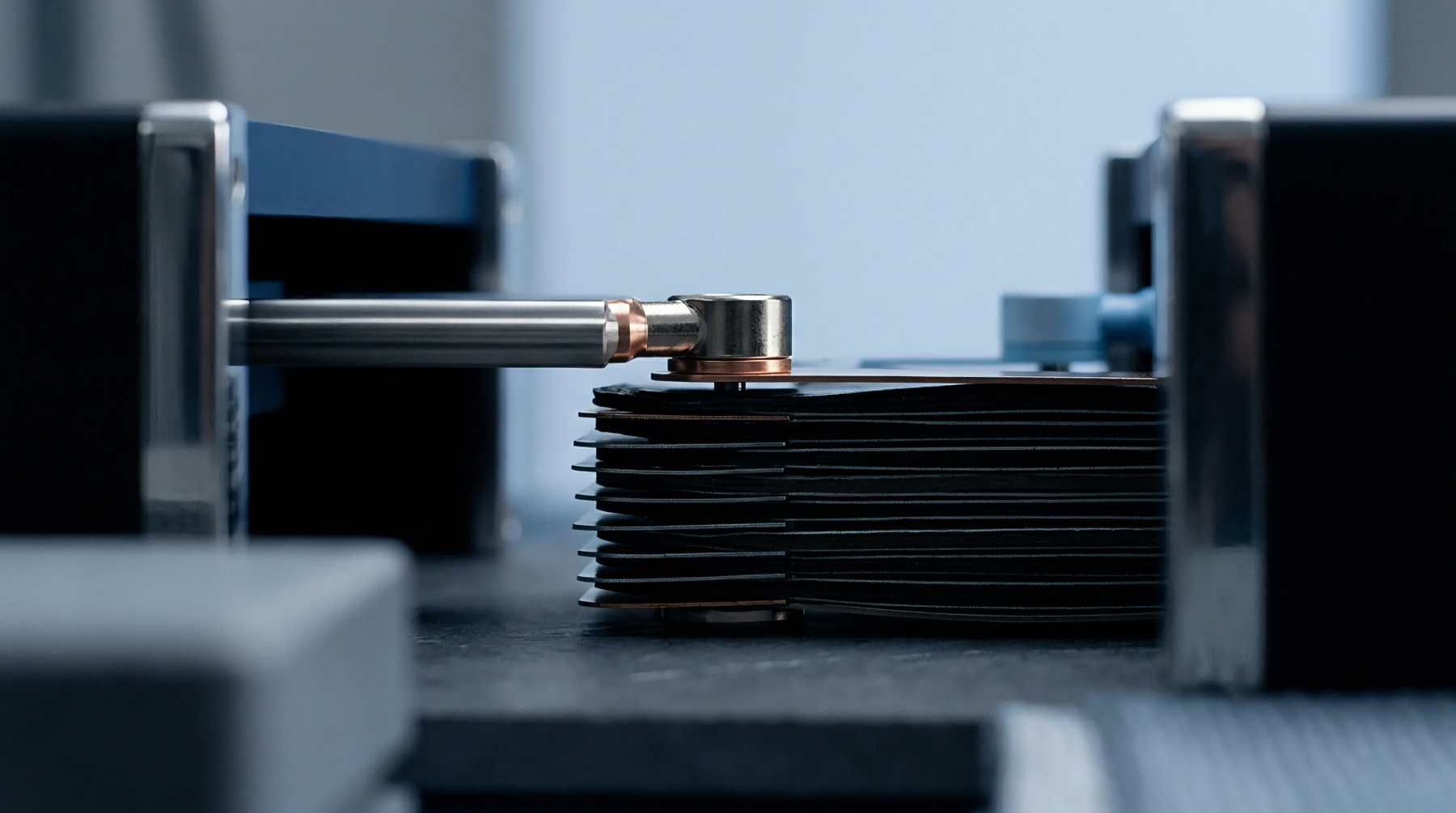
Self-aligning joints transmit high axial forces while automatically correcting for angular misalignment between mating surfaces. Proper spherical joint seating ensures that compression platens remain parallel to the surface of a battery cell during swelling tests. This prevents the application of non-uniform mechanical stress.
Mechanical Alignment
A spherical ball sits within a matching concave socket to allow three-dimensional rotation around a single pivot point. To achieve effective spherical joint seating, the joint must be greased to minimize friction and prevent stick-slip motion. This allows the platen to tilt and adjust as the cell expands.
The joint is preloaded to eliminate any mechanical backlash before testing begins.
Compression Uniformity
Even pressure distribution is necessary to prevent premature lithium plating and localized capacity fade in graphite anodes. With correct spherical joint seating, the compression fixture dynamically conforms to the changing shape of a pouch cell during charge and discharge cycles. This uniform interface keeps the internal current density balanced across the entire active area.
Without this feature, the cell edges would experience high compression, resulting in rapid localized degradation of the separator. Advanced testing labs rely on this continuous mechanical adjustment to generate high-quality aging data for design verification.
Friction Limitation
High contact friction within the joint can lock the assembly in place and prevent self-alignment under low forces. Spherical joint seating requires a minimum threshold force to overcome static friction and initiate rotational correction. If the swelling force is below this threshold, the joint remains rigid and behaves like a fixed block.
This boundary restricts the usefulness of the joint in low-force testing.