Mechanical Fixture Thermal Strain Deconvolution in Cell Thickness Metrology Baseline
Deconvoluting fixture thermal strain from battery metrology requires baseline transfer matrix subtraction to isolate true electrochemical cell breathing.
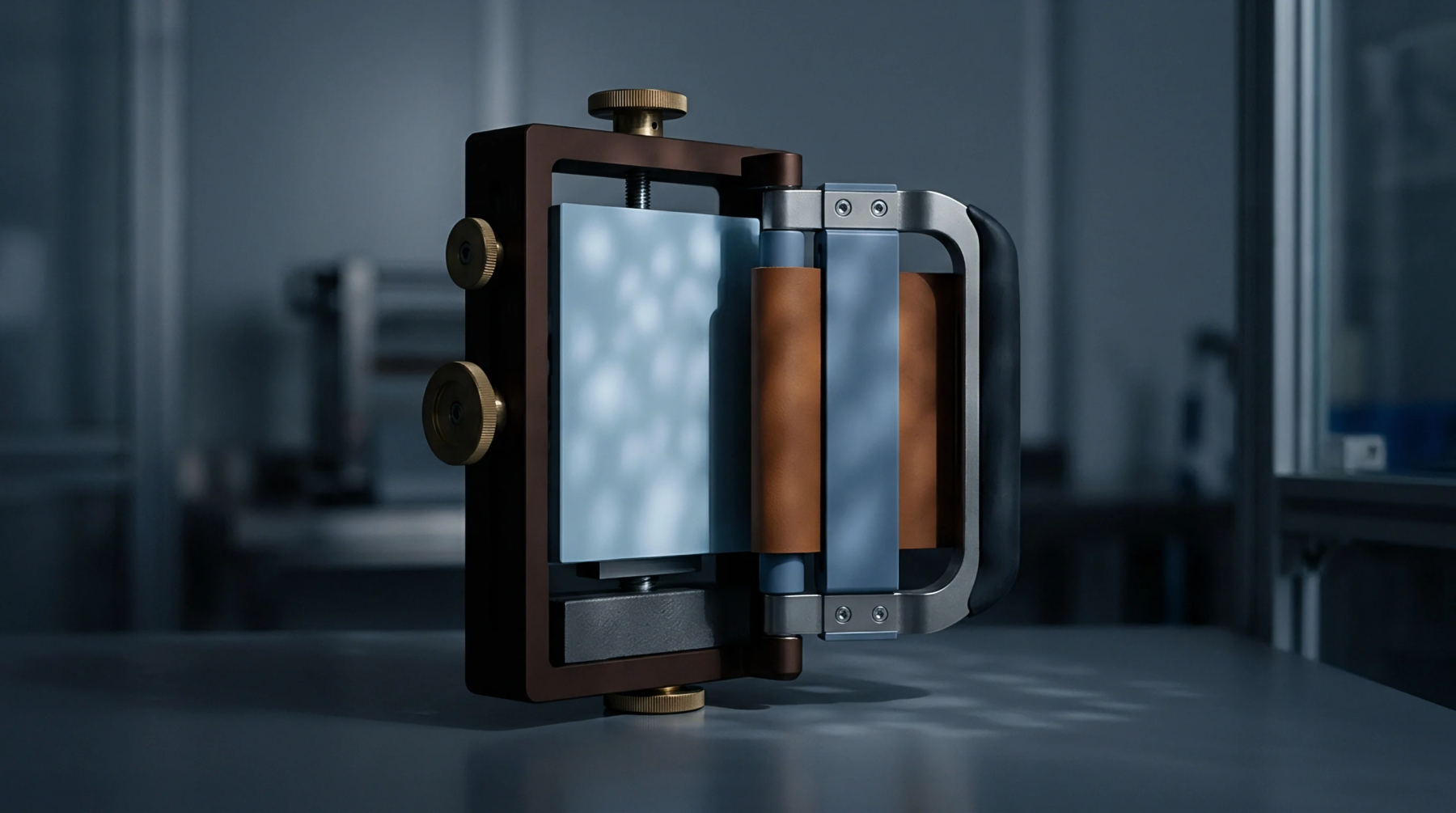
Geometrical specification describing the degree to which the surface of a compression plate in a battery tester approximates a perfectly level plane. Maintaining high platen flatness is essential for ensuring that the mechanical load applied to a battery cell is distributed uniformly across its entire surface area. In a laboratory setting, the platens are the heavy metal plates that squeeze the cell to simulate the pressure it would experience inside a module.
If the platens are warped or bowed, they will create high-pressure spots that can crush the internal structure of the cell or lead to uneven electrochemical activity. This measurement is typically verified using a precision surface plate and a dial indicator or a laser scanner. A flatness tolerance of a few microns is standard for high-precision metrology equipment used in battery research.
Distribution of mechanical stress across the face of a battery determines the consistency of the ionic flow and the overall health of the cell. When platen flatness is within the specified limits, the distance between the two plates is the same at every point, ensuring that the cell is compressed equally from edge to edge. This uniformity is necessary for pouch cells, which are flexible and easily deformed by uneven forces.
If the pressure is higher in the center than at the edges, the ions will preferentially move through the areas of lower resistance, leading to localized overcharging and accelerated aging. In extreme cases, a lack of flatness can cause the cell casing to pinch or tear, creating a safety hazard. Engineers use pressure-sensitive films to verify the contact pattern between the platen and the cell before starting a test.
This visual check provides a quick way to identify any major defects in the surface of the plates.
Measurement of the battery’s expansion during cycling depends on the ability of the test fixture to provide a stable and level reference surface. If the platens have any tilt or curvature, the displacement sensors will record a value that includes the geometric error of the fixture. This contamination makes it impossible to accurately characterize the sub-micron growth of the electrode layers.
High-quality battery testers use platens made from hardened steel or ceramic to resist the bending forces that occur during high-pressure testing. The thickness and rigidity of the platens are carefully chosen to minimize deflection under load. Achieving high platen flatness requires a combination of precision machining and careful assembly of the test frame.
This attention to detail is what allows for the collection of high-fidelity data that can be used to validate complex electrochemical models.
Implementation of a regular maintenance schedule ensures that the compression surfaces of the tester remain within their original design specifications. Over time, the repeated cycles of pressure and temperature can cause the platens to lose their flatness due to mechanical fatigue or thermal warping. Technicians must periodically resurface the plates or replace them if they fall outside the allowed tolerance.
This verification step is a requirement for laboratories that operate under international quality standards for testing and calibration. Providing a certificate of flatness for the test equipment is often a part of the reporting requirements for major automotive contracts. This documentation gives the customer confidence that the results were not biased by the quality of the hardware.
Maintaining the precision of the contact surfaces is a fundamental aspect of professional metrology in the energy storage industry. Reliable pressure data is essential for the design of safe and efficient battery modules.
Deconvoluting fixture thermal strain from battery metrology requires baseline transfer matrix subtraction to isolate true electrochemical cell breathing.
Expertise is a utility, not a secret. sentiention™ publishes its working knowledge as open reference: intelligence layer covering the materials it sources, the markets it enters, and the reference that serves both.