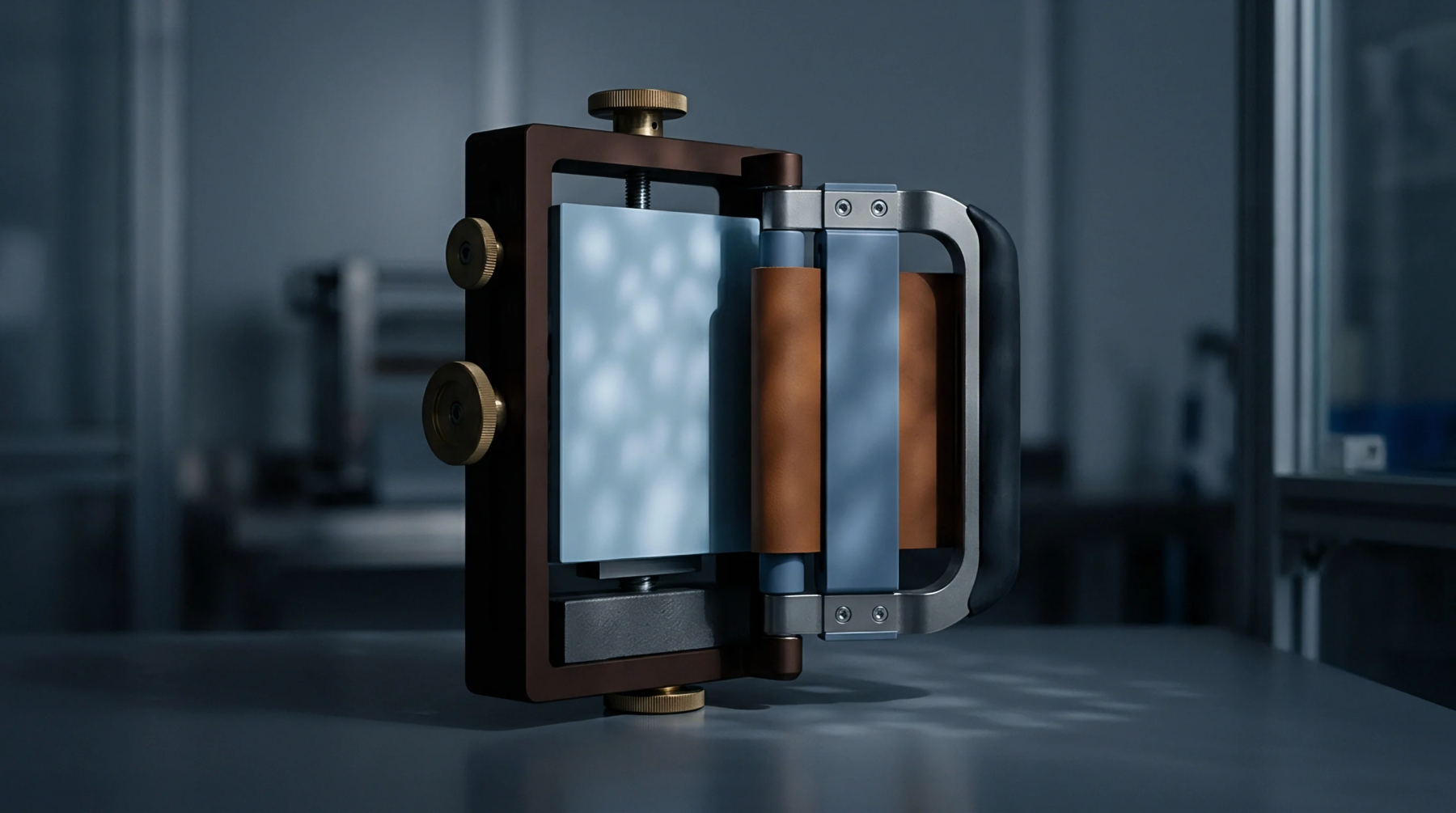
Mechanical Fixture Thermal Strain Deconvolution in Cell Thickness Metrology Baseline
Deconvoluting fixture thermal strain from battery metrology requires baseline transfer matrix subtraction to isolate true electrochemical cell breathing.
Signal processing technique used to remove unwanted noise from battery sensor data by converting time domain signals into frequency domain representations. Fourier filtering is an essential tool for cleaning up the high-resolution displacement data collected during battery swelling tests. In a laboratory environment, mechanical vibrations from pumps and electrical noise from the power grid can obscure the small physical changes occurring within a cell.
By decomposing the sensor signal into its individual frequency components, engineers can identify and remove the specific frequencies associated with this interference. The remaining signal is then transformed back into the time domain, resulting in a much cleaner and more accurate representation of the cell’s behavior. This process is necessary for detecting the subtle shifts in thickness that happen during the early stages of a charge cycle.
Transformation of raw sensor data into a usable format requires a series of mathematical operations that isolate the relevant information. The first step in Fourier filtering is the application of the fast fourier transform to the time-sequenced data points. This operation creates a spectrum that shows the amplitude of every frequency present in the original signal.
Low-frequency components usually represent the actual growth of the battery, while high-frequency spikes often indicate electronic noise or mechanical vibration. A digital filter is then applied to the spectrum to zero out the unwanted high frequencies. Finally, the inverse transform is used to reconstruct the cleaned signal.
This approach allows for the removal of noise without losing the detail of the underlying electrochemical process.
Improving the quality of the data is the primary benefit of applying frequency-based cleaning methods to battery measurements. When Fourier filtering is used correctly, it can reveal features in the expansion curve that were previously hidden by noise. For example, the small plateaus in thickness that occur during specific phase changes in the electrode can be much easier to see.
This clarity is essential for researchers who are trying to correlate mechanical swelling with the internal chemistry of the cell. If the filtering is too aggressive, however, it can smooth out real data and lead to incorrect conclusions. Engineers must carefully choose the cutoff frequency to balance noise reduction against the preservation of important signal details.
The choice of filter type, such as a Butterworth or a Gaussian filter, also influences the final shape of the data.
Reliable interpretation of battery performance data depends on the consistency of the signal processing techniques used across different tests. Fourier filtering provides a standardized way to handle noise that is more robust than simple moving average filters. Because it operates on the specific frequencies of the noise, it can remove interference without introducing the time lag associated with other methods.
This precision is especially important in high-rate testing where the battery’s state changes very quickly. Most modern data acquisition software includes built-in tools for performing these transformations in real time. Using these advanced techniques ensures that the insights gained from the lab are based on the truest possible representation of the physical phenomena.
High-resolution signal analysis is a requirement for the development of the next generation of fast-charging battery cells.
Deconvoluting fixture thermal strain from battery metrology requires baseline transfer matrix subtraction to isolate true electrochemical cell breathing.
Expertise is a utility, not a secret. sentiention™ publishes its working knowledge as open reference: intelligence layer covering the materials it sources, the markets it enters, and the reference that serves both.