Meaning
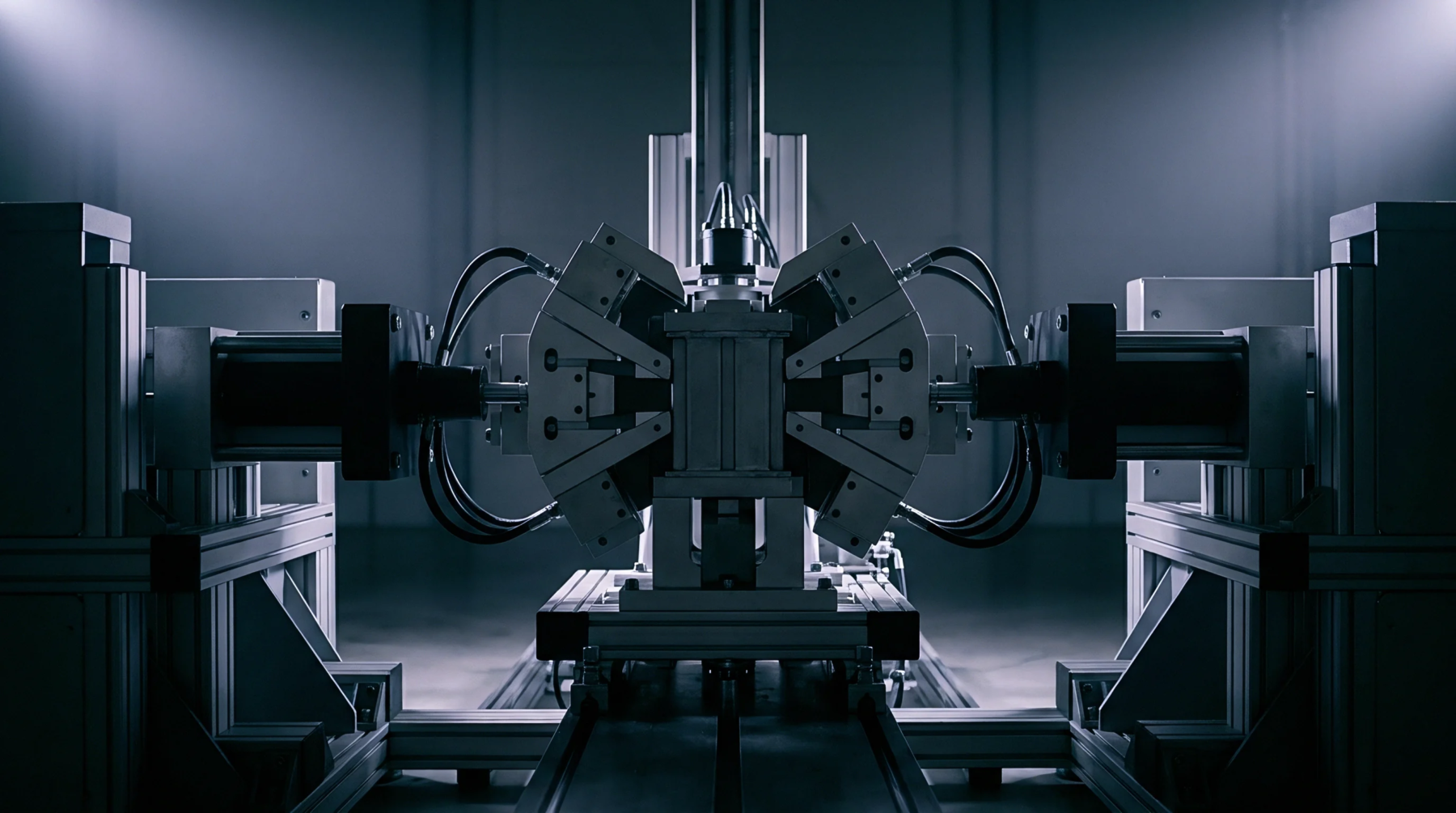
Closed-loop electromechanical drive mechanisms combine electric motors, position feedback transducers and motion controllers to execute precise linear or rotary force application. Within battery manufacturing and mechanical abuse testing, servo actuators deliver programmable displacement and compression cycles to cell stacks, formation presses and physical impact rigs. The functional envelope includes automated electrode stacking, cell insertion equipment, constant-pressure cycling fixtures and nail-penetration testing devices.
The boundary excludes open-loop unmonitored motors, passive spring assemblies and unmetered pneumatic cylinders.
Operational Dynamics
Brushless servomotors drive low-friction planetary roller screws or ballscrews to achieve micrometer-level linear position precision. Continuous position and current feedback signals stream to digital signal processors, allowing millisecond transitions between displacement control and force control. In cell characterization rigs, these actuators adjust platen spacing dynamically to match programmed profiles, maintaining precise kilopascal pressure targets as cells expand and contract during electrochemical cycles.
Fast response speeds enable real-time tracking of sudden gas-generation events.
Test Architecture
Mechanical test machines apply these actuators to perform nail penetration, crush resistance and slow-rate mechanical compression tests specified in standards such as SAE J2464 and UL 2580. High torsional rigidity and high structural stiffness prevent frame deflection from skewing physical penetration speed measurements. Programmable speed settings range from fractions of a millimeter per second during quasi-static compression to high-velocity impacts during crash-simulation testing.
Absolute encoders retain positional coordinates through sudden power interruptions, eliminating calibration drift during long cycling schedules.
Purchasing Specifications
Sourcing teams define actuation units through dynamic load capacities, encoder resolution, frequency response boundaries and thermal operating limits. Production machinery relies on high duty-cycle ratings to sustain continuous twenty-four-hour operation on automated module assembly lines without thermal shutdowns. Integrated digital communication protocols interface directly with industrial manufacturing networks for full trace-data logging.
High capital costs restrict deployment to applications requiring fine position and force repeatability across extended operational runs.