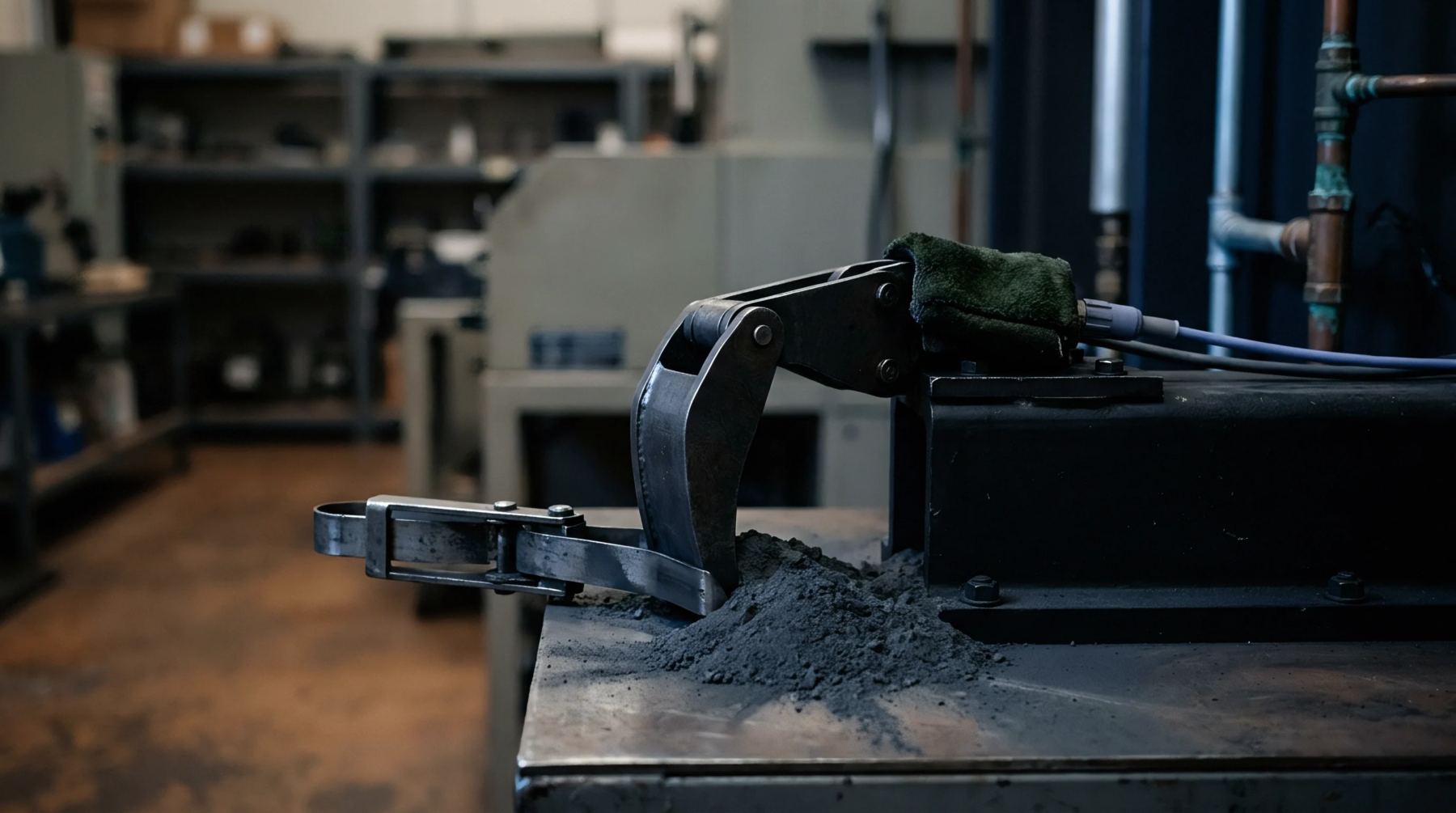
Gas Atomization Parameters Governing Tool Steel Powder Sizing
Gas-to-metal mass ratio and delivery bore diameter govern tool steel powder sizing by establishing plume kinetic energy and primary droplet breakup limits.
High-velocity discharge of compressed gases, atomized electrolyte vapor, and incandescent active material particulate escapes from a battery cell vent during severe thermal runaway when internal pressures choke the exhaust orifice. Internal gas generation from decomposing cathode materials and boiling solvents drives internal cell pressures past rupture disc thresholds, forcing expanding decomposition products through the vent opening at speeds matching or exceeding the local speed of sound. The expansion of a supersonic plume generates external shock waves, severe mechanical thrust, and rapid thermal energy transfer to neighboring cells.
The phenomenon applies strictly to high-energy venting dynamics during runaway, ending once internal gas generation subsides and pressure equilibrates with the surrounding enclosure.
Gas production inside a runaway cell accelerates exponentially as self-heating decomposition reactions liberate oxygen, carbon monoxide, carbon dioxide, and hydrogen. When internal pressure exceeds several megapascals, gas flow through the narrow venting port becomes choked, reaching sonic velocity at the nozzle throat and expanding into a supersonic plume outside the casing. This choked flow regime dictates that internal pressure continues to escalate regardless of exterior atmospheric conditions, subjecting the cell casing to immense hoop stresses that risk secondary side-wall rupture if the vent cannot clear the volumetric flow.
The structural integrity of adjacent cells depends directly on the directional management of this gas jet.
Venting gases emerge at temperatures exceeding one thousand degrees Celsius, carrying molten copper droplets, burning graphite flakes, and shattered cathode fragments. The supersonic plume functions as an industrial cutting torch, exerting localized convective heat transfer coefficients capable of burning through aluminum module walls and melting structural plastic frames within fractions of a second. High mechanical momentum strips away passive thermal barriers, driving hot particulate directly into the casing walls of adjacent uncompromised cells.
Managing this concentrated thermal assault requires flame arrestors and directional exhaust channels engineered to depressurize and decelerate the escaping flow before it impinges on adjacent modules.
Mechanical pack architecture incorporates physical diversion channels and internal blast shields to deflect violent vent discharges toward exterior pack exhaust ports. Deflection surfaces must withstand the kinetic erosion caused by traveling particulate without puncturing or exposing sensitive high-voltage wiring harnesses to electrical arcing. Sourcing specifications for battery enclosure materials require testing against supersonic plume erosion and pressure blast resistance to verify that single-cell runaway events do not propagate into pack-level thermal catastrophes.
Containment systems must absorb both the acoustic shock wave and the extreme convective heat flux of choked exhaust discharges.
Gas-to-metal mass ratio and delivery bore diameter govern tool steel powder sizing by establishing plume kinetic energy and primary droplet breakup limits.
Expertise is a utility, not a secret. sentiention™ publishes its working knowledge as open reference: intelligence layer covering the materials it sources, the markets it enters, and the reference that serves both.