Meaning
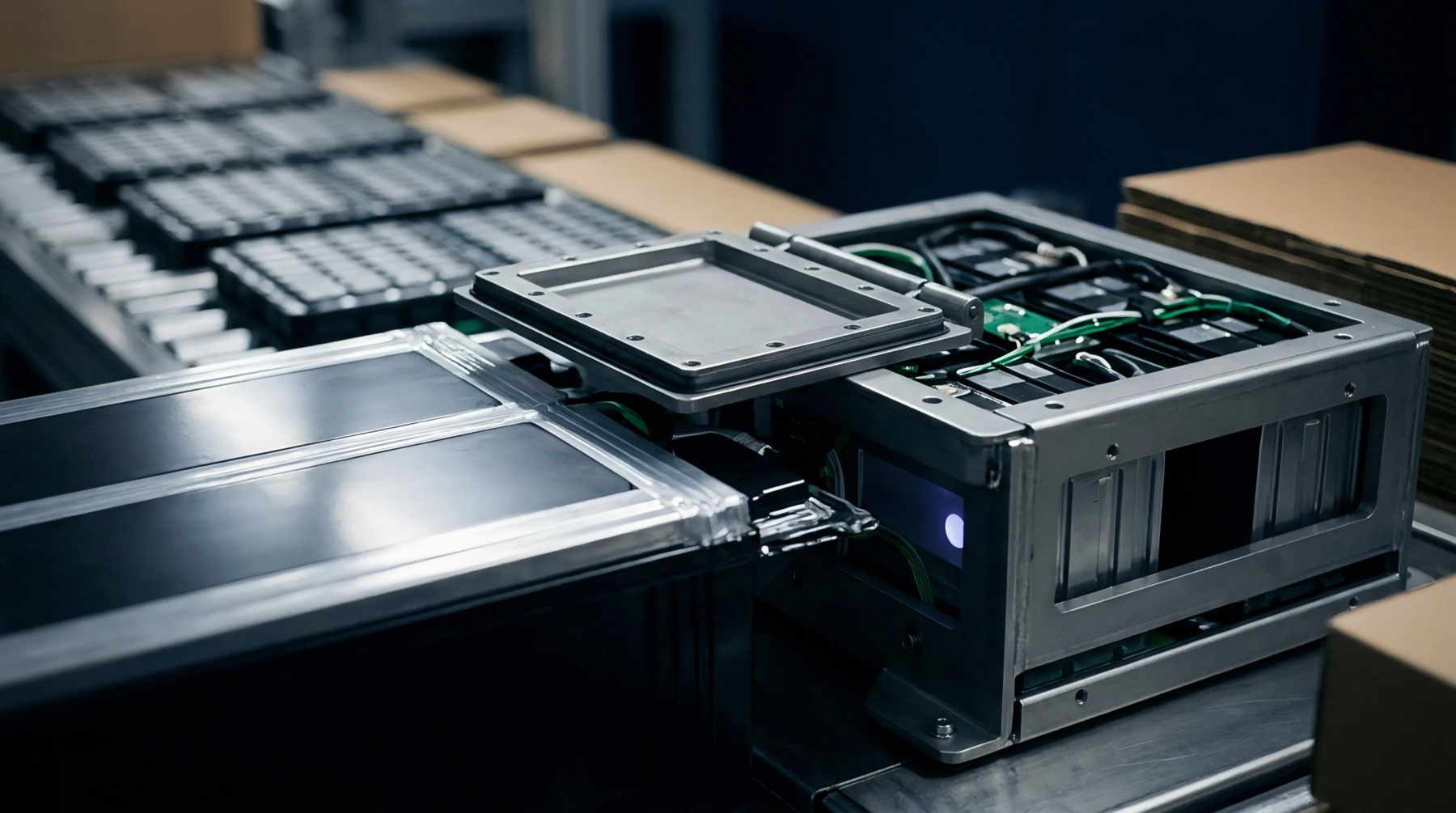
A specialized sensing instrument designed to measure mechanical force at the boundary of a prismatic or pouch cell during charge and discharge cycles is known as a tip pressure transducer. Mechanical boundary stress increases continuously during lithium insertion because graphite and silicon anodes undergo volumetric expansion. Monitoring this localized force prevents premature delamination of internal electrode layers and structural failure of the outer containment.
Accurate force data governs the mechanical loading limits applied during pack assembly and constrains operation to safe displacement boundaries.
Sensor Placement
Positioning the sensing element requires direct contact against the exterior boundary plate where mechanical displacement concentrates during expansion phases. Engineers attach the assembly near the geometric centre of the broad cell face to capture peak mechanical deflection rather than edge anomalies. Correct mechanical coupling ensures that thermal expansion of housing components does not distort the electrical output of the strain gauge.
Signal Calibration
Voltage output from the internal strain gauge maps directly to applied force through factory calibration curves established under controlled temperature conditions. Electronic signal conditioners amplify the millivolt output to standardized analogue levels for acquisition by battery testing hardware. Temperature fluctuations introduce measurement drift that requires software compensation using integrated thermal sensors located adjacent to the primary strain element.
Commercial Procurement
Purchasing specifications demand documented fatigue resistance ratings that withstand millions of charge and discharge cycles without zero shift or signal degradation. Buyers evaluate sensor thickness carefully because thick instrumentation alters the thermal gradient across the cell and distorts the natural expansion profile. Contract pricing reflects the required operating temperature range, with high temperature variants commanding premiums for stationary energy storage validation.