Cathode Active Material Synthesis Principles from Hydrometallurgical Recycling Streams
Direct synthesis of recycled cathode active materials demands strict liquor purification below five parts per million iron and controlled calcination stoichiometry.

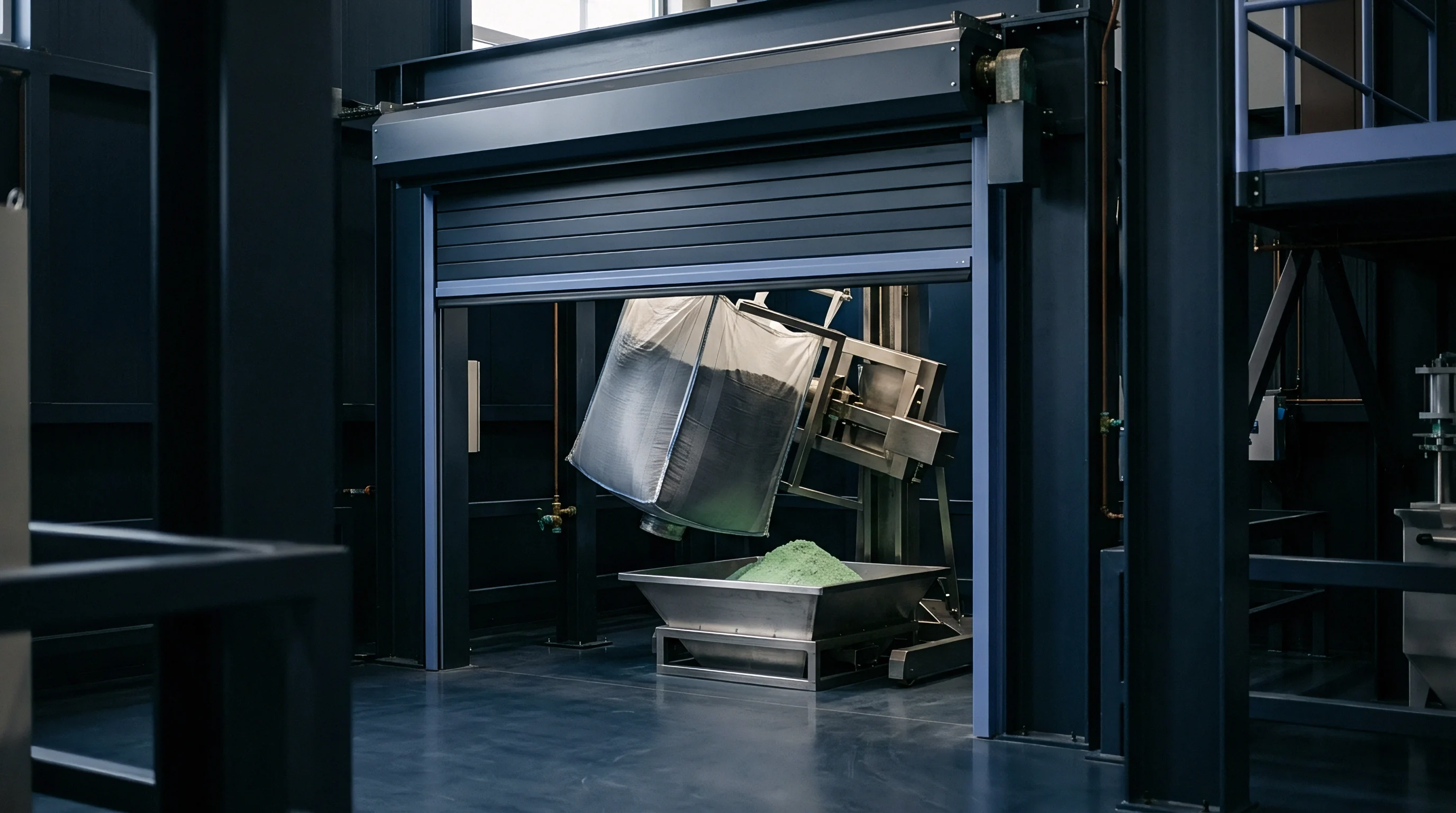
Liquor
Hydrometallurgical digestion of spent lithium-ion black mass produces complex aqueous matrices. Leaching with sulfuric acid pulls nickel, cobalt, manganese, and lithium into solution, but also extracts undesirable copper, iron, aluminum, sodium, and calcium species. Rebuilding cathode active materials straight from these recycled liquids bypasses the energy-intensive step of converting purified metals back into sulfate salts.
Reaching true battery-grade purity, however, requires systematic separation cascades to knock tramp metal ions down to sub-ppm levels before precipitation can start.
Hydrometallurgical Leachate Composition and Purification Thresholds
The origin of the black mass governs the concentration profile of the leachate. EV scrap heavy in high-nickel formulations produces solution ratios around eight parts nickel to one part cobalt and one part manganese, while recycled consumer electronics yield much higher cobalt levels. Iron contamination generally comes from structural cell casings and current collector foils.
Above critical thresholds in the final cathode matrix, ferric ions speed up transition metal dissolution and destabilize the solid electrolyte interphase. Copper ions, meanwhile, plate onto the anode during initial charge cycles, driving dendrite growth straight through the separator fabric.
To clean up these acidic sulfate solutions, solvent extraction circuits rely on organophosphoric acids like bis(2-ethylhexyl) phosphoric acid and alkyl phosphinic acids to remove aluminum and iron. Operating pH targets are held between 1.5 and 2.5, dropping iron while leaving nickel and cobalt in the raffinate. These circuits require continuous organic-phase scrubbing so primary transition metals are not lost to co-extraction.
| Impurity Element | Maximum Concentration (ppm) | Analytical Detection Method | Primary Degradation Mechanism |
|---|---|---|---|
| Iron (Fe) | 5.0 | ICP-OES | Catalyzes electrolyte oxidation and accelerates structural phase transition |
| Copper (Cu) | 2.0 | ICP-MS | Reduces on graphite anode, forming metallic dendrites through separator |
| Aluminum (Al) | 10.0 | ICP-OES | Forms resistive micro-domains and reduces specific discharge capacity |
| Sodium (Na) | 15.0 | Flame AAS | Displaces lithium in crystal structure, decreasing rate capability |
| Calcium (Ca) | 10.0 | ICP-OES | Precipitates insoluble sulfates, clogging precursor particle pores |
| Chloride (Cl-) | 20.0 | Ion Chromatography | Pits stainless steel reaction vessels and forms corrosive gas during calcination |
While solvent extraction can pull out residual cobalt and uncontrolled sulfur impairs cycle life, chloride carryover poses a distinct risk when hydrochloric acid leaching is used for scrap containing refractory oxides. Chloride levels above 20 parts per million corrode synthesis reactors and evolve chlorine gas during thermal processing. Removing chloride requires silver ion precipitation or targeted anion exchange resins, with final polishing of nickel-rich streams handled by ion exchange columns right before precipitation.
Dissolved iron levels above 5.0 parts per million in recycled sulfate streams reduce capacity retention by twelve percent after 500 cycles under standard 1C cycling at 45 degrees Celsius.

Solvents and Crystallization Selectivity
Separating transition metals effectively depends on keeping aqueous equilibrium under tight control. Extraction efficiency hinges directly on solution pH, temperature, and organophosphoric extractant loading ratios. Multi-stage counter-current mixers pull target cations into the organic phase while sending refined aqueous raffinate down the synthesis feed line.
Impurity management across aqueous raffinate lines must adhere to strict boundary limits to safeguard downstream co-precipitation:
- Ferric Hydroxide Precipitation selectively drops trivalent iron at pH 3.2 without dragging down divalent nickel or cobalt species.
- Chelating Resin Extraction captures residual copper and zinc ions using aminophosphonic functionality when concentration drops below ten parts per million.
- Sodium Sulfate Crystallization removes excess alkali salts through mechanical vapor recompression and chill crystallization steps during liquid loop closure.
- Solvent Stripping Regimes recover extracted metals from organic phases using dilute sulfuric acid wash streams.
Minor sodium contamination inside purified sulfate liquors is sometimes assumed harmless under the assumption that post-precipitation washing removes all residual salt. Chemical analysis of washed hydroxide cakes shows otherwise: sodium ions lock directly into particle grain boundaries during high-pH precipitation and resist removal by water.
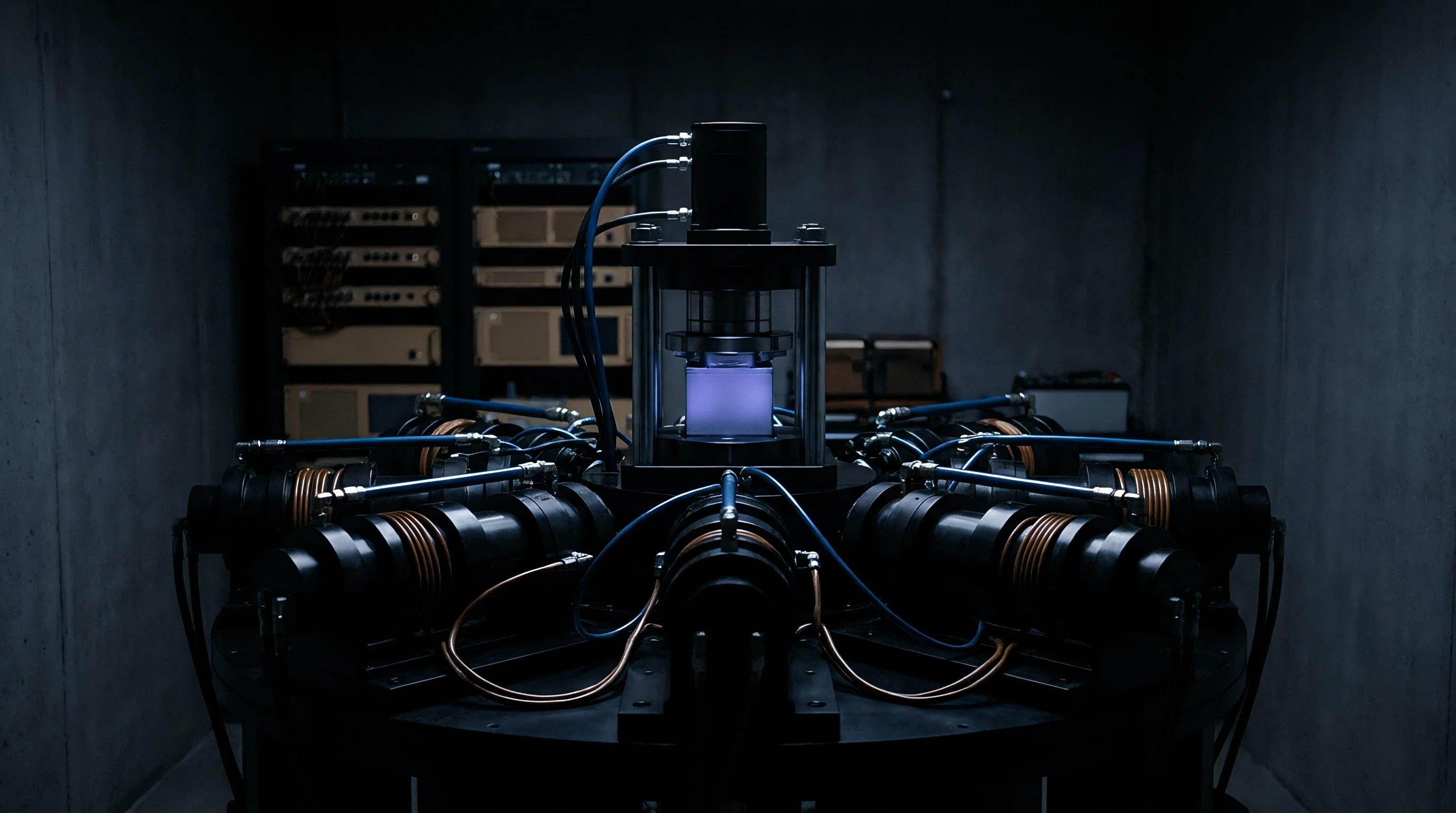

Cake
Co-precipitation is the core physical synthesis step for nickel-manganese-cobalt mixed hydroxide precursors. Refined nickel, cobalt, and manganese sulfate feed solutions enter continuous stirred-tank reactors alongside sodium hydroxide and ammonium hydroxide reagents. Ammonium hydroxide acts as a complexing agent, binding transition metal cations to regulate free ion concentration.
This controlled release promotes uniform nucleation and growth of spherical particles, resulting in high powder tap density.

Nucleation and Growth Kinetics in Mixed Hydroxide Precursors
Co-precipitation demands tight pH control, as the balance between nucleation and growth dictates the final powder metrics. Running at pH values above 12.0 triggers rapid nucleation, leaving fine, irregular particles with poor tap density. Dropping pH below 11.0 favors growth over nucleation, building up existing seed crystals instead.
Industrial systems hold pH within a narrow window of 0.05 units around target setpoints using automated dosing loops.
Vessel temperature influences reaction kinetics and ammonia stability, so reactors run between 50 and 65 degrees Celsius under a continuous nitrogen blanket. Dissolved oxygen prematurely oxidizes divalent manganese into trivalent states, triggering phase segregation inside the hydroxide lattice. Excluding oxygen ensures nickel, cobalt, and manganese remain uniformly distributed across the particle volume.
Precise ammonia complexation prevents phase segregation during precursor co-precipitation.
Because particle morphology directly influences slurry viscosity, tap density drops quickly when growth conditions fluctuate. Reaching tap densities above 2.0 grams per cubic centimeter requires spherical precursors with tight particle size distributions. Standard automotive applications typically target average particle diameters between 8 and 12 micrometers.
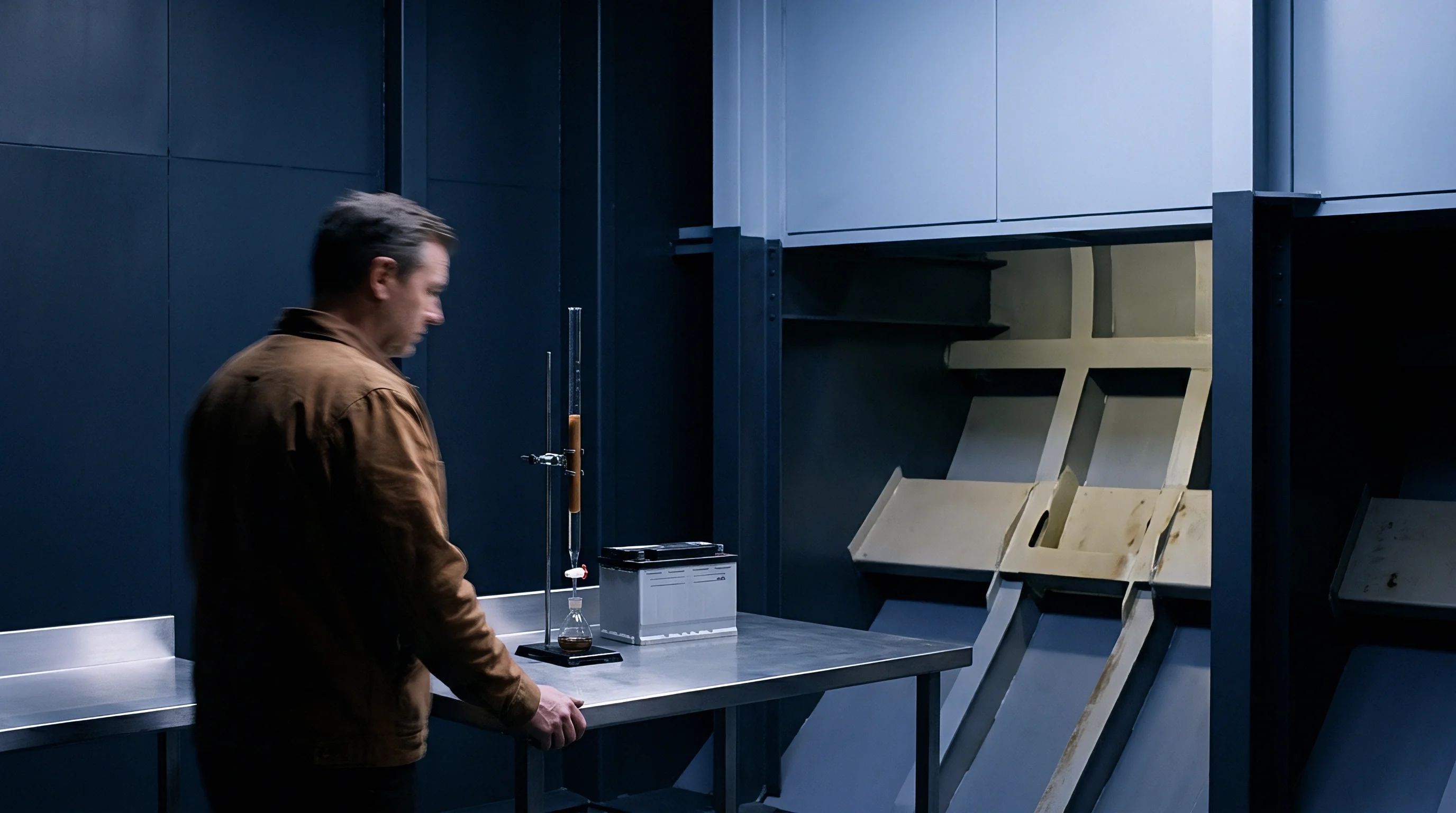
Reactor Hydrodynamics and Dewatering Sequences
Agitation power input controls fluid shear inside continuous stirred-tank reactors. This shear stress breaks apart weak agglomerates, promoting dense packing of primary particles. Impeller geometry and speed must balance circulating flow against localized shear dissipation, as oversized impellers generate excessive shear that fractures mature spherical particles and spreads particle size distribution.
Optimizing mixed hydroxide particle growth from recycled feedstocks requires a deliberate sequence of operational steps:
- Charge the reaction vessel with de-aerated water and adjust the initial ammonia complexing concentration to 0.6 moles per liter at 55 degrees Celsius.
- Inject refined metal sulfate solution and sodium hydroxide simultaneously to initiate primary crystal seed nucleation.
- Raise the agitation speed to 450 revolutions per minute to maintain uniform suspension without inducing particle degradation.
- Shift reactor pH from 12.0 down to 11.4 over two hours to transition the regime from crystal nucleation to controlled crystal growth.
- Maintain continuous overflow harvesting while feeding fresh metal sulfate liquor at a fixed residence time of 8 to 12 hours.
- Filter the harvested slurry using vertical plate pressure filters to dewater the wet filter cake down to less than ten percent moisture content.
- Wash the filter cake with warm deionized water until filtrate conductivity drops below 50 microsiemens per centimeter.
Dewatering efficiency comes down to cake porosity and particle size distribution. Fines clog filter media, extending cycle times and trapping moisture. Thorough washing washes away surface sodium and sulfate ions; if residual sulfate remains above 0.5 weight percent in dried precursor cake, it forms undesirable lithium sulfate phases during calcination, depleting active lithium in the finished cathode.
In practice, low precursor tap density translates directly into reduced volumetric energy density in the final electrode coatings.
Roast
Thermal processing converts dried mixed hydroxide precursor cake into electrochemically active cathode material. The precursor is blended thoroughly with lithium hydroxide or lithium carbonate before entering continuous rotary or roller hearth kilns. Lithium stoichiometry determines phase purity, crystal lattice parameters, and cycle retention.
High-nickel cathodes require lithium hydroxide specifically ~ its lower melting point relative to lithium carbonate enables a complete solid-state reaction below 800 degrees Celsius.
Solid-State Reaction Kinetics and Lithium Stoichiometry
Synthesis targets typically call for lithium-to-transition-metal molar ratios between 1.01 and 1.05 to offset high-temperature lithium loss. Sub-stoichiometric blending leaves unreacted metal oxides behind and triggers cation mixing, where divalent nickel occupies lithium sites in the lattice. This mixing obstructs lithium-ion diffusion paths, cutting into rate capability and specific capacity.
During calcination, sintering temperatures govern phase conversion and cation mixing. Heat profiles are split into low-temperature pre-oxidation and high-temperature sintering. Pre-oxidation between 450 and 500 degrees Celsius converts hydroxide cake to mixed oxides while driving off structural water, whereas sintering between 700 and 900 degrees Celsius incorporates lithium into the layered alpha-NaFeO2 crystal structure.
| Precursor Type | Lithium Source | Peak Sintering Temperature (°C) | Kiln Atmosphere | Dwell Time (Hours) | Target Cation Mixing Ratio (%) |
|---|---|---|---|---|---|
| Virgin Ni0.8Co0.1Mn0.1(OH)2 | LiOH·H2O | 760 ~ 780 | Pure Oxygen (>99.5%) | 10 ~ 12 | < 1.5 |
| Recycled Ni0.8Co0.1Mn0.1(OH)2 | Recycled LiOH | 750 ~ 770 | Pure Oxygen (>99.9%) | 12 ~ 14 | < 1.8 |
| Virgin Ni0.6Co0.2Mn0.2(OH)2 | Li2CO3 | 860 ~ 890 | Dry Air | 8 ~ 10 | < 2.5 |
| Recycled Ni0.6Co0.2Mn0.2(OH)2 | Recycled Li2CO3 | 850 ~ 880 | Dry Air | 10 ~ 12 | < 2.8 |
Atmosphere selection is critical for high-nickel compositions. Pure oxygen environments prevent nickel from reducing from trivalent to divalent states during high-temperature dwell cycles. Inside the kiln, carbon dioxide must stay under 50 parts per million to prevent lithium carbonate from forming on particle surfaces, as carbonate layers raise cell impedance and cause gassing under high-voltage storage testing.
Why Do Sodium Traces Cause Rapid Micro-Cracking?
Residual sodium in recycled hydroxide cake alters calcination kinetics and accelerates electrolyte breakdown. At 1.02 Angstroms, sodium ions are noticeably larger than lithium ions at 0.76 Angstroms. When sodium enters the layered lattice during calcination, it introduces localized strain and distorts the oxygen planes.
Adjusting calcination parameters for recycled precursor lots involves working within specific physical boundaries:
- Lithium Blend Ratio compensation increases by 0.5 percent when recycled precursor carries residual sulfur above 0.2 weight percent.
- Oxygen Flow Rates scale upward to displace carbon dioxide generated by trace organic contaminants surviving black mass pyrolization.
- Cooling Ramp Rates drop below 2 degrees Celsius per minute to prevent thermal shock and micro-fracturing across primary crystallites.
- De-agglomeration Milling uses air classification mills to break sintered clusters without generating sub-micron fine particles.
Lattice distortion from uncompensated sodium reduces cleavage resistance along crystal planes. As lithium intercalates and deintercalates during cycling, expansion and contraction along the c-axis turn microscopic strains into full structural micro-cracks. These micro-cracks expose fresh surface area to secondary electrolyte reactions, accelerating capacity fade and cell swelling.
Missing the target calcination temperature window converts active layered oxides into inactive rock-salt structures, permanently cutting delivered discharge capacity.

Doping
Doping stabilizes cathode materials synthesized from hydrometallurgical streams. Trace elemental variations that survive purification can disrupt phase stability at high voltage. Intentionally micro-alloying with electrochemically inert elements reinforces the crystal framework, mitigating lattice distortion from recycled impurity fluctuations.
Bulk Cation Substitution for Structural Stabilization
Dopant cations form strong metal-oxygen bonds in the crystal lattice. Aluminum, titanium, zirconium, magnesium, and tungsten partially replace transition metals at octahedral sites. Aluminum, for instance, strengthens bonding with oxygen and suppresses the shift from hexagonal to monoclinic structures during deep lithium extraction above 4.2 Volts.
Zirconium doping concentrates at grain boundaries, slowing transition metal dissolution and curbing intergranular cracking. Addition rates are low ~ typically between 0.1 and 1.0 atomic percent relative to total transition metal content ~ because excessive doping displaces active nickel cations with inert species and reduces specific capacity.
Standard supply agreements require secondary surface coating coverage to exceed ninety-eight percent by surface area under transmission electron microscopy verification.

Core-Shell Heterostructure and Epitaxial Surface Coatings
Surface modification creates a physical barrier between active cathode particles and acidic electrolyte species. Trace moisture reacts with lithium hexafluorophosphate to produce hydrofluoric acid, which dissolves transition metals that can then migrate across the separator and poison the graphite anode.
Coating processes apply nanometer-thin oxide layers to calcined powders using materials like aluminum oxide, titanium dioxide, zirconium oxide, or lithium phosphate. Wet chemical routes suspend the powder in solvents containing metal alkoxide precursors, followed by heat treatment between 300 and 500 degrees Celsius to form epitaxial oxide skins.
Surface coating layers shall not exceed five nanometers in uniform thickness, and any lot demonstrating coating discontinuity over two percent of total surface area shall face immediate batch rejection.
Dry coating uses high-energy mechanical mixing to fuse nanoparticle dopants onto primary particle surfaces. This mechanical fusion avoids rehydrating dry cathode powders, protecting low residual lithium levels and eliminating secondary drying stages to save processing energy.
Whether bulk doping alone can eliminate the micro-structural strain introduced by variable trace iron impurities in recycled feedstocks without requiring secondary surface coating steps remains unsettled.

Crystal
Electrochemical validation confirms whether cathode material synthesized from recycled streams matches virgin performance benchmarks. Physical powder properties translate directly into slurry behavior, coating uniformity, and stability during extended full-cell cycle testing.

Physical Density Metrics and Rheological Behavior
Particle morphology governs powder packing limits. Recycled cathode materials must match virgin tap density benchmarks to run on existing manufacturing lines. High tap density allows tight packing during roll pressing, yielding high volumetric energy density in finished cells.
Brunauer-Emmett-Teller surface area measurements highlight particle porosity and surface roughness. High surface area increases binder consumption during slurry prep, driving up solvent needs and drying times while accelerating parasitic reactions with the electrolyte during high-temperature storage.
Recycled cathode materials display distinct failure modes during physical qualification testing:
- Particle Bimodal Splitting occurs when uneven calcination causes selective agglomeration, altering slurry viscosity and coating thickness.
- Excess Residual Lithium forms surface lithium hydroxide and carbonate layers, inducing gelation in N-methylpyrrolidone binder slurries.
- High Crushing Fracture happens when internal microporosity lowers mechanical strength under calendering pressures exceeding 300 megapascals.
- Transition Metal Dissolution accelerates when incomplete doping leaves unprotected phase boundary channels exposed to electrolyte acid.
Slurry rheology testing catches surface lithium contamination. Leached lithium ions raise solvent pH and trigger premature cross-linking of polyvinylidene fluoride binders; the resulting gelation creates thick streaks during slot-die coating, forcing line stops and generating scrap.
Recycled cathode materials display identical first-cycle coulombic efficiency to virgin active materials when residual surface lithium levels stay below 0.3 weight percent.
Electrochemical Failure Modes under High-Voltage Cycling
Full-cell cycling evaluates long-term lattice stability under field conditions by pairing recycled cathode electrodes with artificial graphite anodes in pouch cells. Cycling between 2.8 and 4.3 Volts at 1C rates tests phase stability over thousands of charge-discharge loops.
As micro-cracking opens fresh contact area to side reactions, differential capacity analysis tracks phase transitions across cell life. Shifts in redox peak positions signal impedance growth and lithium loss. Materials with uncompensated impurity profiles show accelerated peak shifting past 800 cycles, signaling progressive lattice degradation.
Post-cycling electrode cross-sections reveal intergranular fracturing where primary crystallites detach from secondary spherical particles. This isolates active mass from the conductive carbon network, driving up internal resistance and creating localized current density hot spots.
Material specifications require delivered cathode lots to maintain 80 percent capacity retention after 1,500 continuous cycles at a 1C rate under 25 degrees Celsius test conditions.
Penalty
Commercial valuation of recycled hydrometallurgical streams depends on accurate elemental assays and impurity penalty schedules. Buyers adjust settlement pricing based on deviations from baseline purity, with off-spec lots triggering sharp deductions or outright rejection depending on poison levels.
Impurity Deductions and Precursor Grading Schedules
Scrap recyclers and cathode synthesizers tie pricing frameworks to metal benchmarks on the London Metal Exchange and Fastmarkets. Payable factors apply to nickel and cobalt content in incoming liquor or crude cake, with impurity penalties deducted from the baseline whenever tramp elements exceed contract limits.
Assay verification relies on independent referee laboratories conducting split testing on incoming shipment samples. If analytical discrepancies between buyer and seller exceed agreed tolerance bands, referee arbitration is triggered, with the losing party absorbing testing costs.
| Element / Parameter | Contract Baseline Limit | Penalty Threshold Window | Financial Penalty / Deduction Rule |
|---|---|---|---|
| Iron (Fe) | < 10 ppm | 10 ~ 50 ppm | Deduct $15.00 per metric tonne per ppm exceedance |
| Copper (Cu) | < 5 ppm | 5 ~ 25 ppm | Deduct $30.00 per metric tonne per ppm exceedance |
| Sodium (Na) | < 50 ppm | 50 ~ 200 ppm | Deduct $5.00 per metric tonne per 10 ppm exceedance |
| Moisture Content | < 8.0 wt% | 8.0 ~ 12.0 wt% | Adjust net weight baseline on dry mass equivalent basis |
| Chloride (Cl-) | < 30 ppm | 30 ~ 100 ppm | Deduct $10.00 per metric tonne per 5 ppm exceedance |
| Reject Exceedance | Any hard ceiling limit | Above maximum threshold | Full lot rejection; seller absorbs return freight cost |
Yield penalties hit margins directly. Contracts set hard rejection limits for critical poisons like copper and iron; exceeding them allows buyers to refuse delivery, forcing sellers to cover return freight or re-refining costs. These extra expenses quickly erode operating margins, underscoring the need for tight solvent extraction controls.
Landed-Cost Economics for Recycled versus Virgin Cathodes
Synthesis economics depend on energy inputs, chemical reagents, and waste treatment overhead. Recycled hydrometallurgical streams save overall energy by skipping primary mining and pyrometallurgical smelting, though extractants, sodium hydroxide, and pure oxygen remain major cost drivers.
Consider a 100-metric-tonne lot of high-nickel precursor derived from recycled black mass with an incoming iron concentration of 35 parts per million against a baseline limit of 10 parts per million. Under the penalty schedule, this incurs a deduction of $375.00 per metric tonne, or $37,500 against the gross settlement value. If fixing the issue requires an extra solvent extraction wash cycle, operating expenses rise by another $120.00 per metric tonne in reagents and energy.
Together, the penalty and re-processing add up to a $495.00 per metric tonne margin reduction, illustrating how early purity management dictates synthesis profitability.
Waste salt handling also shapes landed cathode economics. Co-precipitation generates large sodium sulfate effluent streams, and zero-liquid-discharge rules compel recyclers to install mechanical vapor recompression crystallizers to recover dry sodium sulfate. Because this crystallized byproduct has little market value, managing it remains a net operational cost that adds directly to the landed cost per kilogram of active material.