Meaning
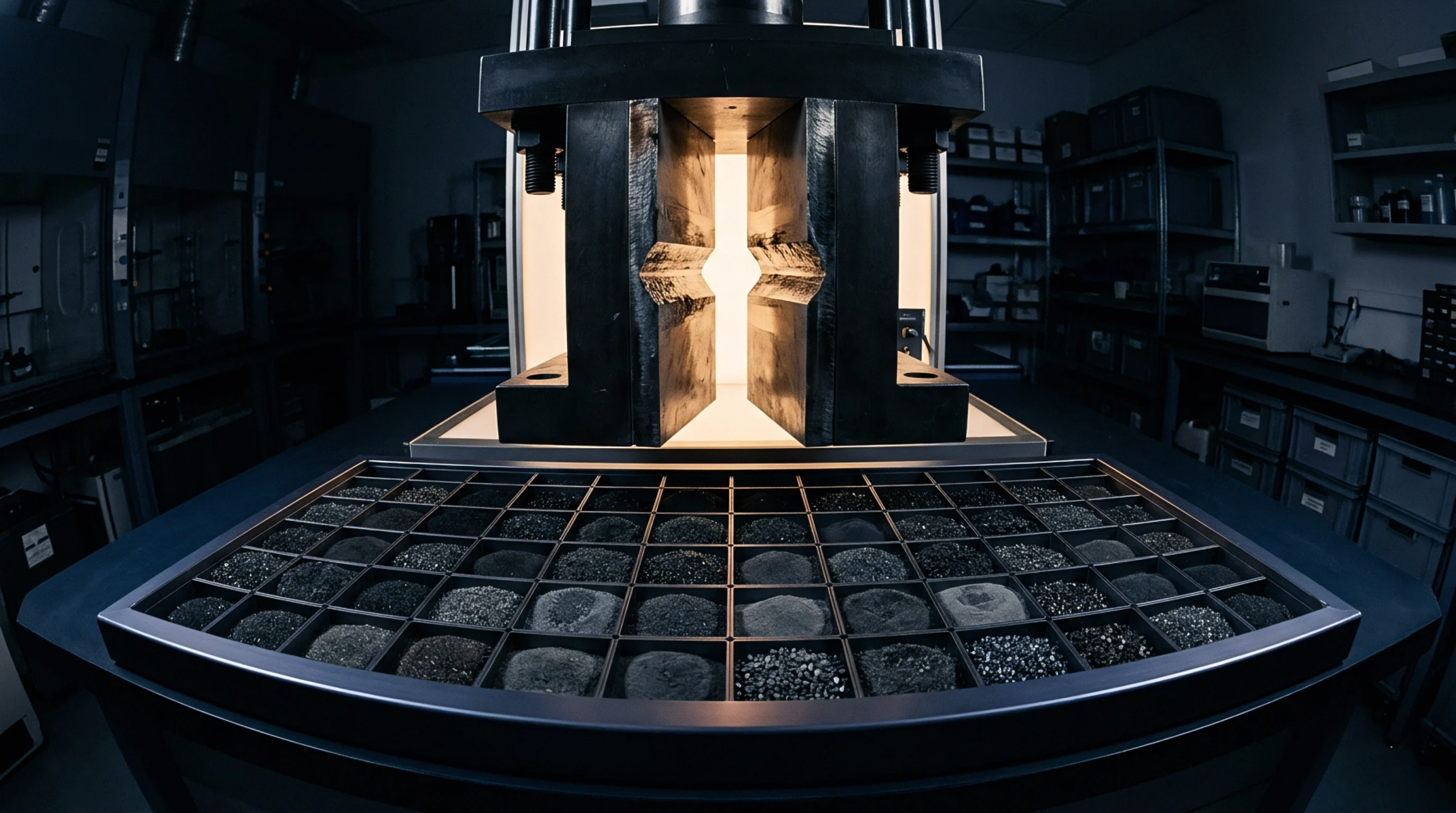
This high-temperature thermal treatment process heats solid materials in a controlled atmosphere to induce chemical decomposition or phase transitions. In battery material production, calcination drives off volatile impurities and forms the correct crystal structure for cathode active materials. The process governs the crystallinity, phase purity and particle size of the synthesized material, ending when the heat cycle is complete and the temperature returns to ambient levels.
This operation does not apply to low-temperature drying or solvent evaporation processes, requiring temperatures that alter the atomic arrangement.
Thermal Processing
The material enters a rotary kiln or roller hearth furnace where the temperature rises to specific levels. During this heat treatment, precursor compounds like metal hydroxides or carbonates react with lithium sources to form the final mixed metal oxide. The atmosphere within the furnace must be closely controlled, often using pure oxygen or dry air depending on the specific chemistry.
As the temperature rises, water vapor and carbon dioxide escape through the exhaust system. This thermal cycle includes specific heating, holding and cooling zones to ensure uniform crystal growth. Proper temperature control prevents incomplete reactions or excessive sintering of the particles.
Phase Formation
The reaction between the transition metals and the lithium source occurs during the high-temperature dwell stage. Accurate thermal control ensures that the lithium atoms enter the correct lattice positions within the transition metal layers. This phase purity determines the specific capacity and electrochemical stability of the resulting active material.
Insufficient heat yields poor crystallinity and lowers the energy density of the final cells, while overheating causes over-sintering and reduces lithium ion diffusion rates. Sourcing teams use this parameter to evaluate the thermal efficiency and consistency of material suppliers.
Production Economics
The operational costs of this step depend heavily on energy consumption and furnace throughput. Continuous roller hearth furnaces require significant electrical energy to maintain the necessary temperature profiles over long production runs. Sourcing contracts must account for these energy costs alongside the raw material prices of the precursors.
Variations in the thermal profile lead to inconsistent material batches, affecting the quality of the battery cells. High-efficiency furnaces with precise zone control minimize these variations, ensuring stable electrochemical properties across different production lots.