Quantifying Creep Relaxation and Laser Weld Fatigue in Pack Busbars
Quantifying busbar life requires matching flexure spring rates to cell swelling and capping thermal creep relaxation to preserve laser weld fatigue limits.
Wrought non-heat-treatable unalloyed grades containing a minimum aluminum purity of 99.70 weight percent form an essential conductor material class across large-format battery pack manufacturing. Procurement specifications distinguish 1070 aluminum from lower-purity variants such as 1050 or 1060 by strict compositional limits that restrict iron content to 0.25 percent and silicon to 0.20 percent. The material governs electrical conductivity ratings, typically guaranteeing at least 61 percent of the International Annealed Copper Standard in the fully annealed state, while defining the chemical boundary where impurity phases do not destabilize automated laser welding processes.
The designation stops applying when deliberate micro-alloying elements like magnesium, manganese, or copper exceed 0.04 percent each, shifting the raw stock into alloyed structural series.
Annealed tempers deliver high volumetric conductivity paired with low room-temperature yield thresholds. Specifiers choose 1070 aluminum over structural alloys for battery busbars, pouch cell terminal tabs, and prismatic cell interconnects because elevated thermal and electrical conductivity suppresses internal ohmic losses during heavy charge discharges. Minimal interstitial impurities curb electron scattering along grain boundaries, holding volumetric electrical resistivity near 2.8 micro-ohm centimeters at 20 degrees Celsius.
Lower purity wrought grades present higher bulk resistance that accelerates localized resistive heating. Thin-foil variants of this composition serve as current collector substrates for positive cathode slurries, where high baseline conductivity ensures uniform current extraction across wide active electrode surfaces. Mechanical stiffness remains modest, compelling engineers to evaluate bend radii and cyclic fatigue resistance whenever pack interconnects endure constant vibrational loads.
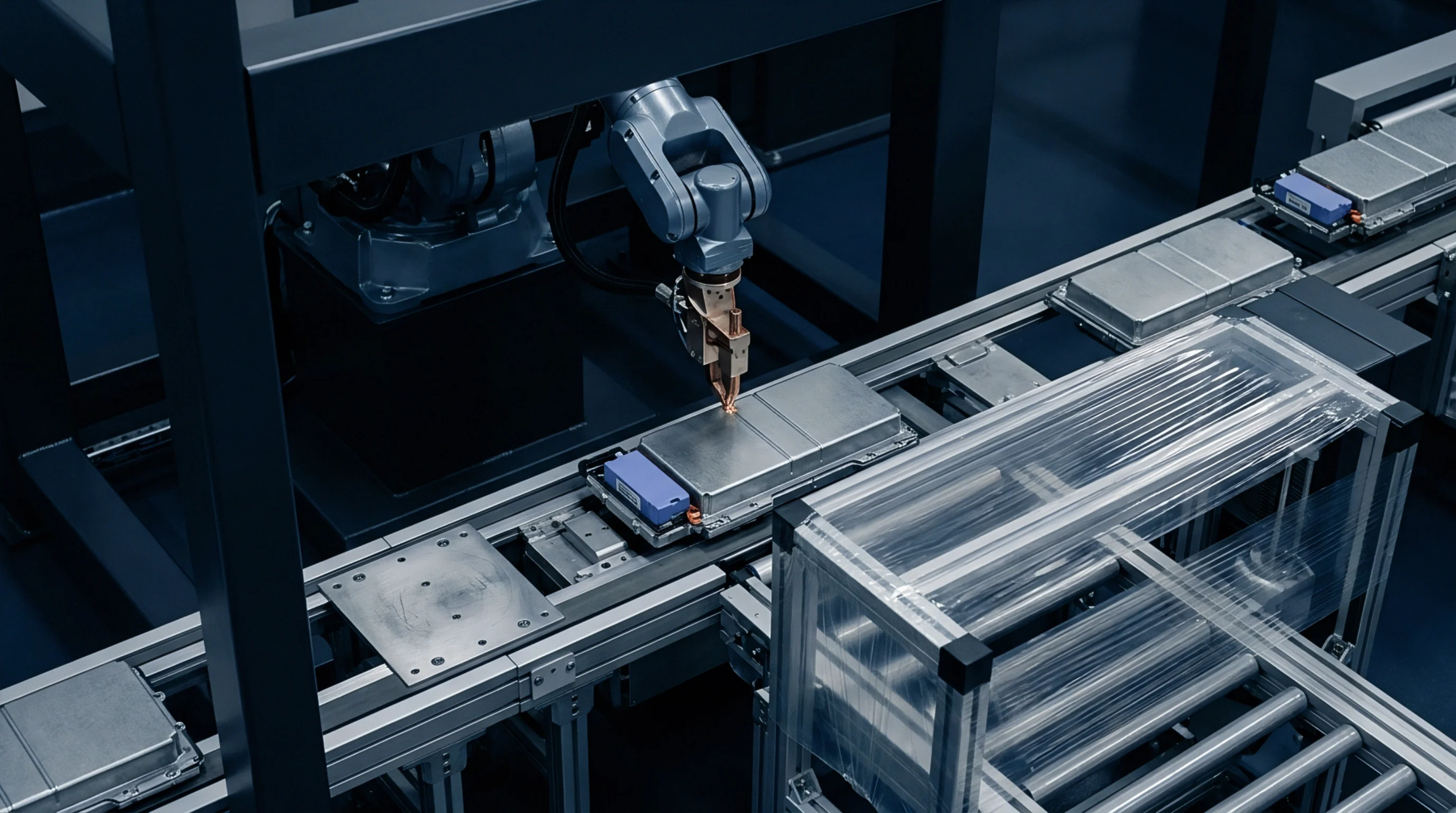
Infrared fiber laser joinery relies on consistent optical absorption and predictable molten pool fluidity. Industrial laser welding of 1070 aluminum produces fewer brittle intermetallic exclusions and internal gas blowholes than welding silicon-heavy or copper-doped alloys. Viscosity in the liquid phase remains uniform, supporting repeatable high-speed spot and seam welds between cell terminals and flexible interconnectors.
Surface treatments, including rolling lubricants and native oxide films, must undergo controlled cleaning prior to joining. Heavy surface oxidation alters light absorption dynamics, driving spatter or incomplete penetration during beam pulses.
Mill test certificates must confirm elemental composition, mechanical temper designation, and minimum electrical conductivity prior to lot acceptance. Quality audits inspect 1070 aluminum lots against international standards such as ASTM B209, EN 573-3, or GB/T 3190, balancing chemical limits against tensile requirements. O-temper material mandates yield strengths below 45 megapascals to facilitate precise stamping of cell interconnects, while H14 tempers require proof testing past 85 megapascals for rigid bolted assemblies.
Thickness tolerance verification takes precedence on cold-rolled strips, where deviations above two percent distort welding laser focus depths and degrade connection reliability. Trace amounts of zinc, gallium, or vanadium undergo spectrometer verification, because even marginal contaminant peaks compromise long-term corrosion resistance in wet or salt-spray operating environments. Verification protocols check that surface hardness values correlate with certified temper codes.
Quantifying busbar life requires matching flexure spring rates to cell swelling and capping thermal creep relaxation to preserve laser weld fatigue limits.
Expertise is a utility, not a secret. sentiention™ publishes its working knowledge as open reference: intelligence layer covering the materials it sources, the markets it enters, and the reference that serves both.