Meaning
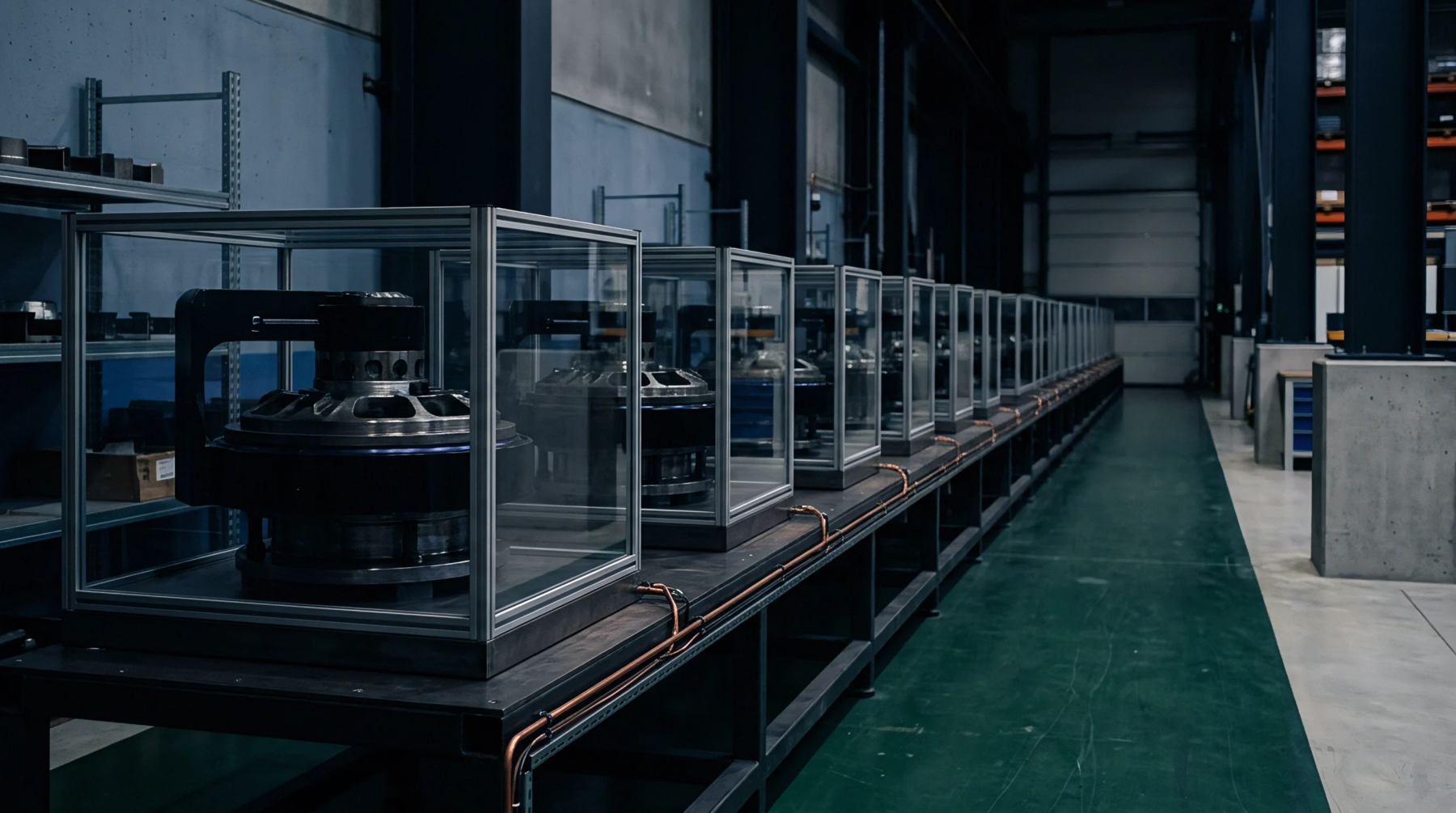
Mechanical constraint systems provide constant force to pouch or prismatic cells during volume changes. Incorporating active spring clamping ensures that the electrode stack remains under consistent pressure as materials expand during lithiation. Maintaining uniform current distribution across the active surface prevents the delamination of layers.
Pressure Stability
The Pressure Stability of active spring clamping allows for the compensation of swelling without exceeding the structural limits of the battery housing. Fixed enclosures often lead to substantial stress peaks during high states of charge, whereas a spring based solution modulates the load over the full range of expansion. Such systems are frequently specified in heavy duty applications where large format cells undergo physical displacement.
Hardware Design
Designing for active spring clamping involves calibrated compression springs or wave washers integrated into the module frame. Engineers select the spring rate to match the projected expansion curve of the specific chemistry, such as silicon dominant anodes. Assembly requires precise pre loading to ensure the initial contact pressure falls within the electrochemical specification.
Mechanical Durability
Maintaining active spring clamping performance requires the selection of metal components with high fatigue resistance over thousands of charge cycles. Failure to maintain the required force leads to increased interfacial resistance and potential cell failure. Robust clamping mechanisms remain a standard requirement for ensuring the long term performance of soft packed battery systems.