Meaning
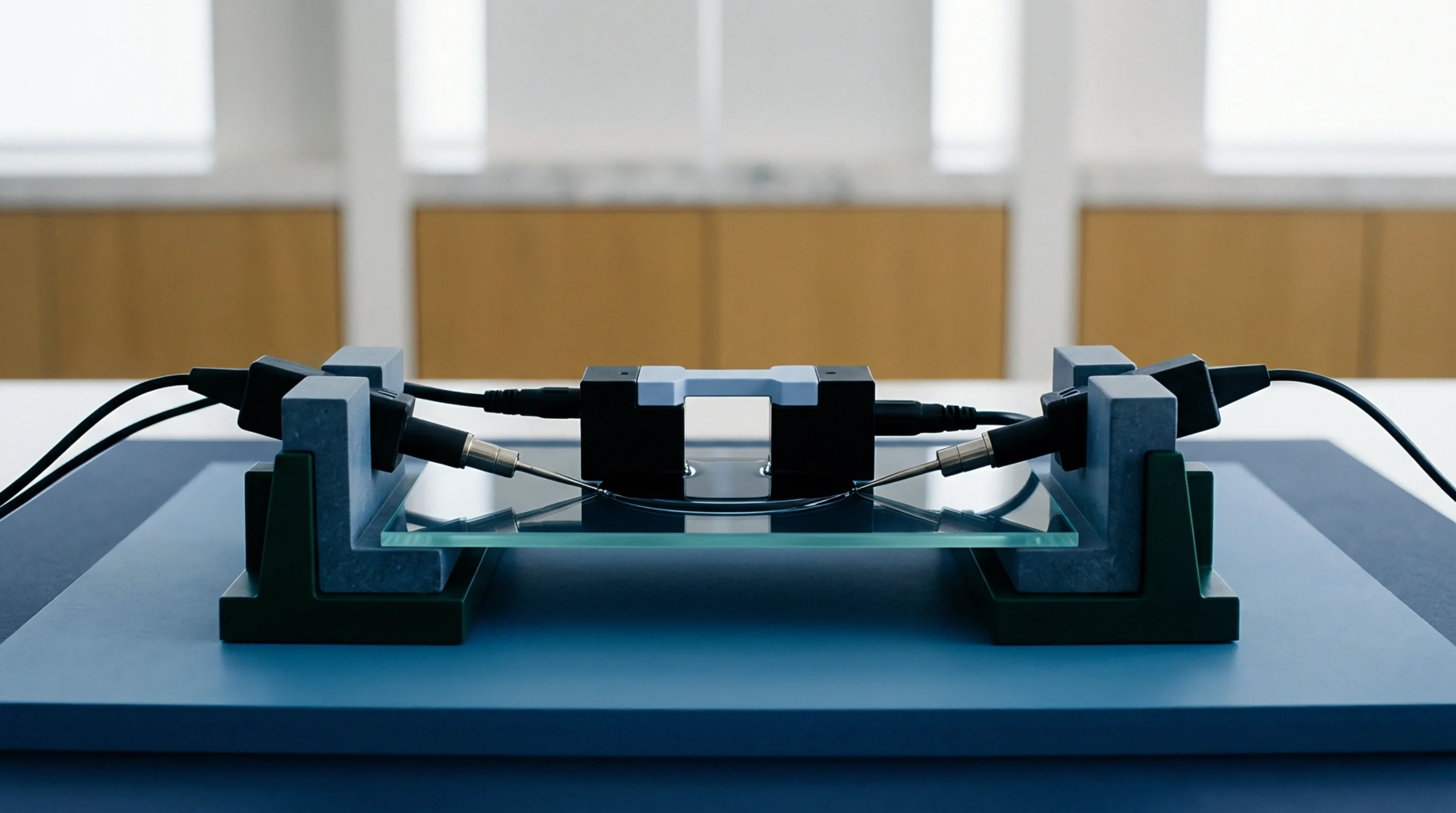
Reversible and irreversible dimensional changes in battery active materials driven by repeated ionic insertion and extraction define the volumetric displacement occurring throughout operating cycles. Cyclic electrochemical expansion originates at the crystalline level as guest ions occupy and evacuate host lattice matrices during standard charge and discharge sequences. The metric quantifies macro-scale cell breathing along geometric axes, governing module mechanical clearance allowances and thermal interface pressure baselines.
Boundary limits exclude purely thermal volumetric changes and isolate strain generated by electrochemically driven phase changes, lattice parameter variation, and parasitic degradation reactions.
Breathing Amplitude
Breathing profiles vary systematically across differing cell chemistries and geometric formats. Pouch and prismatic cells experience dynamic thickness increases during charging, reaching maximum displacement at full state of charge before relaxing during discharge. Silicon-doped graphite blends manifest pronounced breathing amplitudes compared to traditional synthetic graphite baselines, producing displacement swings of several hundred micrometers per cell.
Pouch formats transmit these displacements directly to pack enclosure boundaries unless managed by compliant pads. Irreversible expansion accumulates over hundreds of operating cycles as continuous solid electrolyte interphase growth and particle pulverization permanently displace active layers.
Constraint Response
Module structures resist cell breathing through structural end plates and tension ties. Rigid mechanical constraints convert outward geometric expansion into internal compressive stress fields. Internal pressures often rise from nominal baseline values near zero point one megapascal to operating levels exceeding one megapascal during fast charge sequences.
Excessive mechanical compression collapses electrode porous networks, choking liquid electrolyte transport pathways and accelerating localized lithium plating. Unconstrained breathing, conversely, accelerates electrode delamination from current collector foils through unmitigated cyclic shear strains.
Clearance Allowance
Pack engineering requires dynamic volume allocation derived from long-term displacement data. Designers calculate module internal dimensional stack-ups using end-of-life thickness projections rather than beginning-of-life factory tolerances. Foam isolation sheets positioned between adjacent cell faces accommodate breathing cycles while maintaining contact pressure against cooling plates.
Procurement documentation requires suppliers to furnish cyclic expansion curves under specified C-rates, operational temperatures, and external clamping pressures. Cell lots displaying excessive swelling rates face rejection to prevent structural casing distortion and coolant conduit failures.