Meaning
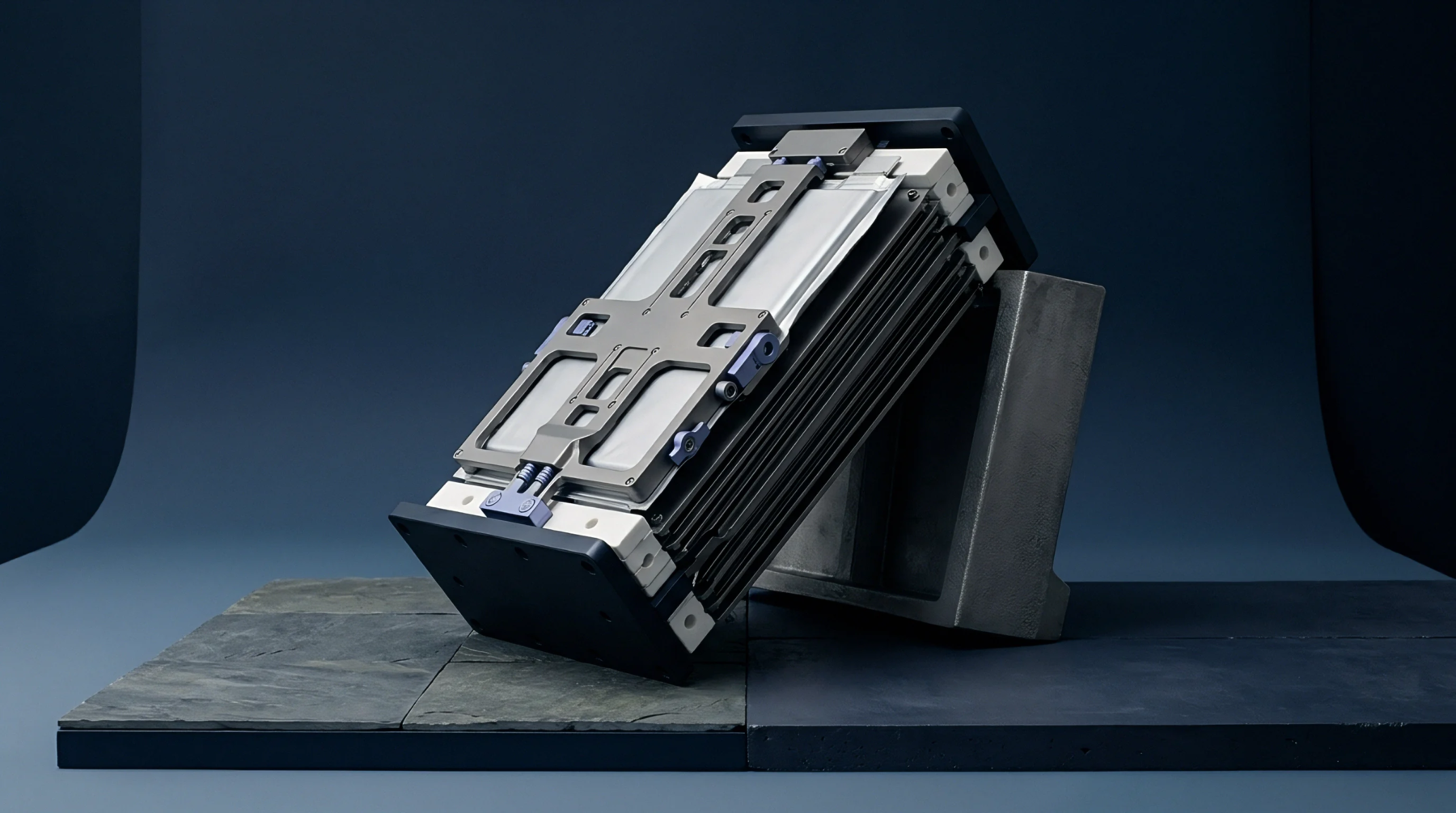
Structural retention plates positioned at the terminal ends of a cell group constrain internal swelling forces and preserve module mechanical integrity. The deployment of module end plates provides compressive restraint across prismatic or pouch cell arrays inside electric energy storage packs. High-strength aluminum alloys, stamped steel, or engineered fiber composites form the load-bearing wall.
Bolting, welding, or tensioned tie straps clamp the plates against the cell face stack. The term stops at the terminal boundary plates of the module and excludes battery pack perimeter enclosures or vehicle chassis side members.
Structural Loading
Swelling forces generated during electrochemical cycling exert uniform distributed pressures across the plate surface. Flexural stiffness prevents excessive plate bowing that could produce non-uniform pressure profiles across interior cells. Uneven stress distribution accelerates local electrode degradation and degrades capacity retention.
Dynamic loads from road vibrations and shock events impart secondary shear forces across the anchoring hardware.
Material Configuration
Die-cast aluminum variants combine high specific stiffness with low structural mass. Finite element analysis directs the placement of external reinforcement ribs to minimize center-point deflection under maximum swelling scenarios. Non-conductive coatings or polymer insulation sheets prevent electrical contact between active cell terminals and the grounding metal plate.
Internal fluid channels are integrated into specialized end plates to provide boundary thermal management.
Quality Verification
Technical data packages specify maximum out-of-plane deflection tolerances under peak simulated end-of-life swelling pressures. Coordinate measuring machines inspect mounting face flatness to prevent localized pressure points against adjacent cells. Pull-off testing evaluates tie-rod weld joints and threaded anchor points to confirm tensile load capabilities.
Incoming lot inspections reject end plates with internal casting porosity that lowers elastic modulus below design thresholds.