Meaning
State of charge estimation algorithms in battery management systems rely on mathematically modeling the discrepancy in open-circuit voltage between charging and discharging pathways. The term dynamic hysteresis refers to the rate-dependent, transient separation of these voltage curves under active current flow, which persists even after the current has ceased. This phenomenon is particularly pronounced in iron-phosphate chemistries and complicates accurate state-of-charge tracking.
Transient Response
Relaxation times within the active electrode materials dictate the duration of voltage lag after a load is removed. When dynamic hysteresis is present, the terminal voltage slowly drifts toward its equilibrium value, a process that can take hours. This slow recovery stems from the phase-transition kinetics of materials like lithium iron phosphate, which do not transition instantly between state phases.
Algorithm Compensation
Battery management firmware uses mathematical filters to correct for the non-linear relationship between voltage and capacity. Failing to account for dynamic hysteresis leads to cumulative errors in fuel-gauge chips, causing them to miscalculate the remaining driving range of an electric vehicle. Algorithms must adjust their voltage-state lookup tables by monitoring current throughput over time to maintain precision.
Measurement Protocol
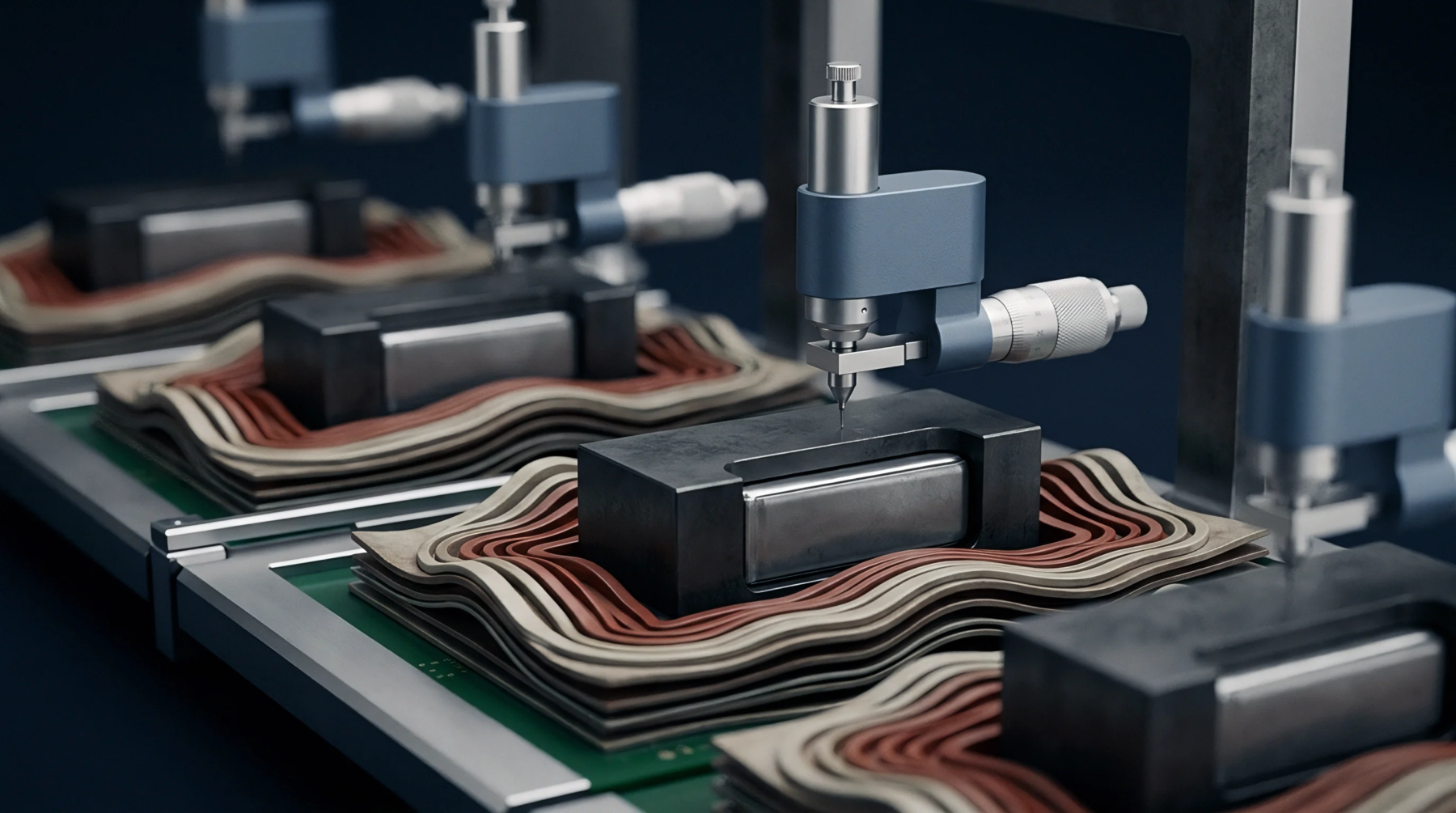
Laboratory testing of cells requires specific resting periods to isolate static hysteresis from the active transient effects. Measuring dynamic hysteresis involves applying pulse-discharge profiles followed by prolonged open-circuit rest periods at controlled temperatures. The gathered data allow engineers to extract the dynamic parameters necessary to configure the state of charge estimation models.
These tests must be run at multiple temperatures since the underlying phase-change kinetics are highly thermal-sensitive.