Dynamic Mechanics of Micro-Crack Growth in Electrolyte-Swollen Polyolefin Separators
Electrolyte solvent plasticization lowers polyolefin yield stress, driving sub-critical micro-crack propagation under cyclic stack pressure.


Solvation
Soaking microporous polyolefin membranes in organic carbonate mixtures alters their internal matrix well before applying any mechanical load. Blends of ethylene carbonate, dimethyl carbonate, and ethyl methyl carbonate diffuse rapidly into non-crystalline polyolefin phases. Entering the amorphous domains between crystalline lamellae, these molecules widen inter-chain spacing and weaken van der Waals bonding, dropping the tensile modulus dramatically.
A dry ultra-high molecular weight polyethylene separator with an initial machine-direction Young’s modulus of 850 MPa drops below 520 MPa after 24 hours in standard carbonate solvent at 25 degrees Celsius. That added compliance reduces yield strength, which falls 30% to 45% depending on crystalline fraction and web orientation.
Solvation rate depends heavily on resin density, degree of crystallinity, and solvent molecular volume. Penetrants absorb faster into linear low-density polyethylene regions than into dense crystalline domains. As solvent molecules force into the polymer network, the glass transition temperature of the amorphous fraction drops by up to 15 degrees Celsius.
The resulting plasticization enhances chain mobility under localized shear. Under ASTM F1306 testing parameters using a 3.2 mm hemispherical probe, puncture resistance falls from a dry baseline of 5.2 N to 3.4 N once fully saturated, allowing micro-cracks to propagate under much smaller loads.

Organic Carbonate Uptake in Polyethylene Crystallites
Non-polar polyolefins absorb liquid alkyl carbonates primarily within their non-crystalline domains. High-density polyethylene consists of dense crystalline lamellae linked by amorphous tie-chain regions. Solvents like ethyl methyl carbonate have solubility parameters that closely match these amorphous domains, drawing liquid into inter-lamellar spaces.
While the crystal lattice remains intact up to 60 degrees Celsius, the tie chains joining adjacent crystallites experience continuous swelling stress, loosening polymer entanglements.
Liquid transport into the membrane follows non-Fickian anomalous diffusion profiles as polymer chains relax during absorption. Weight-gain measurements show rapid intake during the first 10 minutes, settling into saturation equilibrium within 60 to 90 minutes. This mass gain causes unconstrained separator sheets to expand isotropically by 1.8% to 3.5% in volume.
Inside a tightly wound cell roll, that expansion exerts dynamic swelling pressure against neighboring electrode layers, pre-stressing micro-defects along slitting edges.
| Separator Type | Process Method | Thickness (µm) | Dry Modulus MD/TD (MPa) | Swollen Modulus MD/TD (MPa) | Swollen Yield Stress (MPa) |
|---|---|---|---|---|---|
| Single-layer PE | Wet Process | 9.0 ± 0.5 | 780 / 620 | 460 / 340 | 38 ± 2.1 |
| Single-layer PE | Dry Process | 12.0 ± 0.8 | 1150 / 140 | 680 / 85 | 62 ± 3.4 |
| Trilayer PP/PE/PP | Dry Process | 16.0 ± 1.0 | 1420 / 180 | 890 / 110 | 85 ± 4.2 |
| Ceramic-coated PE | Wet Process + Al2O3 | 12.0 ± 0.6 | 810 / 650 | 510 / 390 | 41 ± 2.5 |
Amorphous Plasticization and Free Volume Expansion
As liquid molecules filter between macromolecular chains, the internal spacing of non-crystalline polymer networks widens. Penetrant absorption increases total fractional free volume, lowering the energy needed for segmental chain motion. In polyethylene membranes, solvent molecules lubricate adjacent polymer chains, reducing inter-chain friction.
Under an applied strain rate of 50 mm per minute, swollen polyolefin webs yield plastically at far lower stress levels than dry material, shifting primary load-bearing onto tie chains.
A dry single-layer polyethylene separator with an initial machine-direction tensile modulus of 850 MPa retains less than 520 MPa after 24 hours of saturation in alkyl carbonate solvent at ambient room temperature.
Plasticization reduces the stiffness needed to resist puncture by electrode burrs or active material particles. When a micro-burr on a copper current collector foil presses into a swollen separator, plasticized tie chains yield locally instead of strain-hardening to disperse the stress. Localized shear bands develop around the contact area.
If applied force exceeds the lower yield threshold of the swollen polymer, material flows laterally, thinning the membrane from an initial 9 µm down to under 2 µm right beneath the indent.
Plasticizer extraction tolerances counteract solvent-induced dimensional drift within standard slitting specs across swollen wet-process webs.

Notch
Microscopic flaws along slitting margins and within porous membranes redirect internal stress under load. Rotary shear blades routinely leave micro-notches 2 µm to 15 µm deep along edges during converting. Dry polyolefin matrixes manage stress concentrations at notch roots through localized fibril necking and strain hardening.
Once saturated with electrolyte, solvent plasticization stifles that strain-hardening response and accelerates crazing at the notch tip. Under transverse tension, stress concentration factors at a sharp notch root jump from a nominal geometric value of 3.0 to localized dynamic peaks above 12.0.
Pore architecture from wet and dry processing dictates notch geometry and crack sensitivity. Dry-process separators contain elongated, slit-like pores oriented strictly along the machine direction; thin polyolefin fibrils bridging these pores act as structural notches under transverse tension. Wet-process separators instead form an isotropic, interconnected sponge-like network where nodal points handle multi-axial stresses.
When swollen, these wet-process nodes distribute stress fairly evenly, while dry-process fibrils suffer intense local strain concentrations that split micro-fibrils.

Stress Intensity Factors at Fibril Interfaces
Load concentration profiles across microscopic fibrils govern the threshold for mechanical tear initiation. Linear elastic fracture mechanics models express the stress state at a micro-crack tip through the mode-I stress intensity equation K_I = Y sigma sqrt(pi a), where sigma is global applied stress, a is crack length, and Y is the geometric correction factor. In a 9 µm wet-process polyethylene film with a 5 µm edge notch, solvent swelling cuts the critical stress intensity factor threshold K_Ic from 1.8 MPa sqrt(m) down to 0.95 MPa sqrt(m).
Dry separators behave quite differently.
Stretching fibrils under transverse load creates steep stress gradients across individual polymer bundles. Concentrated solvent molecules at the crack tip accelerate environmental stress cracking by breaking weak secondary bonds under tension. Void formation precedes crack growth, leading to crazing.
In plasticized polyethylene, crazes develop rapidly at loads far below bulk yield stress, forming micro-voids that merge into macro-cracks along fibril boundaries.
- Edge slitting micro-notches stem from dull shear blades or web chatter during converting, leaving initial edge cracks between 3 µm and 18 µm long.
- Pinhole pore coalescence voids occur when adjacent micropores collapse into a single defect under local transverse shear within the cell roll.
- Foreign inclusion notches develop around un-melted gel particles or particulate contaminants trapped in the polyolefin extrusion matrix.
- Ceramic coating delamination scars arise from mechanical compliance mismatches between rigid alumina particle coatings and the flexible, swollen polyethylene base.
Biaxial Orientation and Tear Anisotropy
Processes orienting polymer webs in orthogonal directions create distinct mechanical properties along machine and transverse axes. Uniaxially stretched dry-process separators offer high machine-direction tensile strength but poor transverse tear resistance. A tiny edge defect in a dry-process film can run down the full length of a roll under less than 0.2 N/cm of transverse tension.
Crack growth follows aligned crystalline lamellae almost entirely along the Machine Direction.
Integrating ISO 15814 annex guidelines into incoming membrane inspection creates enforceable benchmarks for mechanical creep under solvent saturation.
Biaxially oriented wet-process separators display balanced tensile strength when dry, but solvent swelling reveals hidden anisotropy in tear initiation energy. Machine-direction stretching aligns primary polymer backbones, whereas transverse stretching aligns secondary tie chains. Because solvent swelling selectively softens this tie-chain network, transverse crack growth requires 40% less strain energy release rate G_Ic in swollen wet-process films compared to dry controls.
Minor edge defects can thus trigger catastrophic tearing.
On the shop floor, separators that show fibril fibrillation during transverse tensile pulls carry much higher crack propagation risks than those yielding uniformly across the tie-chain matrix.
Propagation
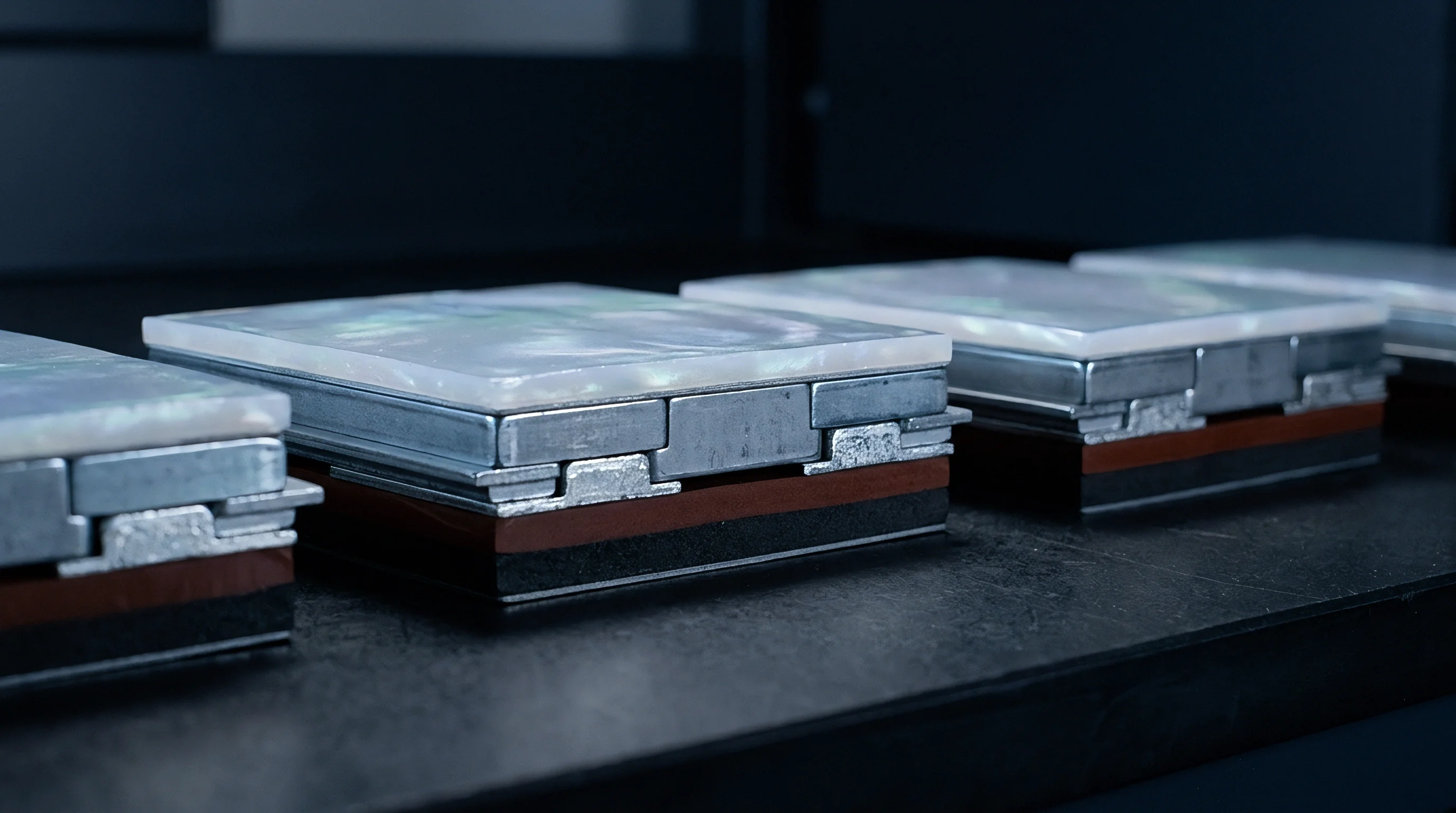
Defects expanding under steady or cyclic mechanical stress compromise separator integrity over prolonged operation. Micro-crack growth in swollen polyolefins proceeds via static creep and dynamic fatigue. Under static transverse tension from cell curvature, swollen polyethylene undergoes slow crack growth driven by environmental stress cracking.
Crack velocity follows the power-law relation v = A (K_I)^n, where exponent n drops from 8.5 in dry polymer down to 4.2 upon swelling. That drop means cracks propagate faster over a much wider range of stresses when saturated with carbonate solvents.
Cyclic loading speeds up dynamic fatigue crack growth. As lithium-ion anodes expand and contract during charge-discharge cycles, they apply repetitive strain to the separator. Polyolefin fatigue growth per cycle da/dN follows Paris law, da/dN = C (delta_K)^m.
In lab tests, pre-factor C jumps by nearly two orders of magnitude once the polymer is saturated with solvent. Fibrils ahead of the crack tip undergo rapid plastic deformation with each load pulse, breaking down prematurely and driving steady crack growth across active separator areas.
Sub-Critical Crack Growth Dynamics
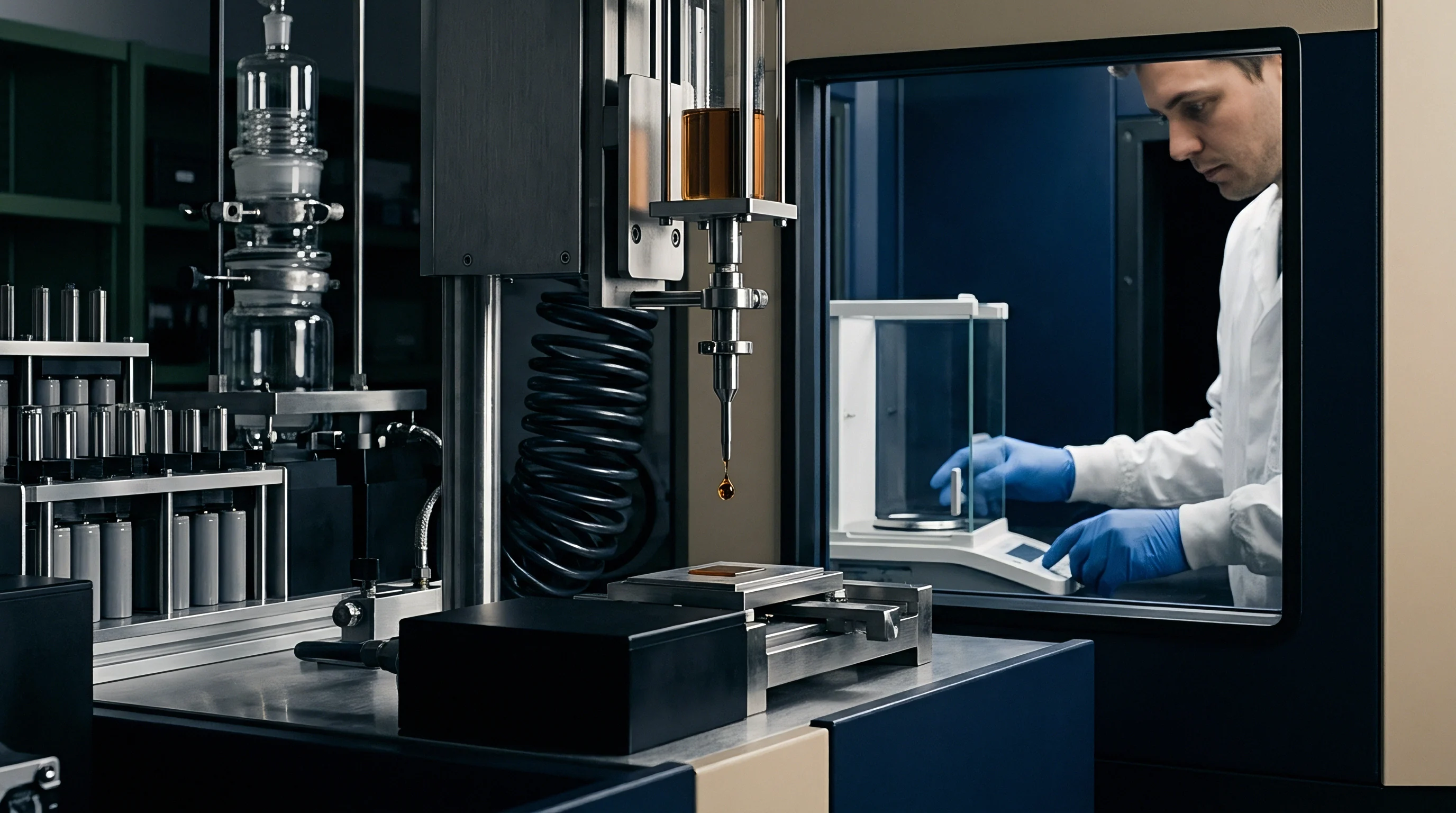
Sub-critical crack extension at loads below the critical fracture threshold ultimately determines long-term membrane survival. Sub-critical growth can occur at stress intensities as low as 30% of K_Ic. Solvent molecules migrate straight into the highly stressed region ahead of the crack tip.
Driven by high stress and local solvent concentration, polymer chains in this plasticized zone disentangle without strain hardening, causing puncture strength to drop precipitously.
Sub-critical crack growth progresses in step-wise jumps. Crazes form ahead of the crack tip, reach a critical length of 1 µm to 3 µm, and then rupture as individual fibrils fail in sequence. In trilayer dry-process separators (PP/PE/PP), sub-critical cracks typically originate in the polyethylene core ~ which absorbs more solvent and has a lower melting point ~ before pushing outward into stiffer polypropylene skins.
This internal delamination forms pathways for localized dendrite penetration.
| Separator Architecture | State Condition | K_Ic (MPa m^0.5) | G_Ic (kJ/m^2) | Paris Law Exponent m | Paris Law Pre-factor C |
|---|---|---|---|---|---|
| Wet PE (9 µm) | Dry | 1.82 ± 0.08 | 4.2 ± 0.2 | 3.8 | 1.2e-7 |
| Wet PE (9 µm) | Swollen (EC/EMC) | 0.95 ± 0.05 | 1.8 ± 0.1 | 5.2 | 8.5e-6 |
| Dry PP/PE/PP (16 µm) | Dry | 2.45 ± 0.12 | 6.8 ± 0.4 | 3.1 | 4.1e-8 |
| Dry PP/PE/PP (16 µm) | Swollen (EC/EMC) | 1.38 ± 0.07 | 3.1 ± 0.2 | 4.6 | 2.9e-6 |
| Wet PE + Ceramic (12 µm) | Swollen (EC/EMC) | 1.15 ± 0.06 | 2.4 ± 0.1 | 4.8 | 5.1e-6 |
Electrolytic Hydraulic Pressure and Micro-Venting
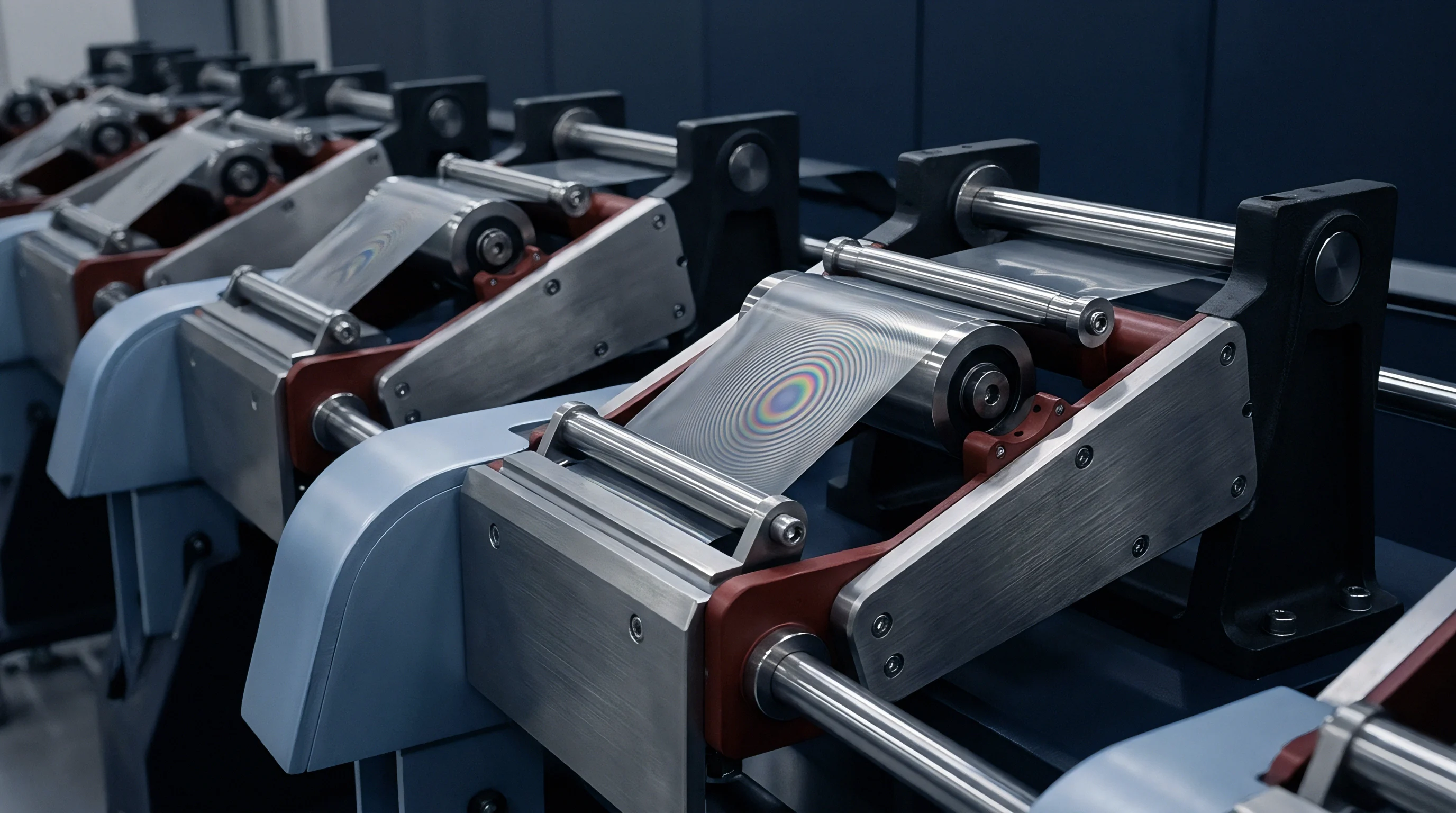
Trapped electrolyte within internal void spaces exerts outward pressure when squeezed by expanding electrodes. As a graphite anode swells during lithiation, liquid inside separator pores is displaced dynamically. If micro-cracks restrict fluid channels or alter local permeability, localized hydraulic pressure surges build up inside the flaw.
This fluid pressure acts like a mechanical wedge, forcing crack faces apart and elevating effective stress intensity K_I at the tip.
Hydraulic wedging works hand in hand with polymer plasticization. Fluid pressure forces solvent deeper into newly exposed polymer at the crack tip, accelerating environmental stress cracking. During rapid charging, when anode expansion occurs within minutes, localized electrolyte pressures inside micro-cracks can exceed 0.8 MPa.
Under these conditions, cracks propagate under surprisingly low external loads. This hydraulic fracturing effect turns stable surface notches into fully penetrating pinholes, shorting positive and negative electrodes.
Overlooking sub-critical crack growth under swelling stress leads directly to localized internal shorts during high-rate cycling, triggering thermal runaway and forcing complete rejection of the batch compliance record.
Strain
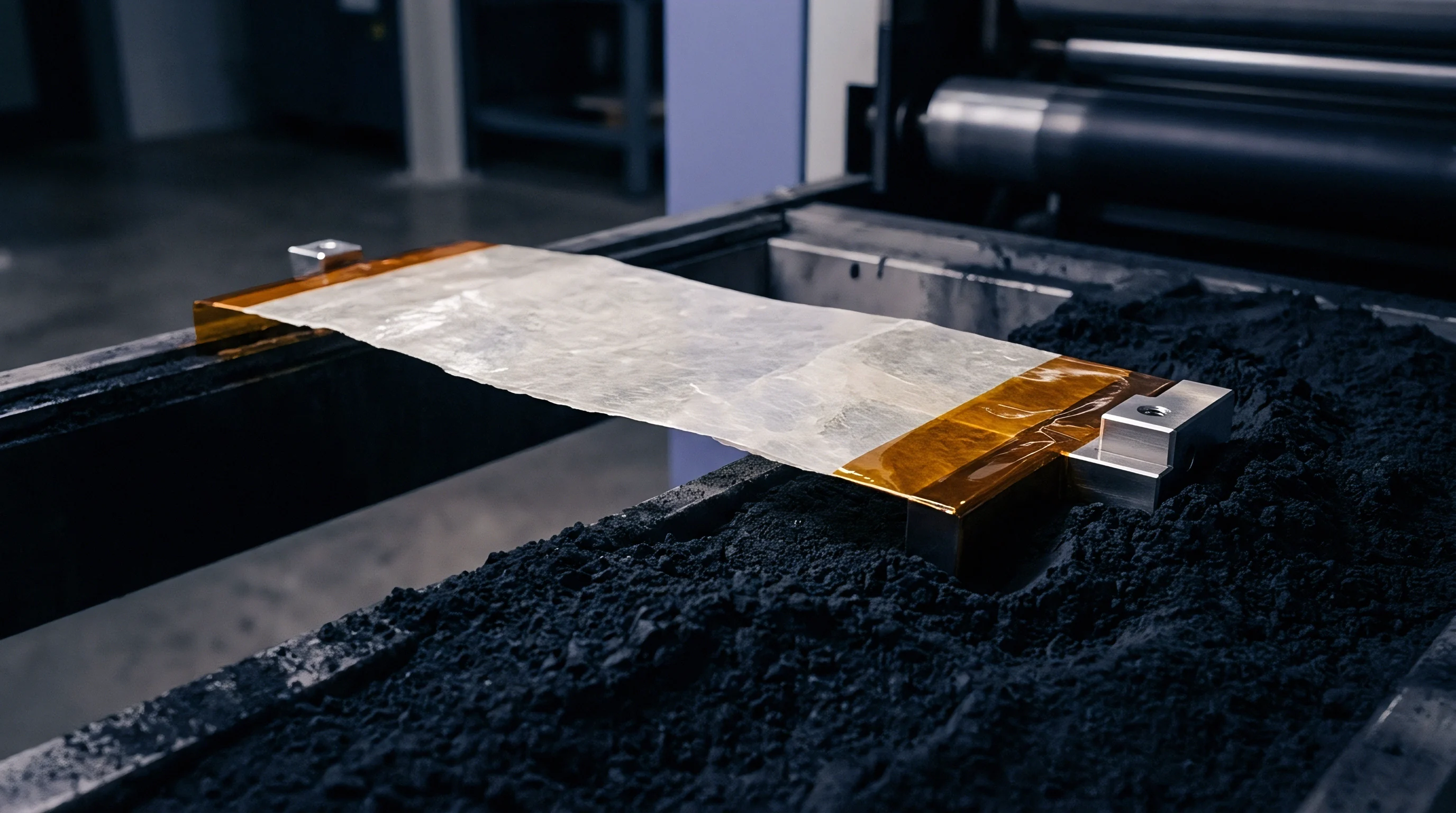
Assembly tooling and operational electrode swelling subject internal separators to complex multi-axial stresses. Different battery form factors create distinct mechanical boundary conditions on the separator. Cylindrical cells generate steady circumferential hoop stress during winding, along with radial compression from the outer steel can.
Prismatic and pouch cells apply planar stack pressures between 0.3 MPa and 1.5 MPa under static pre-load, cycling up to 3.5 MPa as silicon-graphite anodes swell during charging.
Complex strain fields redirect micro-crack propagation paths. Under pure mode-I tension, cracks extend perpendicular to applied stress. In jellyrolls and stacked cells, however, normal stack pressure combined with in-plane friction introduces mode-II (in-plane shear) and mode-III (out-of-plane tear) stresses.
In swollen polyolefin separators, mode-II shear reduces the strain energy release rate needed to drive tearing by nearly 35% compared to pure mode-I tension, accelerating crack growth across electrode edges.
Cyclic Stack Pressure and Anode Expansion
Lithium intercalation into graphite or silicon-composite anodes drives periodic volume expansion across the cell stack. Standard graphite anodes expand by roughly 10% to 12% at full charge, while silicon-blend anodes swell between 25% and 40%. This dimensional shift pinches the electrolyte-swollen separator against rigid ceramic coating layers.
High spots or particle agglomerates in the electrode coating concentrate global stack pressure onto localized 10 µm to 50 µm regions of the web.
Cyclic compressive creep flattens the separator’s pore structure, dropping local porosity from a nominal 40% to under 22% in high-pressure zones. At the same time, Poisson expansion forces the plasticized film to expand laterally against adjacent uncompressed polymer. These lateral strain gradients generate high shear stresses along compression boundaries.
Micro-cracks initiate along these interface zones and propagate laterally through the plasticized film under minimal applied load.
- Map localized stack pressure profiles across active cell faces using calibrated tactile pressure films at minimum and maximum states of charge.
- Calculate local yield criteria for swollen polyolefin substrates by combining planar normal stress with friction-induced shear vectors.
- Determine minimum acceptable separator thickness under peak compression to avoid pore collapse and local yielding.
- Select separator ceramic coating morphology that balances surface hardness against load-distribution across the plasticized polyethylene base.
- Specify allowable slitting burr heights on current collector foils so burr length never exceeds 30% of compressed separator thickness at maximum stack pressure.

Where Does Stack Pressure Accelerate Micro-Crack Tear?
Pouch and prismatic cell formats experience sharp stress concentrations along the outer perimeter of the active stack. Near rounded electrode corners and slitting edges, stack pressure drops from full nominal compression to zero over less than 1 mm. This steep gradient induces high out-of-plane bending moments and transverse shear strain within the swollen separator, especially as pouch cells expand during formation.
Planar stack pressures above 2.0 MPa combined with electrolyte plasticization reduce the critical strain threshold for transverse tear initiation in wet-process separators from 12% down to under 3.5%.
As a cell undergoes thermal expansion or swelling, the separator shifts relative to fixed electrode edges. High friction between the swollen polyolefin and ceramic-coated electrodes anchors the center of the sheet, forcing differential thermal and swelling strains onto unconstrained margins. Edge micro-cracks open rapidly under these concentrated strains, tearing inward toward the active area and creating pathways for internal shorts.
Adopting ISO 15814 annex requirements for wet mechanical creep testing turns incoming raw material specifications into an enforceable contractual quality benchmark rather than a loose supplier guarantee.
Screening
Catching microscopic flaws and web non-uniformities prior to cell winding requires rigorous inline and offline diagnostics. Micro-cracks under 10 µm wide easily pass low-resolution optical inspection systems on high-speed slitters. While the web is dry, operational tension keeps these micro-notches pinched tight.
Once exposed to carbonate solvents inside the cell, plasticization allows them to gape open under minimal strain, forming pathways for electrical breakdown. Laboratory teardown evaluations show over 60% of field short circuits originated from edge micro-notches that had passed standard optical quality gates.
Robust quality verification combines optical, ultrasonic, and pneumatic inspection. High-speed vision systems with multi-angle dark-field LED lighting detect diffraction patterns from micro-crack edges down to 2 µm resolution at web speeds up to 200 meters per minute. Non-contact ultrasonic attenuation detects local density shifts and micro-void concentrations before physical tearing occurs, letting operators flag damaged web sections prior to cell assembly.

Acoustic Emission Tracking and Defect Localization
High-frequency elastic wave monitoring detects micro-structural damage events in real time as the web is tensioned. As polyolefin tie chains yield or crack tips advance, energy releases as transient acoustic waves between 100 kHz and 1 MHz. Sensors mounted on web guiding rollers record these acoustic events in dry or swollen material.
Burst count and peak amplitude correlate directly with the crack growth rate da/dt.
Acoustic emission tracking separates benign elastic stretching from irreversible micro-fracture. Elastic deformation generates low-amplitude continuous noise, while micro-crack initiation and fibril rupture produce high-amplitude transient bursts. Signal processing algorithms use arrival times across sensor arrays to pinpoint micro-cracks across the web width to within 0.5 mm spatial accuracy, catching pinholes before they can short adjacent electrode layers.
| Inspection Technology | Detection Limit (µm) | Max Line Speed (m/min) | Primary Defect Target | Inline Capability |
|---|---|---|---|---|
| Dark-Field Optical Vision | 2.0 ± 0.5 | 250 | Slit edge micro-notches, inclusions | Yes |
| Ultrasonic Attenuation | 5.0 ± 1.0 | 150 | Density variations, micro-crazing | Yes |
| Acoustic Emission Monitoring | 1.0 ± 0.2 | 100 | Fibril rupture, active crack growth | Yes (Rollers) |
| Air Permeance / Gurley Drift | N/A (Bulk Area) | 50 | Pore structure collapse, macro-voids | Offline / Sampling |
| High-Voltage Spark Testing | 0.5 ± 0.1 | 180 | Penetrating pinholes, conductive flaws | Yes |
Porous Structure Inspection and Tensile Profiling
Combining optical web monitoring with pneumatic resistance testing establishes material quality across master rolls. Standard Gurley air permeance testing per ASTM D726 measures the seconds needed for 100 cc of air to pass through a set web area under controlled pressure. Localized drops in Gurley time across a slitted web indicate elevated porosity or micro-cracks; a sudden shift from a 220-second baseline down to under 140 seconds signals micro-void coalescence or edge tearing.
Inline tensile stress profiling applies controlled strain pulses in both machine and transverse directions to evaluate fracture toughness on the fly. Load cells track subtle, sudden stress drops that signal micro-crack opening under tension. Keeping transverse tension under 1.2 N/cm during converting suppresses sub-critical crack growth along slit edges while maintaining proper winding tightness.
1. Sample full-width master rolls at 500-meter intervals during primary slitting.
2. Immerse sample separator ribbons for 24 hours in a standard ethylene carbonate and ethyl methyl carbonate solvent mixture at 25 degrees Celsius.
3. Mount swollen specimens in a temperature-controlled tensile fixture equipped with a long-distance optical microscope and acoustic emission sensors.
4. Perform uniaxial tensile pulls in both Machine Direction and Transverse Direction at a constant crosshead speed of 10 mm per minute up to the yield point.
5. Record critical stress intensity factor, yield stress, and acoustic burst count to verify compliance against raw material specifications.
6. Reject the entire master roll lot if swollen Transverse Direction yield stress drops below 25 MPa or if sub-critical acoustic emission events register below 50% of maximum yield strain.
Whether non-destructive high-frequency ultrasonic scanning can reliably isolate sub-micron edge defects on high-speed slitting lines before winding remains an unresolved quality control challenge.
Allowance
Commercial supply contracts and technical specs use physical tolerances to divide risk between membrane converters and pack integrators. Yield loss on the assembly line and warranty risk in the field trace directly back to the micro-crack allowances set in incoming material specs. Master rolls with edge micro-notches break during high-speed winding, causing downtime costs that mount fast.
A single stoppage on a high-speed cylindrical winding line costs roughly $12,000 per hour in lost output alone, setting aside scrapped active materials and cell hardware.
Setting effective defect allowances requires clear limits on micro-notch length, notch frequency per thousand linear meters, and edge roughness. Quality agreements relying solely on dry visual criteria leave buyers unprotected against swelling-induced crack propagation. Procurement contracts ought to link web acceptance directly to wet-state mechanical performance, defining firm thresholds for modulus drop, swollen puncture resistance, and transverse tear strength.
Yield Calculations and Web Handling Limits
Slitting speed, roll tension, and ambient humidity determine net converted web yield on production lines. Converting operations create micro-notches whenever shear blade alignment drifts outside tolerance. Blade overlap, side clearance, and rake angle directly govern edge quality; for instance, a side clearance greater than 10 µm causes plastic tearing instead of clean shear cutting, leaving continuous micro-notches along the margin.
Sudden tension spikes quickly ruin yield.
Web-handling equipment requires tight closed-loop tension control to keep operating stress below the sub-critical crack growth threshold. For swollen wet-process polyethylene, total web tension cannot exceed 0.5% machine-direction strain during assembly. Managing swelling expansion requires dynamically tuning roll winding tension profiles, dropping applied tension as the roll diameter grows to prevent inner-layer buckling and micro-notch formation.

Warranty Seams and Format Risk Boundaries
Contractual liability becomes murky when cell manufacturing flaws interact with pack-level mechanical constraints. Cell vendors frequently blame field short circuits on excessive stack pressure or thermal expansion driven by the pack enclosure. Integrators counter that short circuits originate from separator defects present in the delivered cells.
An incoming web inspection process establishes baseline material compliance before separator rolls ever enter assembly lines.
Cell format dictates the commercial risk of micro-crack defects. Large-format prismatic and pouch cells store substantial energy in each unit, so a single internal short destroys a costly assembly and risks a major pack recall. Cylindrical designs dilute single-cell failure risk through parallel wiring and passive containment, but higher cell counts increase the odds of including at least one defective separator.
Tying web tension limits, blade maintenance schedules, and stack pressure allowances to the reality of solvent plasticization protects yield and shields integrators from unexpected warranty costs.