Meaning
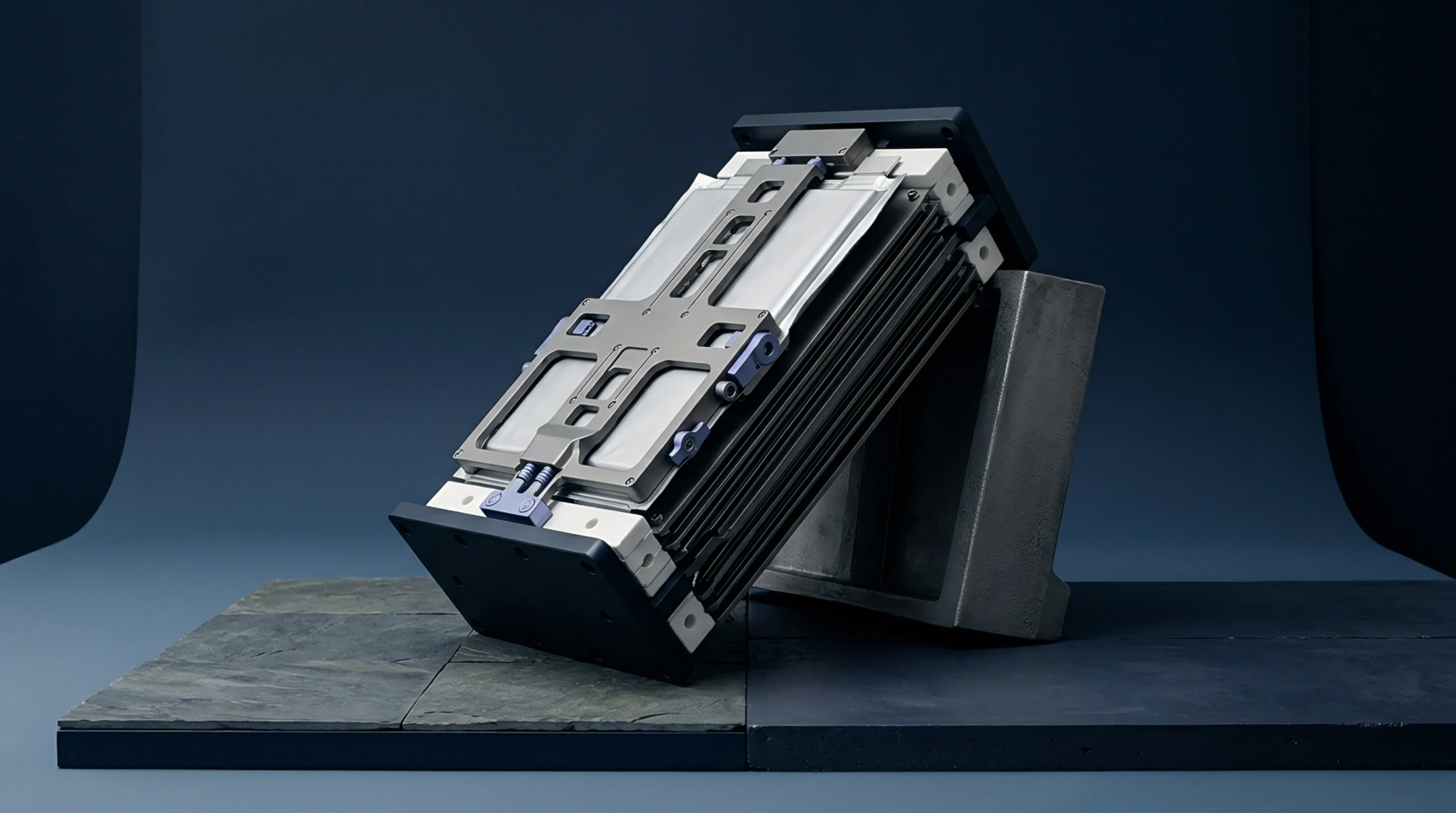
Mechanical compression force exerted by hardware frames against the boundaries of a prismatic or pouch battery stack defines end plate stress distribution. This end plate stress distribution indicates how uniformly pressure applies across the active surface area of internal components during operation. Designers monitor this parameter to prevent cell warping or internal separator damage that occurs under uneven loading conditions.
Force measurements taken during assembly or simulated cycling identify potential failure points where local pressure exceeds the operational limit of the housing materials.
Compression Control
Engineers adjust tightening torque on tie rods or bolts to modify the end plate stress distribution across the module stack. Uniform pressure maintains contact between current collectors and electrodes to reduce electrical impedance. High pressure gradients lead to lithium plating or mechanical fatigue in the stack components over extended service life.
Calibration of the clamping mechanism ensures that thermal expansion of the cells does not cause localized yielding in the end plates.
Structural Interaction
Rigid metal components protect internal elements against external vibrations or shock loads through proper end plate stress distribution. Proper load management ensures that the stack behaves as a single mass instead of independent sheets under inertial forces. Excessive force results in permanent plastic deformation of the casing, while insufficient force allows internal movement that degrades the electrical connection.
Performance Limitation
Electrochemical stability relies on consistent end plate stress distribution to suppress volume changes in the active materials during charge or discharge cycles. Inconsistent clamping forces induce variations in the chemical activity rate across the electrode surface, leading to uneven state of charge distributions among connected cells. Cell degradation patterns often correspond directly to zones of irregular contact pressure identified through pressure mapping sensors.
Proper plate stiffness ensures that internal resistance remains stable despite cyclic expansion of the active materials.