Meaning
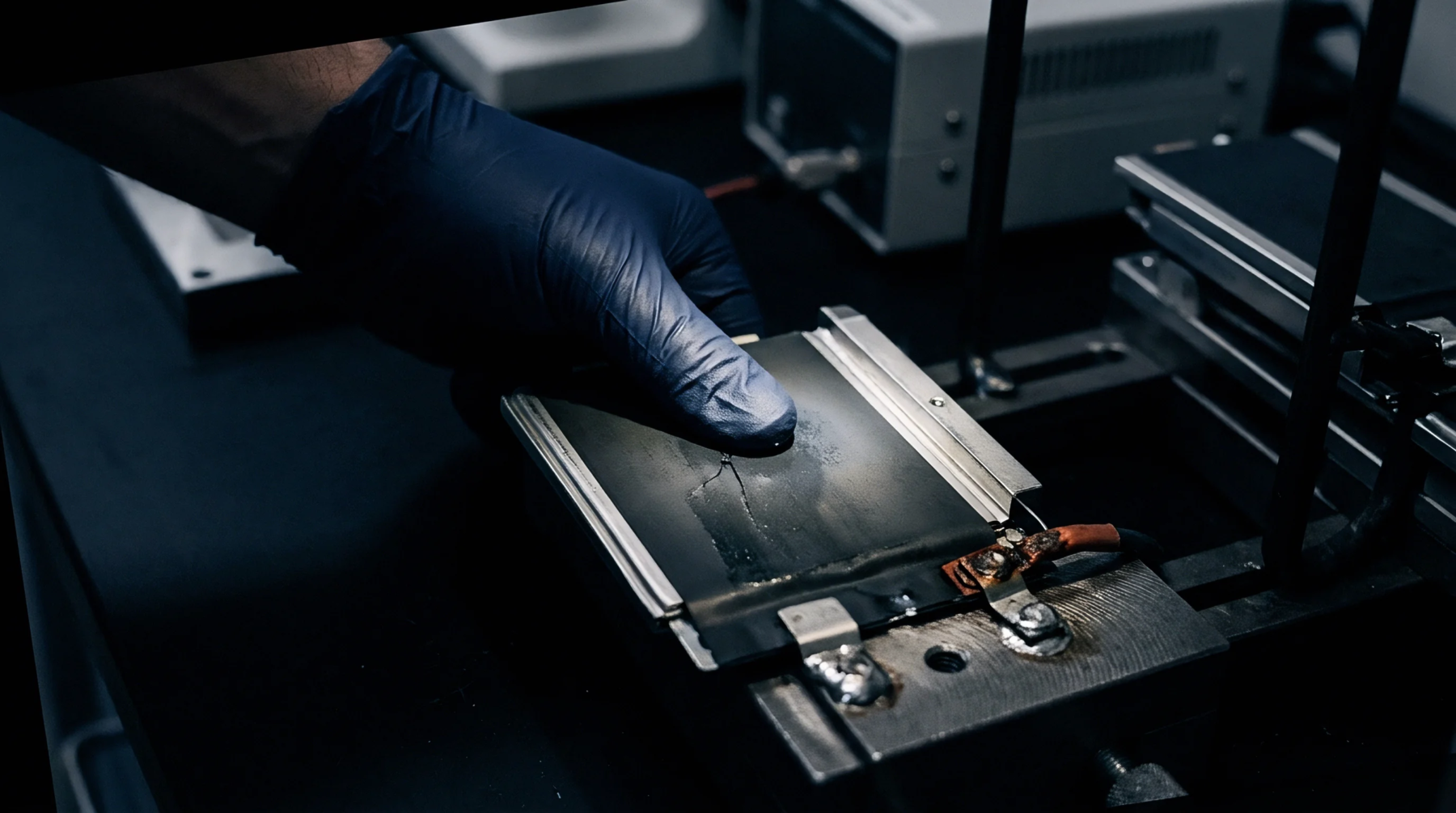
Electrochemical byproduct discharge occurs during the initial charging of a lithium ion cell when electrolyte components decompose on the anode surface. Formation gas evolution creates a volume of H2, CO, and CO2 that requires extraction to ensure electrode contact. Management of this gas volume determines the dwell time in aging racks and the final throughput capacity of the manufacturing line.
Process Dynamics
Variations in the charging rate during the formation cycle dictate the rate at which gas emerges from the solid electrolyte interphase layer. High current densities accelerate decomposition and trap bubbles within the electrode stack, which prevents uniform lithiation and reduces long term capacity. Constant pressure applied by external clamps helps squeeze these gases toward the collection manifold.
Detection Methods
Mass spectrometry identifies the specific composition of the vented gas to verify the health of the chemical additives. Pressure sensors within the formation housing track the rise and fall of these volatiles to mark the end of the degassing phase. Precise measurement of this pressure spike allows for the termination of the formation protocol as soon as gas generation stops.
Quality Impact
Excessive amounts of entrapped gas lead to internal resistance increases and localized heating under high load conditions. Cells that retain large pockets of evolved gases demonstrate higher failure rates in early life cycle testing due to mechanical separation of the active material from the current collector. Consistent removal of all volatile compounds remains the primary requirement for achieving target energy density in high performance battery packs.