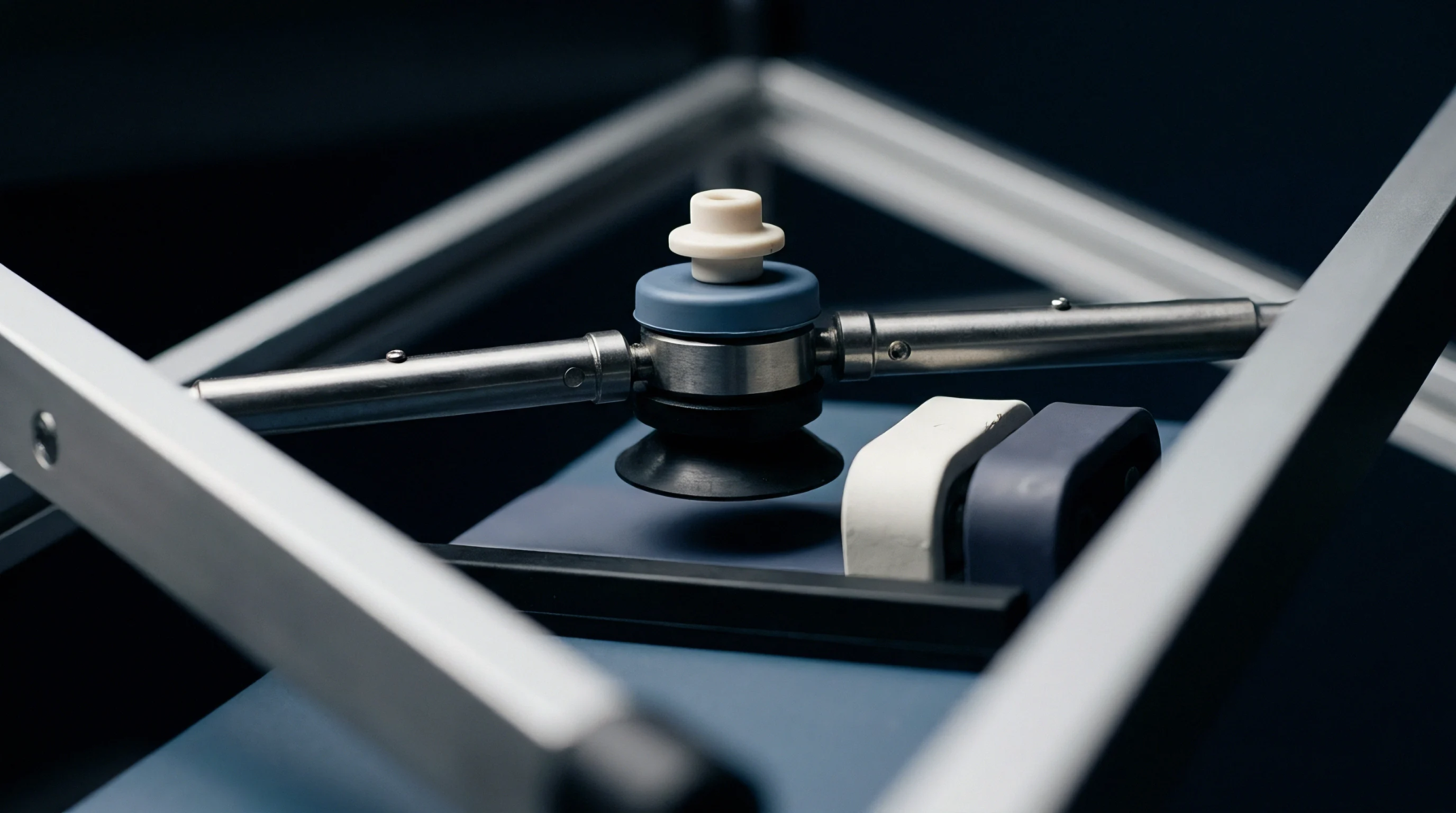
Vacuum Brazing Basics for Aluminum Thermal Management Plates
Vacuum brazing joins aluminum thermal plates flux-free via hard vacuum and magnesium vapor, demanding sub-0.15 mm gaps and precise 595°C thermal controls.
Heat transfer fluids composed of aqueous solutions of ethylene glycol or propylene glycol combined with corrosion inhibitors provide thermal management across liquid-cooled electrochemical energy storage packs. Formulated glycol-water coolant circulates through extruded aluminum cooling plates, serpentine ribbons, or chassis-integrated jackets to extract heat generated by internal cell impedance during cycling. The ratio of glycol to deionized water dictates fluid freezing depression, boiling point elevation, bulk viscosity, and convective heat transfer coefficients.
Additive packages passivate aluminum, copper, steel, and brazed joints against galvanic corrosion and erosion without increasing fluid electrical conductivity beyond safe isolation limits. Coolant performance criteria cease to apply to direct-contact immersion systems, where dielectric fluids replace aqueous mixtures to prevent catastrophic arcing across bare cell terminals.
Freezing point depression curves dictate the standard fifty-fifty volumetric mixture of water and inhibited ethylene glycol for temperate and sub-zero storage envelopes. Water provides high specific heat capacity and low dynamic viscosity, while glycol suppresses ice crystallization by disrupting the hydrogen-bonded water lattice. Increasing glycol concentration beyond sixty percent by volume raises fluid kinematic viscosity at sub-zero temperatures, which multiplies pumping power losses across narrow cooling channels.
Conversely, over-diluting the mixture below thirty percent glycol risks frost heave inside cold plates, bursting internal channel walls under freeze conditions. Operating viscosity profiles dictate whether cold-weather preheating circuits must warm the coolant reservoir before primary pack charging commences. Heat rejection capacity drops moderately as glycol content rises, requiring careful plate surface sizing during pack engineering.
Inhibitor chemistries preserve structural aluminum cooling channels against pitting, cavitation erosion, and galvanic oxidation induced by stray electrical potentials. Organic acid technology additives form microscopic mono-molecular passivation layers over bare metal, avoiding the abrasive precipitation common to legacy silicate or borate treatments. Coolant formulations must limit electrical conductivity below designated thresholds to prevent high-voltage isolation faults across pack chassis grounds during micro-leaks.
Dissolved oxygen, residual flux residues from brazed cold plate manufacturing, and mechanical shearing degrade carboxylate inhibitors over prolonged service cycles. Periodic testing of reserve alkalinity confirms whether the mixture retains sufficient neutralization capacity against glycol oxidation products such as glycolic and formic acids. Degradation of the inhibitor suite turns the fluid acidic, aggressively attacking cooling plate welds and cell casing walls.
Hydraulic pressure drops through micro-channel cooling plates scale with fluid density, viscosity, and volumetric flow velocity within the closed cooling loop. Low temperatures exacerbate pressure drop penalties, forcing coolant pumps to operate near peak power ratings to maintain required thermal uniformity across module banks. Laminar flow regimes inside thin plate channels reduce local convective heat transfer coefficients, widening temperature deltas between adjacent series-connected cells.
Cell temperature differentials wider than five degrees Celsius accelerate uneven cell capacity fade, triggering premature module retirement. Engineering pack manifolds demands balancing channel flow resistance so every parallel branch receives equivalent mass flow rates of coolant. Hydraulic design verifies that pump cavitating limits are never breached during rapid coolant acceleration cycles.
Vacuum brazing joins aluminum thermal plates flux-free via hard vacuum and magnesium vapor, demanding sub-0.15 mm gaps and precise 595°C thermal controls.
Expertise is a utility, not a secret. sentiention™ publishes its working knowledge as open reference: intelligence layer covering the materials it sources, the markets it enters, and the reference that serves both.