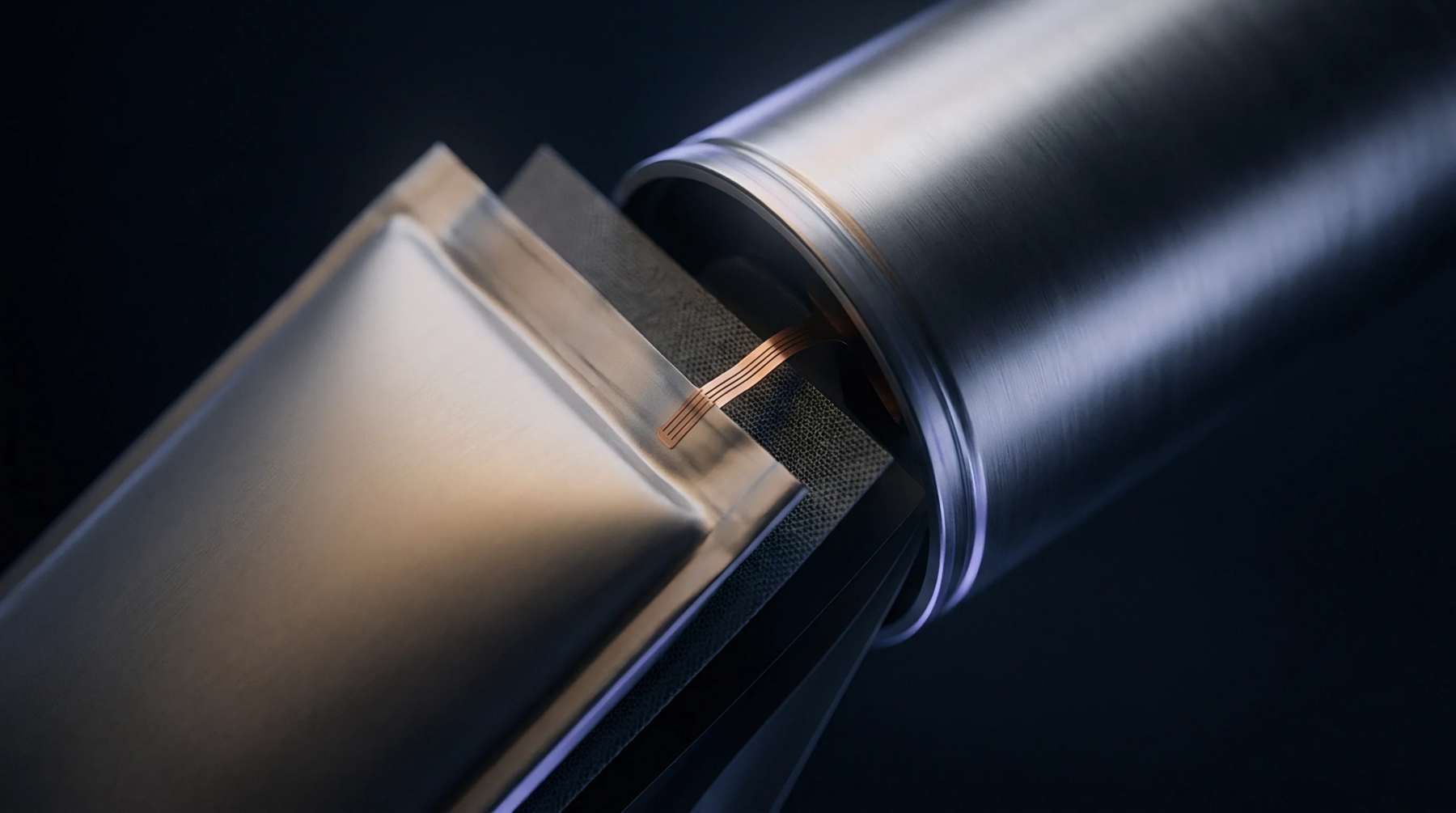
Bonded Cell Stacks against Serviceability Economics
Structurally bonding cell stacks eliminates module mass but transforms minor field defects into complete pack scrap liabilities.
This mechanical cutting and cleaning technique utilizes a highly concentrated stream of water pressurized to several thousand bar to slice through materials or remove surfaces. In battery recycling and pack dismantling, a high-pressure waterjet is used to cut open tough steel or aluminum housings and wash away adhesive bonds. Sourcing teams select this equipment to automate the initial stages of recycling lines and increase processing throughput.
The process holds a clear limit, as it cannot be used directly on live, uninsulated electrical components due to the risk of short circuits and shock hazards. Sourcing contracts define the water pressure, flow rate, and nozzle specifications.
Achieving precise cuts in thick metal enclosures requires driving water through a tiny sapphire or diamond nozzle to create a high-velocity stream. For hard metals, an abrasive substance, such as garnet sand, is mixed into the water stream to enhance its cutting power. The high-pressure waterjet erosion occurs at the microscopic level, slicing through thick plates without generating heat or mechanical distortion in the workpiece.
This lack of thermal impact is highly advantageous when dismantling battery packs, as it avoids triggering thermal runaway in adjacent cells. Process engineers control the standoff distance and nozzle travel speed to ensure clean, consistent cuts across different pack geometries.
Utilizing this waterjet technology in recycling centers allows for the rapid separation of aluminum plates and steel brackets. The water stream can also wash away the soft potting compounds and thermal pastes that are used to secure cells within modules. Sourcing teams choose closed-loop water treatment systems that filter out the abrasive particles, metal chips, and adhesive residues, allowing the water to be recycled and reused.
This filtration minimizes waste generation and lowers the overall environmental footprint of the recycling facility. Procurement managers verify that the equipment meets local industrial water safety and disposal regulations.
Sourcing managers evaluate waterjet systems based on pump reliability, nozzle life, and automated programming capabilities. The capital equipment contract should include service packages that cover high-pressure seal replacements, pump maintenance, and software training for operators. Sourcing decisions prioritize systems that integrate easily with robotic arms to allow for fully automated, three-dimensional cutting paths on variable pack designs.
Reliable suppliers must guarantee the prompt supply of wear parts and consumables to prevent expensive downtime on the dismantling line. Strategic procurement of these systems ensures high recovery rates of clean materials from decommissioned battery packs.
Structurally bonding cell stacks eliminates module mass but transforms minor field defects into complete pack scrap liabilities.
Expertise is a utility, not a secret. sentiention™ publishes its working knowledge as open reference: intelligence layer covering the materials it sources, the markets it enters, and the reference that serves both.