Thermal Strain Optimization and Microstructural Craze Resistance in High-Conductivity Tooling Alloys
Optimizing thermal strain in high-conductivity tooling alloys prevents microstructural craze initiation through tailored precipitation aging and conformal heat removal
Heat
Transient thermal cycling inside high-takt battery pack injection moulds sets up severe internal stress fields. When high-conductivity copper tooling alloys are selected to pull heat out of thick thermoplastic structural ribs or cast aluminum module frames, their hot cavity surfaces expand cyclically against colder, rigid substrate cores. This constrained expansion generates the dynamic strain profiles that drive mechanical fatigue in the insert.

Thermomechanical Strain Profiles in High-Conductivity Mould Inserts
Solidifying thermoplastic enclosures shot after shot establishes steep temperature differentials across copper tool faces. Cavity surfaces expand against the colder backing core to produce compressive surface strain during injection, which flips into tensile strain as the part cools and ejects. Surface temperatures often spike to between 180 and 240 degrees Celsius within sub-second injection windows, while internal cooling channels sit at 15 to 30 degrees Celsius.
That difference concentrates steep strain gradients right at the working face.
Steep thermal drops across adjacent tool zones force differential expansion that the surrounding bulk material cannot accommodate elastically.
Specifying high-takt tooling materials always forces a trade-off between thermal transfer and yield strength. Precipitation-hardened copper-chromium-zirconium (CuCrZr) and copper-beryllium (CuBe) alloys offer thermal conductivities between 200 and 320 Watts per meter-Kelvin, compared to just 20 to 45 Watts per meter-Kelvin for standard tool steels. However, the higher coefficient of thermal expansion in copper alloys increases the total expansion stroke for every degree of temperature swing.
- Establish base cooling liquid temperatures before cycle initiation.
- Monitor dynamic cavity surface temperatures using infrared sensors.
- Calculate spatial thermal gradients across active core surfaces.
- Adjust cycle pulse duration to limit maximum surface strain.
Calculating total strain amplitude requires separating the elastic and plastic components over the full cycle. Whenever localized thermal strain exceeds the alloy’s yield point at elevated operating temperatures, micro-plastic deformation begins to accumulate.
Thermal Expansion Mismatch and Cyclic Stress Fields
Differences in expansion rates across metallic phases create localized shear along grain boundaries. In precipitation-hardened copper tooling, second-phase chromium or beryllium particles expand at rates distinct from the surrounding copper matrix. Continual thermal cycling concentrates micro-scale stresses directly along these precipitate interfaces.
A temperature gradient exceeding 85 Kelvin per millimeter across a copper alloy insert surface generates localized thermal strains above 0.22 percent during rapid injection cycles.
Total calculated strain range determines whether tooling components survive high-volume production runs. Under the combined action of high heat flux and machine clamping tonnage, tool faces flex enough to push local stress well past nominal design limits.
| Alloy Designation | Thermal Conductivity (W/m·K) | Coefficient of Thermal Expansion (10⁻⁶/K) | Yield Strength at 200°C (MPa) | Craze Resistance Threshold (Cycles) |
|---|---|---|---|---|
| C17200 CuBe (TH04) | 105 – 130 | 17.5 | 980 | 1,200,000 |
| C18200 CuCr | 320 – 340 | 17.6 | 340 | 350,000 |
| C18150 CuCrZr | 300 – 325 | 17.8 | 420 | 580,000 |
| CuNi2.5Si (Low-Be Alternative) | 180 – 210 | 16.8 | 650 | 850,000 |
Failing to account for dynamic strain amplitudes when sizing inserts leads directly to early thermal fatigue cracking, premature tool retirement, and unscheduled line downtime.
Grain
Crystallographic orientation dictates how plastic deformation builds under cyclic thermal loads. Precipitation-hardened copper alloys rely on fine dispersed particles to pin grain boundaries and block dislocation movement, but long-term cyclic thermal strain at elevated temperatures alters these microstructural barriers and softens the matrix over time.

Precipitate Coarsening and Dislocation Pile-Up Mechanics
Second-phase precipitates in hardened copper alloys impede dislocation slip until thermal degradation takes over. Across hundreds of thousands of moulding cycles, elevated cavity temperatures coarsen the precipitating phases. In CuCrZr alloys, fine nanoscale chromium particles either dissolve back into solution or agglomerate into larger, less effective obstacles.
Dislocation networks bypass these coarsened precipitates through thermal activation. Slip bands concentrate along specific crystallographic planes to form localized strain bands, creating severe internal stress concentrations where dislocation pile-ups meet grain boundary intersections.
Fine precipitate dispersions suppress grain boundary sliding when cyclic operational temperatures remain below the secondary aging threshold.
As dislocation density accumulates, local matrix ductility falls. High local shear strain opens micro-voids around primary precipitates, introducing physical discontinuities into the high-conductivity insert.
Microstructural Craze Nucleation at Boundary Intersections
Subsurface microcracking begins wherever local plastic shear strains exceed the slip capacity of adjoining crystals. Craze networks then develop as clusters of micro-voids and intergranular fissures across surface layers subjected to the highest thermal gradients.
Craze formation in tooling alloys differs from polymer crazing because it involves metallic grain boundary decohesion and persistent slip band cracking. Tensile residual stresses formed during cooling pull these micro-voids apart at triple points throughout the grain structure.
- Precipitate coarsening mechanisms reduce boundary pinning capabilities when localized peak temperatures surpass aging limits.
- Dislocation pileup clusters generate microscopic shear stresses that exceed localized matrix yield limits.
- Intergranular void formation weakens grain boundaries under cyclic tensile thermal stresses.
- Phase boundary decohesion initiates microcracks along copper-chromium interfaces during rapid cooling transients.
Ongoing strain cycling forces isolated crazes to link up, transforming micro-fissures into visible macro-cracks across working tool surfaces.
Technical assessments frequently divide over whether microstructural crazing originates primarily from uncalibrated cooling fluid flow or from premature precipitate coarsening within the alloy matrix.

Mould
Cooling passage layout dictates how thermal gradients distribute across an insert during fast injection cycles. Additive manufacturing makes it possible to route conformal channels along complex three-dimensional cavity contours, eliminating the hot spots that accelerate microstructural breakdown in high-conductivity tooling.
Could Subsurface Conformal Geometry Reduce Thermal Gradient Severity?
Routing fluid passages along contour lines cuts localized expansion differentials. Traditional straight-drilled channels leave uneven wall thicknesses between the coolant and the cavity face, allowing heat to pool in thicker core sections. Conformal channels hold a consistent wall offset, steadying heat extraction across the whole insert face.
A thermal balance analysis of a CuCrZr insert for battery module end-plates demonstrates the mechanical advantage of conformal design. A baseline straight-drilled layout with a 6-millimeter wall offset produces a peak thermal gradient of 92 Kelvin per millimeter at core corners. Replacing this with a 3D-printed conformal network with a uniform 3-millimeter offset lowers the peak gradient to 34 Kelvin per millimeter under identical 8.5-second cycle parameters.
The calculated peak surface strain drops from 0.24 percent to 0.09 percent, keeping the alloy within its elastic operating range.
| Channel Configuration | Peak Thermal Gradient (K/mm) | Surface Strain Amplitude (%) | Estimated Tool Life (Cycles) | Insert Cost Variance (%) |
|---|---|---|---|---|
| Standard Straight-Drilled | 92 | 0.24 | 350,000 | Baseline (0%) |
| Baffled Deep-Hole Drilled | 68 | 0.17 | 520,000 | + 15% |
| Conformal Direct-Mapped (SLM) | 34 | 0.09 | 1,450,000 | + 85% |
| Conformal with Surface Nitriding | 31 | 0.07 | 1,800,000 | + 105% |
Lowering strain amplitude extends insert fatigue life while sustaining aggressive cycle times for battery housing production.
Surface Conditioning and Aging Regimes for Craze Suppression
Thermochemical surface treatments raise surface hardness on copper alloy contact faces and suppress slip band formation. Low-temperature gas nitriding or physical vapor deposition (PVD) applies a protective layer that resists micro-plastic deformation during heating pulses.
- Conformal fluid conduit mapping maintains uniform surface temperature differentials across complex cavity geometries.
- Surface nitriding layers increase localized yield strength without reducing substrate thermal conductivity.
- Preheat temperature regulation minimizes cyclic strain amplitude during initial production startup runs.
- Substrate alloy grain refining inhibits craze propagation across high-stress core zones.
Post-machining heat treatment schedules must be calibrated to restore precipitation states disturbed during EDM or milling. Over-aging lowers yield strength, while under-aging leaves unprecipitated solute that depresses thermal conductivity.
Matching cooling channel geometry to surface stress contours improves tool life far more reliably than simply boosting coolant volumetric flow rate.

Bench
Laboratory thermal cycling generates the quantitative baseline needed to predict insert durability under production loading. Thermomechanical fatigue testing isolates individual operational variables, validating craze resistance before high-value tooling alloys are cut for production moulds.
Low-Cycle Thermal Fatigue Rig Testing and Thermography
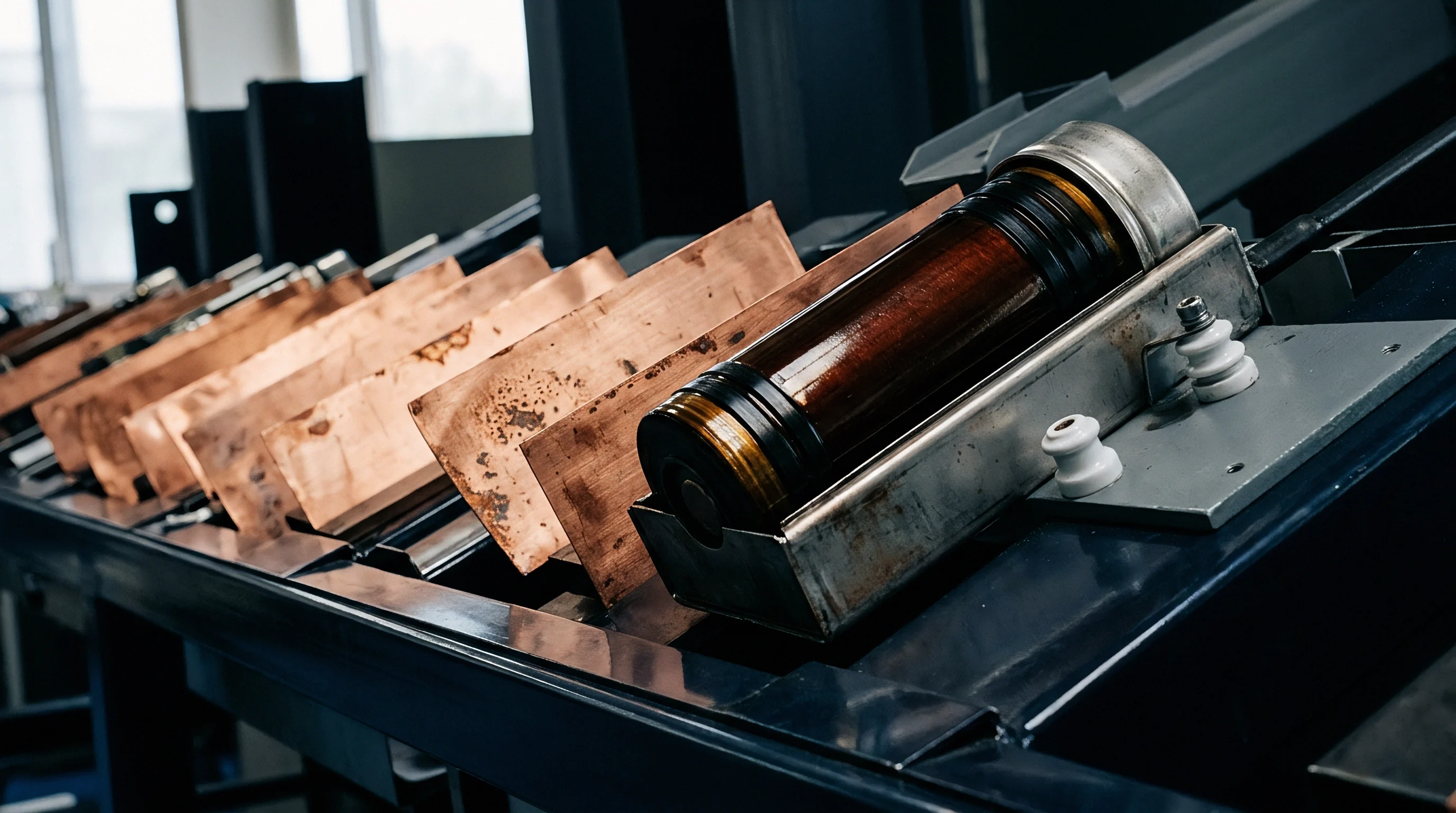
Specialized rigs pair rapid induction heating with pressurized fluid quenching to reproduce mould face dynamics. High-speed infrared thermography tracks thermal gradient development across test coupons in real time, mapping stress accumulation zones while measuring deflection, cycle count, and surface degradation under controlled strain limits.
Acoustic emission monitoring during cycling catches microcrack initiation long before fissures become visible under an optical microscope. High-frequency acoustic bursts signal initial grain boundary decohesion and craze nucleation, establishing dependable cycle-to-failure benchmarks.
Compliance with ASTM E606 thermal fatigue testing standards verifies that lot-specific alloy yield strength holds within five percent of specified design thresholds.
Recording cumulative acoustic counts over cycle life correlates microstructural damage progression with transient surface strain amplitudes.

Residual Stress Measurement by X-Ray Diffraction
Shifts in diffraction peaks map elastic lattice strains across high-conductivity tooling surfaces. High-density X-ray diffraction charts residual stress profiles before and after fatigue trials: tensile residual stresses accelerate craze propagation, whereas compressive surface stresses arrest crack growth.
- Lattice strain diffraction scans verify that residual tensile stress remains below material yield limits.
- Acoustic emission tracking detects early craze nucleation prior to visible surface cracking.
- Thermal diffusivity benchmarking confirms heat transfer capacity after repeated heat-treat cycles.
Mill inspection certificates establish strict compositional limits to prevent unwanted secondary phases.
Procurement addendums referencing ASTM E606 require full thermal fatigue life validation prior to tool sign-off, placing responsibility for premature cracking on the insert fabricator.
Ledger
Selecting tooling alloys for battery pack moulds balances raw material procurement costs against total operational life. Premium copper alloys carry higher billet and machining costs, requiring economic justification through shorter cycle times and lower tool replacement rates.
Tooling Alloy Selection and Capital Amortization Mechanics
High-conductivity copper alloys command higher raw material pricing but cut mould cycle times substantially. Calculating landed cost per moulded part requires amortizing insert procurement, CNC machining, heat treatment, and specialized surface coatings across total output volume.
A comparative financial analysis for a high-volume battery pack enclosure side-frame core illustrates the trade-off. Option A uses standard tool steel (1.2343 / H13) at an insert cost of 4,500 USD, running a 14-second cycle time with an expected life of 1,000,000 cycles. Option B uses high-conductivity CuCrZr (C18150) with 3D-printed conformal cooling channels at an insert cost of 12,800 USD, achieving an 8.5-second cycle time with a verified craze threshold of 850,000 cycles.
Across a production program of 1,700,000 enclosure parts requiring two CuCrZr inserts versus two H13 inserts, the machine time savings of 2,597 production hours at an hourly press rate of 95 USD yields a net operational saving of 230,115 USD, far outweighing the 16,600 USD difference in tooling expenditure.
| Tooling Option | Insert Material and Layout | Unit Insert Cost (USD) | Cycle Time (Seconds) | Tool Replacement Cadence (Cycles) | Net Tooling Cost per 1M Parts (USD) |
|---|---|---|---|---|---|
| Option A | Standard H13 Tool Steel | 4,500 | 14.0 | 1,000,000 | 4,500 |
| Option B | Standard C18150 CuCrZr | 8,200 | 10.2 | 450,000 | 18,222 |
| Option C | Conformal C18150 CuCrZr | 12,800 | 8.5 | 850,000 | 15,058 |
| Option D | Conformal C17200 CuBe | 16,500 | 8.0 | 1,500,000 | 11,000 |
Tooling capital pays back quickly when cycle time reductions lower machine-hour expenses across high-volume production schedules.

Quality Verification Clauses for Alloy Procurement Contracts
Purchase orders for high-performance copper alloys require verified chemical analyses and mechanical test certificates. Tolerances for beryllium content, grain size uniformity, and precipitate distribution must be explicitly stated in procurement agreements, as chemical impurities degrade thermal conductivity and accelerate craze initiation.
Tooling contracts assign replacement liability to the supplier if premature crazing occurs before agreed cycle thresholds. Incorporating mandatory X-ray diffraction residual stress checks and thermal diffusivity verification into first-article inspection ensures delivered inserts match engineering specifications.
Whether ultra-fine dispersion strengthening in next-generation copper-chromium-zirconium-scandium alloys can completely eliminate thermal craze initiation under sub-ten-second cycle times remains an open industrial question.