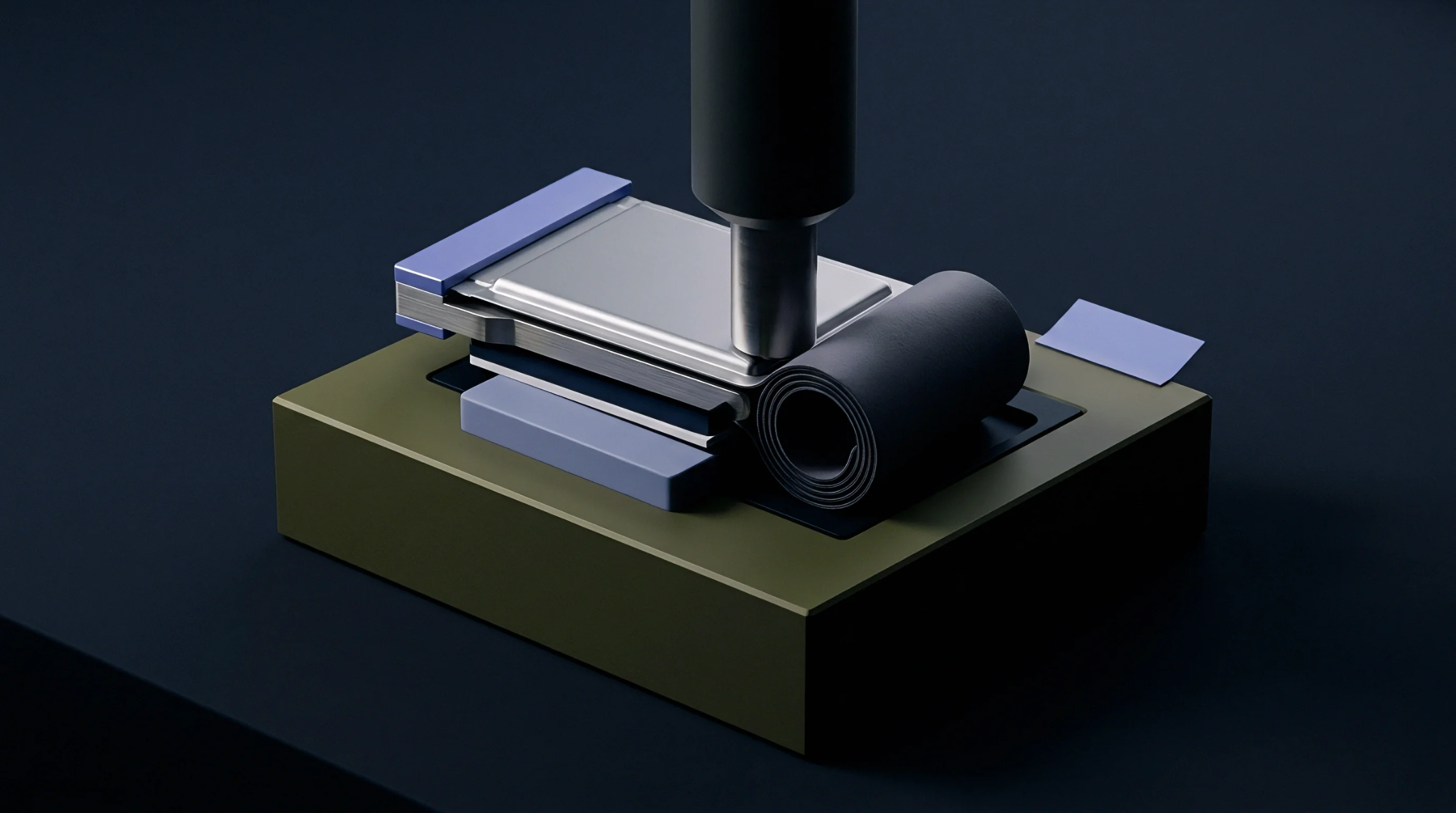
Cylindrical and Prismatic Cell Format Selection Criteria
Format selection dictates tooling capital, cooling architecture, and mechanical containment: cylindrical cells minimize stack stress, while prismatic cells maximize spatial fill.
Radial outward displacement describes the mechanical deformation within a cylindrical cell during the initial charging cycle of a lithium ion battery. This jellyroll expansion occurs when lithium ions migrate into the graphite lattice, forcing the anode layers to swell against the separator and the outer canister. Engineers monitor this phenomenon to ensure the physical integrity of the casing remains stable under pressure.
The condition typically reaches its maximum amplitude during the first full cycle before stabilizing at a slightly reduced volume for subsequent usage. Failure to account for this physical shift causes internal short circuits or mechanical rupture of the protective housing.
Dimensional requirements for battery modules depend on the precise measurement of this internal shift. Manufacturers design the housing with sufficient clearance to accommodate the outward force without inducing stress on the electrical terminals. A rigid enclosure provides a counterforce that prevents excessive electrode delamination.
If the container dimensions remain too tight, the resulting pressure limits ion mobility and shortens the expected service life of the unit. Designers calculate the maximum possible volume increase to determine the safety buffer required during assembly. This buffer protects the internal chemistry from localized microfractures that occur when the stack pushes against unyielding metal.
Engineers adjust the spacing during the cell construction phase to balance energy density against the physical limits of the raw materials.
Graphite particles undergo significant lattice changes when absorbing lithium atoms. This movement drives the outward force observed in the wound stack. Higher silicon content in the anode mixture increases the magnitude of the displacement because silicon expands significantly more than carbon during the intercalation process.
Chemists select additives to mitigate the rate of volume change by reinforcing the structural bonds within the electrode sheet. Stability of the electrode coating during these cycles prevents the loss of electrical contact between active particles. Effective materials manage the mechanical load by maintaining structural coherence while the internal geometry shifts.
High precision testing equipment tracks these microscopic changes to predict long term degradation patterns under various temperature conditions.
Operational thresholds for charging speed often link to the velocity of this physical change. Rapid movement of ions into the graphite causes uneven strain distribution across the wound layers. Thermal management systems regulate the heat generated by these chemical transformations to keep the expansion within manageable limits.
Excessive growth indicates poor stack quality or an accumulation of harmful byproducts within the electrolyte. Careful monitoring of the outer casing profile allows technicians to identify cells that display abnormal swelling patterns before they fail in the field. Uniformity in the internal architecture prevents localized hot spots that accelerate the degradation of the separator.
The total displacement volume dictates the density of the battery pack because adequate spacing is required for safe operation. Successful designs maintain consistent electrochemical efficiency throughout the life of the product by controlling the mechanical environment.
Format selection dictates tooling capital, cooling architecture, and mechanical containment: cylindrical cells minimize stack stress, while prismatic cells maximize spatial fill.
Expertise is a utility, not a secret. sentiention™ publishes its working knowledge as open reference: intelligence layer covering the materials it sources, the markets it enters, and the reference that serves both.