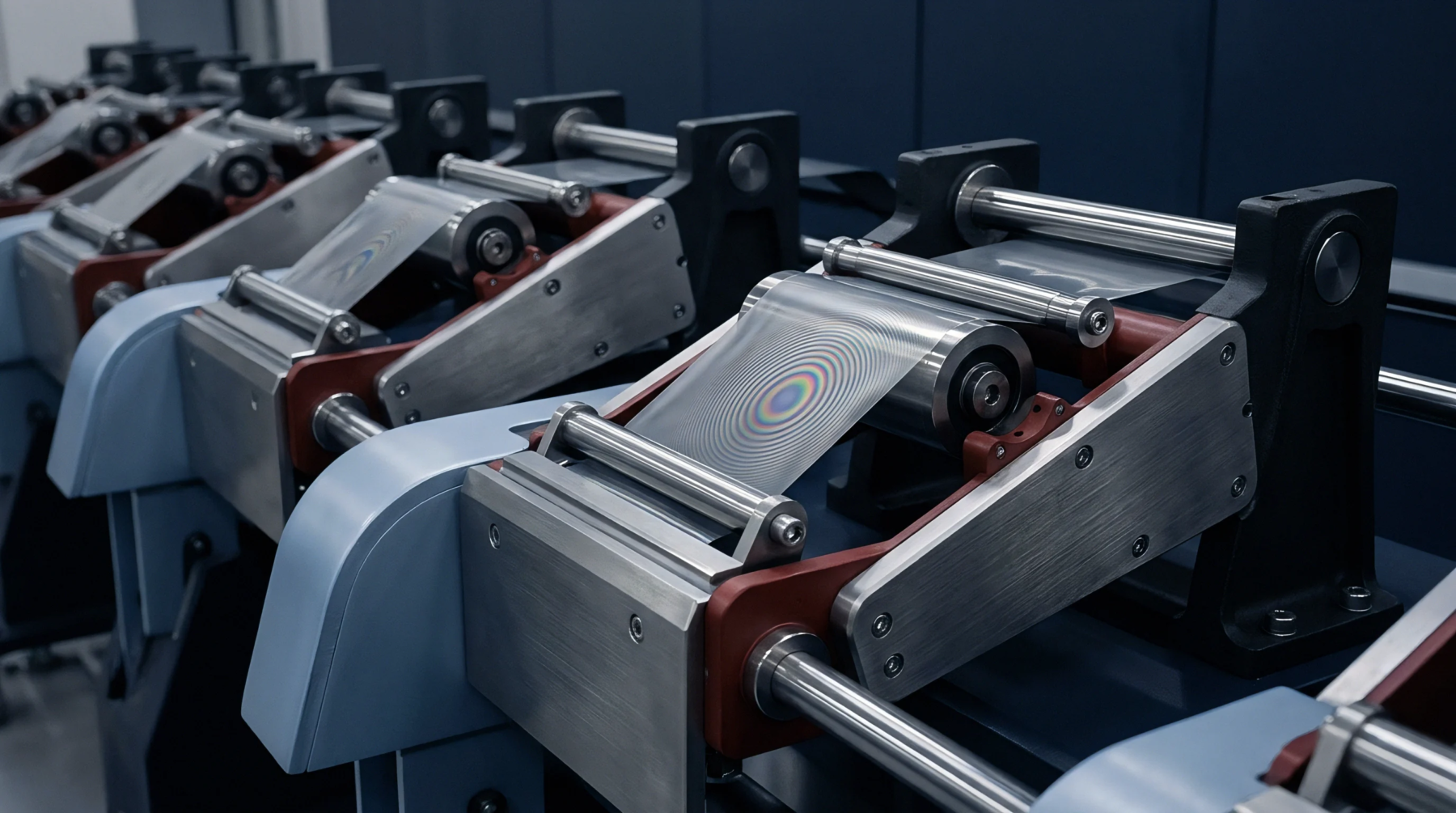
Grading Games in the Secondary Cell Market
Secondary cell sorting games artificially elevate capacity ratings via thermal and discharge rate manipulation, requiring strict incoming testing to avoid severe pack failure.
Analytical characterization defines the measurement of material removal rate through controlled beam ablation to map surface topography or subsurface compositional gradients. Laser etch depth profiling quantifies the precise volume of removed matter by correlating pulse frequency, power density, and pulse duration against the resulting crater geometry. This measurement confirms the spatial distribution of alloying elements or coating thickness within electrochemical components.
It operates by vaporizing defined zones, collecting the plume for spectroscopic analysis or measuring the crater bottom via optical interferometry. The procedure yields a map of material properties relative to the distance from the initial surface. This methodology allows engineers to verify that specific layers of battery anodes or cathodes meet required homogeneity standards for uniform ion migration during operation.
Photons interact with the target material through thermal vaporization or non-thermal photochemical bond breaking. Laser etch depth profiling relies on these two distinct mechanisms to define the erosion boundary at the atomic or microscopic level. High irradiance lasers vaporize the substrate while maintaining the structural integrity of the surrounding matrix to ensure that the measured profile represents the genuine material state rather than a measurement artifact.
Data output follows the integration of pulses per unit area, where the depth value corresponds to the cumulative photon flux. Deviations in the etch rate indicate non-uniformity in the density of the sampled material. This diagnostic provides the necessary evidence for quality control technicians to accept or reject production lots based on the thickness variance of functional films deposited onto current collectors.
Optical sensors detect the displacement of the material surface as the etching progresses to create a three-dimensional representation of the cross-section. Laser etch depth profiling distinguishes between surface contamination and deep-seated inclusions by tracking the intensity of spectral signals during the excavation process. Calibration requires a reference sample of known composition to establish the baseline etch rate for specific battery materials.
System software translates the light intensity collected from the plasma plume into elemental concentration values at precise depth increments. Changes in the plasma signal frequency provide a clear identification of interface transitions between different material phases. These analytical results support the validation of thin-film performance under accelerated degradation conditions.
The accuracy of this method depends on the stability of the beam alignment throughout the entire duration of the sampling session.
Industrial labs verify the performance of electrochemical cells by examining the penetration depth of ion-conducting additives or binder distribution. Laser etch depth profiling identifies variations in the structural composition that influence current distribution across the electrode surface. This technique detects microscopic density fluctuations that occur during the calendering of battery sheets, which otherwise remain hidden from bulk analysis tools.
Technical teams utilize these profiles to refine manufacturing parameters like rolling pressure or drying temperatures for active material slurries. Consistent control of etch parameters ensures that the analytical findings remain repeatable across multiple test runs on the same material lot. The technique provides a robust quantitative basis for assessing the long-term reliability of battery interface layers against specific performance requirements.
Secondary cell sorting games artificially elevate capacity ratings via thermal and discharge rate manipulation, requiring strict incoming testing to avoid severe pack failure.
Expertise is a utility, not a secret. sentiention™ publishes its working knowledge as open reference: intelligence layer covering the materials it sources, the markets it enters, and the reference that serves both.