Cylindrical Prismatic and Pouch Decisions before Tooling Money Moves
Fix format, compression pads, NRE tooling costs, and BMS regulatory boundaries before signing supply contracts to avoid costly re-tooling and unhedged liability.
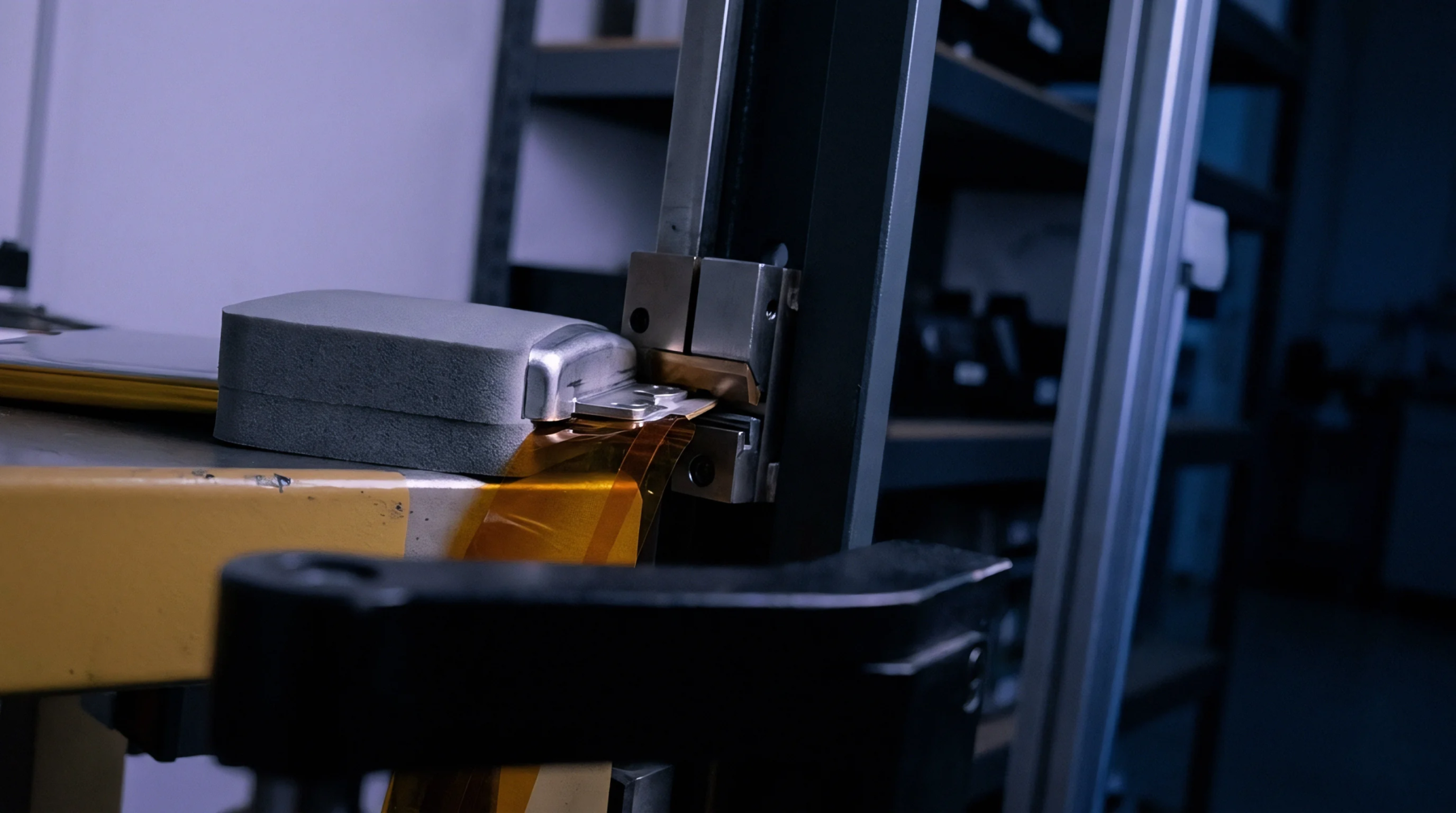
Specialized holding devices designed to orient and clamp battery cells and busbars in exact positions for high energy light joining. These laser welding fixtures ensure that the focused beam hits the material interface at the correct height and horizontal coordinate. They function by exerting uniform pressure across the terminals to eliminate air gaps between the electrical conductors.
Every fixture is matched to a specific battery module layout to maintain the alignment needed for robotic automation. The boundary of application stops at the physical clamp point where the mechanical arm moves into position. Integration involves connecting the device to a logic controller that cycles the pressure before the laser initiates its sequence.
Microscopic adjustments allow the laser welding fixtures to compensate for tiny variations in terminal height across thousands of cells. If the busbar stays loosely against the cell, the laser energy bounces off the gap and creates a failed joint or a hole. These tools use hardened locating pins to guide the battery tray into the primary welding chamber without drift.
Every module rests inside a custom bed that prevents shifting during the rapid movement of the welding head. Cooling channels integrated into the plate help dissipate the heat generated by the intense fiber laser between individual bursts. Maintaining a consistent temperature prevents the physical clamps from expanding and altering the focus offset.
Reliable production depends on the rigidity of these mechanical mounts over long shifts.
Sensors communicate the clamping status back to the master assembly computer to prevent firing the beam prematurely. High quality laser welding fixtures include vision windows that allow cameras to verify the location of the target area before the pulse begins. If the fixture is out of alignment, the software stops the line to prevent damaging the expensive copper busbar material.
The time required to cycle the pneumatic clamps adds to the total build duration of the energy module. Optimization here allows for faster transitions between cells to improve the unit count per hour. These variables move the purchasing decision for tier one manufacturers that operate high speed lines with low human oversight.
Each clamp ensures that the material stays flat while the metal melts and solidifies into a unified circuit.
Frequent usage stresses the mechanical springs and hydraulic seals that hold the modules in tension. Over several thousand units, the pins inside the laser welding fixtures can wear down and introduce unacceptable play into the alignment logic. Maintenance crews measure the position reproducibility to confirm that the tolerance remains within the sub millimeter range required.
This precision protects the delicate chemical seals at the top of the cell from being vaporized by a stray beam. Durable construction utilizes anti reflective materials near the target site to prevent the beam from scattering into sensitive sensors. When the clamp force remains steady, the weld pools are deeper and more reliable for long term current conduction.
Reliability is defined by the ability to hold these locations consistently across millions of electrical connection events.
Fix format, compression pads, NRE tooling costs, and BMS regulatory boundaries before signing supply contracts to avoid costly re-tooling and unhedged liability.
Expertise is a utility, not a secret. sentiention™ publishes its working knowledge as open reference: intelligence layer covering the materials it sources, the markets it enters, and the reference that serves both.