Meaning
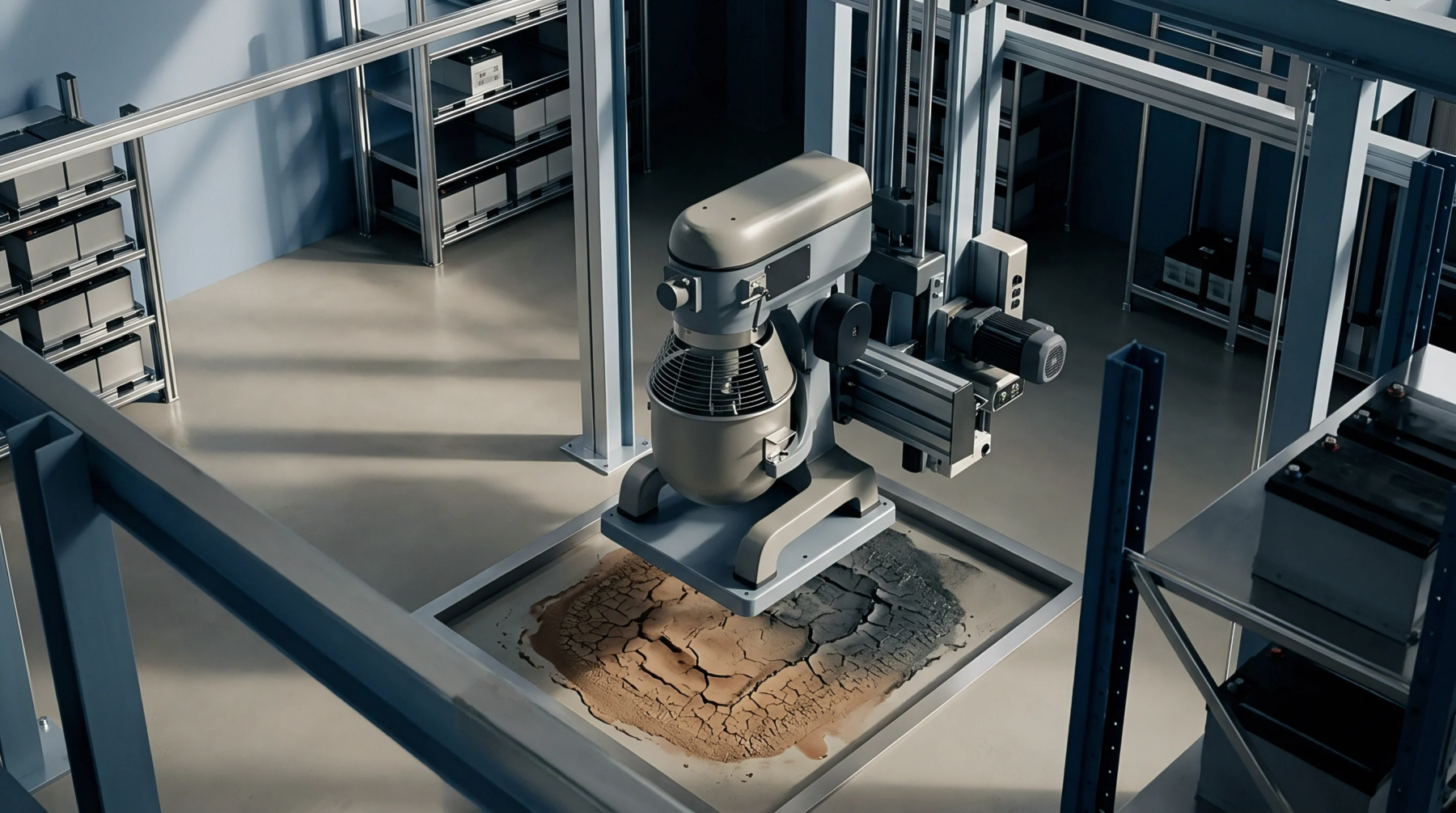
Mechanical disruption of a crystal structure occurs when local atomic planes deviate from their ideal coordinates. In secondary battery electrodes, lattice microstrain represents the non-uniform internal stress generated during synthesis or during repeated ion insertion. This distortion arises from dopants or phase transitions that warp the underlying crystal framework.
Physical Origin
Rapid cooling or elemental substitution creates localized tension within the metal-oxygen layers. When dopants like aluminum or magnesium substitute for transition metals, the ionic radius mismatch deforms the surrounding octahedra. This local distortion limits the movement of atomic planes during phase transitions, which helps suppress structural degradation.
It also introduces local electrostatic variances that modify the extraction energy of active ions. This atomic-level control is essential to balance structural stability during high-voltage extraction.
Diffraction Measurement
Analysis of X-ray diffraction profiles provides a quantitative measure of crystal distortion. Diffraction peaks widen in response to internal stress variations, a phenomenon analyzed using Williamson-Hall plots. Unlike grain size effects, stress-induced broadening increases with higher diffraction angles.
Advanced refinement software isolates these stress effects from thermal vibrations and instrument bias.
Degradation Risk
High internal stress often leads to microcracking when the host material undergoes volume changes during cycling. These cracks allow electrolyte penetration, which causes localized degradation and transition metal dissolution. Reducing internal stress during active material synthesis is therefore essential for long-term capacity retention.