Meaning
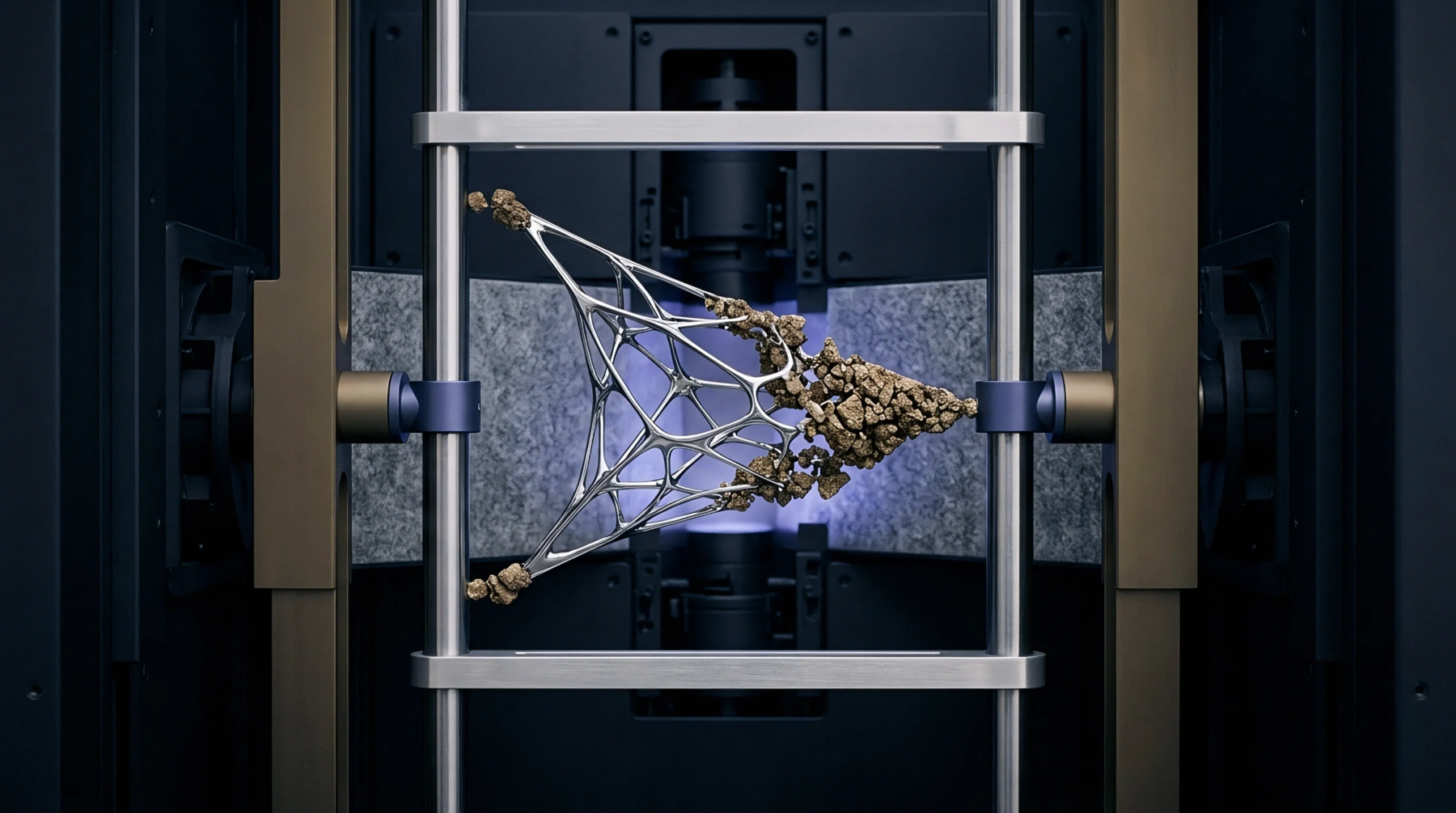
Distribution of internal mechanical stresses that remain in a solid material after the original source of those stresses has been removed affects the dimensional stability of battery components. These locked-in stresses arise during the rolling of current collector foils or the welding of cell terminals. A high residual stress field can trigger unwanted buckling or warping during cell assembly and subsequent electrochemical cycling.
Measuring these internal forces is necessary to ensuring the longevity of the pack structure.
Manufacturing Origin
Thermal gradients during rapid welding or non-uniform plastic deformation during foil rolling generate these locked-in forces. As the metal cools or stretches unevenly, different regions experience tensile or compressive stresses. This residual stress field remains dormant until subsequent mechanical processing or thermal cycling releases it.
Controlling the cooling rates and rolling tensions prevents these localized stresses from forming.
Mechanical Stability
Cell housings and busbars subjected to high cyclic loading are susceptible to premature fatigue failure if high internal stresses are present. Tensile stresses at the surface can accelerate crack initiation and propagation. Compressive stresses, conversely, can retard crack growth but may cause distortion elsewhere.
Balancing these forces ensures structural reliability.
Mitigation Strategy
Thermal annealing or mechanical stretching is utilized to relieve these internal stresses. Post-weld heat treatment restores the material equilibrium and reduces stress gradients.