Meaning
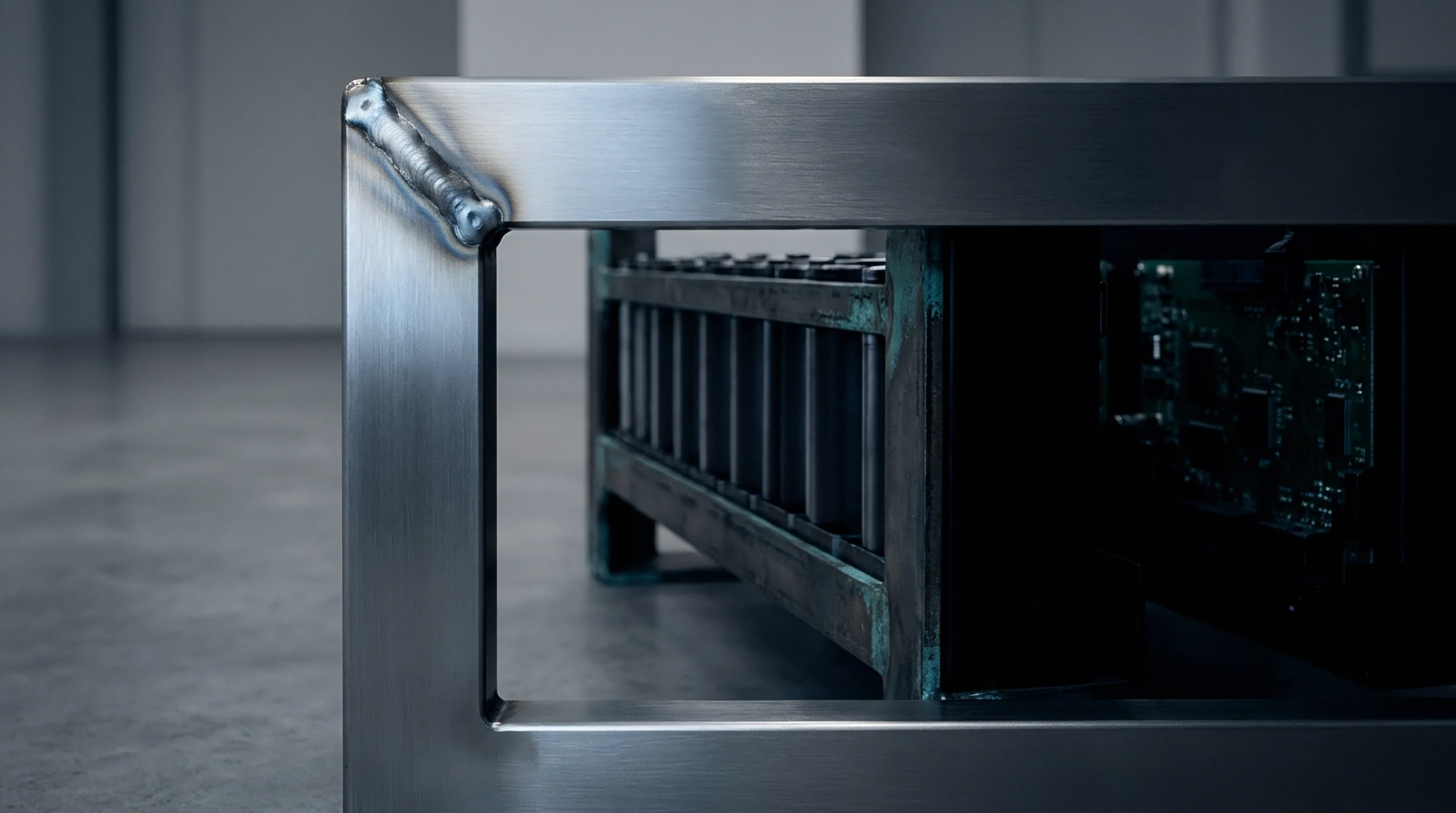
Structural weld discontinuity defines an elongated crack, parting, or separation occurring along the joined metallic perimeter of an electrochemical cell enclosure. Automated laser, ultrasonic, or resistance welding processes bond cell lids to prismatic cans, foil tabs to busbars, and current collector plates to header pins. A seam fissure represents a mechanical breach along this bonded seam, compromising the physical integrity and hermetic isolation of the cell structure.
This defect governs the structural containment boundary of the cell housing, ending where clean, full-penetration metallurgical bonding forms a continuous joint without separation.
Fracture Morphology
Microstructural stresses and localized thermal gradients induce crack propagation along the fusion zone or heat-affected perimeter. During automated laser welding of aluminum battery cans, excessive laser speed or improper beam focus generates hot cracks that open into a visible seam fissure upon rapid cooling. Solidification shrinkage pulls cooling metal apart if joint fit-up tolerances exceed strict gap limits.
The resulting fracture morphology ranges from surface hairline cracks to full-depth through-holes that expose internal jelly rolls directly to outside air.
Inspection Screen
Optical machine vision and non-destructive eddy current testing identify surface discontinuities during high-speed production runs. Inline cameras inspect the shiny weld bead around the prismatic lid perimeter, flagging geometric deviations, surface roughness, and dark lines characteristic of a seam fissure. Non-destructive X-ray micro-computed tomography evaluates internal seam depth, verifying that penetration exceeds minimum structural requirements without blowholes or weld root cracking.
Cells showing structural discontinuities undergo automated rejection prior to the electrolyte dosing station.
Rejection Boundary
Incoming lot verification criteria treat casing fractures as critical safety defects warranting immediate lot quashing. A seam fissure allows internal electrolyte solvent to weep onto external casing walls, leading to high-voltage isolation faults when assembled into series battery strings. Sourcing contracts mandate an absolute zero-defect threshold for weld separations on all cell housing envelopes.
Discovered defects during receiving inspections trigger root-cause investigations into laser power stability, clamping force calibration, and incoming sheet metal cleanliness.