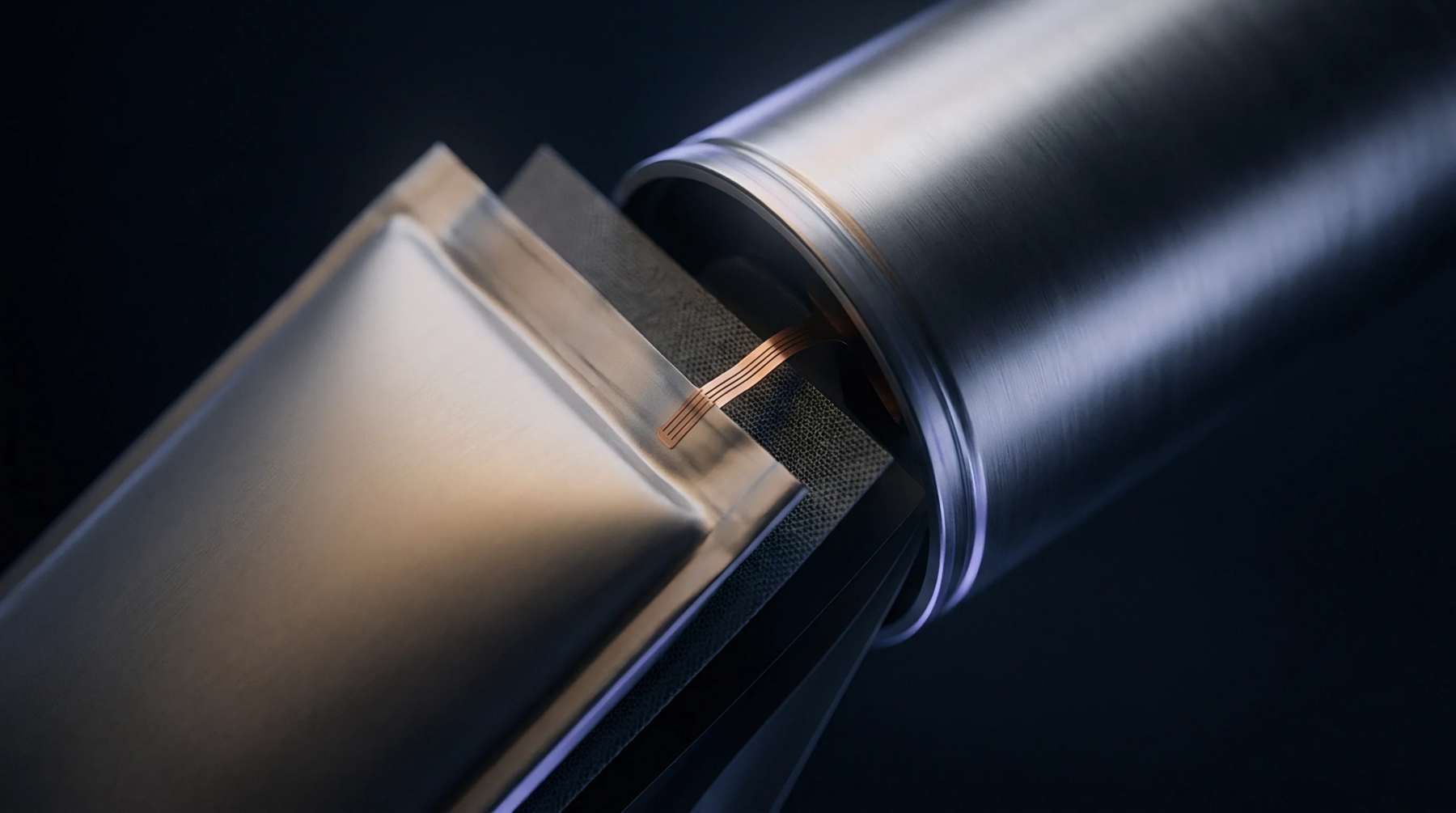
Bonded Cell Stacks against Serviceability Economics
Structurally bonding cell stacks eliminates module mass but transforms minor field defects into complete pack scrap liabilities.
Porous plastic membranes experience physical thinning when subjected to high compression forces inside a battery cell. This separator compaction refers to the irreversible collapse of the microscopic channels that facilitate ion transport between the positive and negative electrodes. It defines the point where the reduction in pore volume increases the local resistance of the stack and slows down the chemical reaction.
The phenomenon occurs primarily during high pressure assembly or as a result of active material expansion during the initial cycling of the cell. It covers changes in the structure of polyethylene and polypropylene films. It stops short of covering total structural rupture or electrical short circuits.
Internal architectures crumble under the weight of external forces applied to the rigid cell housing. Because separator compaction restricts the movement of electrolyte through the film, the device suffers from a restricted power output during high load events. Every micron of thickness lost reduces the space available for liquid ion transfer.
This reduction shifts the balance of the internal chemistry and increases the heat generated during regular operation. The structure of the polymer fibers determines the level of resilience against these mechanical loads. Maintaining high porosity is vital for achieving the fast charging targets required by modern electronic standards.
Observation shows that over pressed cells often fail earlier than those with optimized internal spacing.
Electrochemical pathways become obstructed as the open space within the polymer matrix is slowly eliminated. Managing separator compaction ensures that the battery can maintain a high current flow without suffering from localized hot spots. When thickness decreases beyond a certain threshold, the transport properties of the cell deviate significantly from the laboratory models.
This drift makes it difficult for the management system to estimate the state of health accurately. Manufacturers use specialized calendering techniques to pre condition the material against these specific compression patterns. Precise measurement of the film before and after pressing reveals the extent of the permanent structural change.
These data points assist in selecting the correct grade of polymer for high energy applications.
Selection of high modulus materials provides a defense against the pressures generated during electrode swelling events. Utilizing specialized separator compaction data allows pack designers to specify the correct clamping force for the modular array. The presence of reinforced layers or ceramic coatings can significantly improve the resistance to these mechanical effects.
These materials remain open and functional even when pressed under several megapascals of force. Engineers analyze the trade off between initial energy density and the long term stability of the ion path. Stable separator geometry ensures that the cycle life remains consistent through years of seasonal temperature fluctuations.
The absence of compaction facilitates high throughput ion flux required for peak discharge efficiency.
Structurally bonding cell stacks eliminates module mass but transforms minor field defects into complete pack scrap liabilities.
Expertise is a utility, not a secret. sentiention™ publishes its working knowledge as open reference: intelligence layer covering the materials it sources, the markets it enters, and the reference that serves both.