Meaning
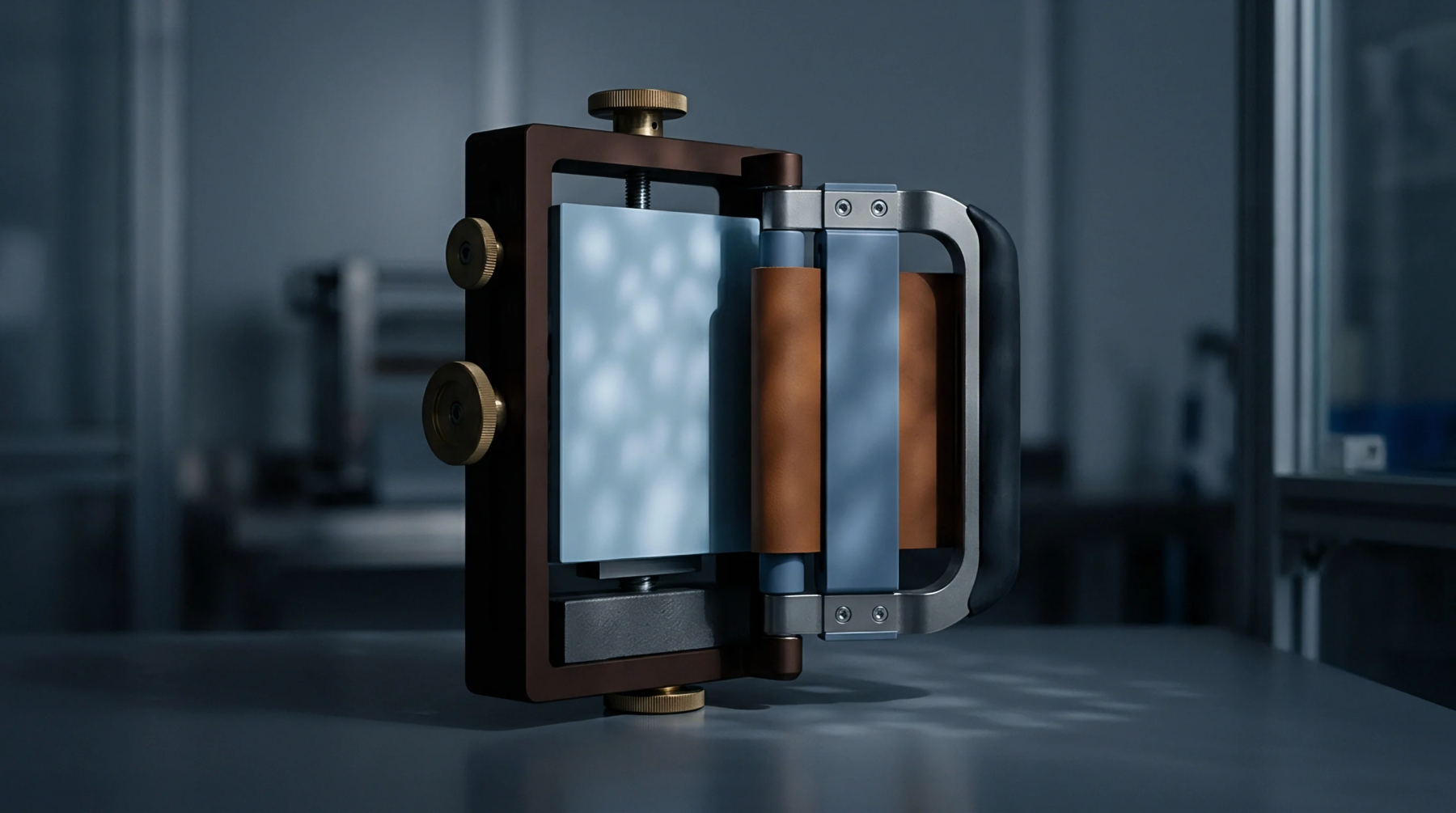
Mechanical transducers measuring real-time surface deflection under load, tactile displacement sensors convert physical contact forces into electrical signals for battery assembly quality control. Operating on capacitive or piezoresistive principles, the tactile displacement sensor quantifies localized pouch cell swelling during formation cycling. This measurement establishes the boundary between acceptable electrode expansion and catastrophic separator pinching inside large format prismatic modules.
Manufacturing engineers rely on this instrumentation to detect microscopic delamination events before modules proceed to thermal runaway testing.
Spatial Resolution
Sensor array density dictates how accurately the tactile displacement sensor maps localized pressure gradients across a separator membrane. Spatial limits arise from physical pin pitch constraints within dense matrix configurations, preventing millimeter-scale detection of edge anomalies. When cell stack compression fixtures warp slightly under thermal expansion, adjacent sensing nodes capture the resulting shear vector shifts with high fidelity.
Calibration protocols match output voltages directly against mechanical micrometer standards to ensure long-term repeatability under continuous factory floor vibrations.
Signal Processing
Raw analog voltage fluctuations require immediate digital filtering to isolate true electrode displacement from thermal expansion noise. High-speed analog-to-digital converters sample the bridge circuit outputs continuously during high-rate discharge pulses. Because thermal drift alters baseline resistance values in piezoresistive elements, embedded microcontrollers apply temperature compensation algorithms before transmitting data over industrial fieldbuses.
This filtering architecture guarantees that transient mechanical spikes translate reliably into actionable cell grading decisions during high-speed sorting.
Procurement Criteria
Purchasing teams evaluate tactile displacement sensor durability against electrolyte exposure risks and long-term mechanical fatigue limits. Housing materials must withstand corrosive solvent splashes common in active lithium-ion manufacturing cleanrooms without degrading signal integrity. Suppliers provide calibration certificates tracing output linearity back to recognized national metrology standards before a purchase order clears final technical approval.
Long-term field reliability depends entirely upon maintaining hermetic sealing around internal strain gauge elements throughout years of continuous cycling.