Resolving Operando Kinetic Heterogeneity and Solid State Diffusion Limitations in Ultra High Density Cathodes
Thick high-density cathodes cause operando kinetic heterogeneity, driving overpotential gradients, localized degradation, and severe warranty risks under high C-rates.


Gradient
Mass transfer restrictions inside thick cathode coatings alter local state-of-charge distributions during rapid charge and discharge cycles. High areal loadings exceeding three point five milliamp-hours per square centimeter require dense electrode packing to minimize inactive cell volume. Pressing cathode slurries to densities above three point four grams per cubic centimeter compresses pore channels, increasing tortuosity factors beyond five.
Ionic transport through liquid electrolyte within these restricted pores turns sluggish. Lithium ions deplete rapidly near the current collector during high-rate discharge, while remaining abundant near the separator interface.
Lithium ions migrate slowly.
This localized ion depletion creates severe overpotential variations along the depth of the electrode coating. The surface layers of active material undergo full oxidation or reduction while deeper layers remain unreacted. Electrochemical impedance spectroscopy measurements taken during operando cycling reveal that internal ionic resistance dominates the total cell impedance at low temperatures and high C-rates.
Solid state diffusion within active particles compounds this pore-level transport limitation, forcing local current density distribution to become non-uniform across the electrode thickness.

Overpotential Skew across High Loading Electrode Cross Sections
High current densities force primary lithium ions through long ionic transport paths in compressed electrolyte pores. Overpotentials measured across a seventy-eight micrometer thick NCM-811 cathode reach upwards of one hundred twenty millivolts between the top separator-facing surface and the bottom current collector foil during a 2C charge pulse. This polarization gradient forces the surface cathode particles into high voltage regimes early in the charge cycle.
Surface particles reach cutoff potentials of four point four volts against lithium while core particles lag at three point nine volts.
An electrode calendered to three point six grams per cubic centimeter exhibits a fourfold reduction in effective liquid-phase diffusivity compared to a baseline coated at two point eight grams per cubic centimeter.
Pore-scale concentration gradients drive secondary reaction pathways near the separator interface. High local potential accelerates electrolyte oxidation, forming thick solid electrolyte interphase films on outer cathode surfaces. Depleted pore regions at the foil interface suffer from high ohmic heat generation due to localized current concentration.
Phase transformations proceed non-uniformly through the coating, creating mechanical shear stress between fully expanded and fully contracted regions of the electrode matrix.
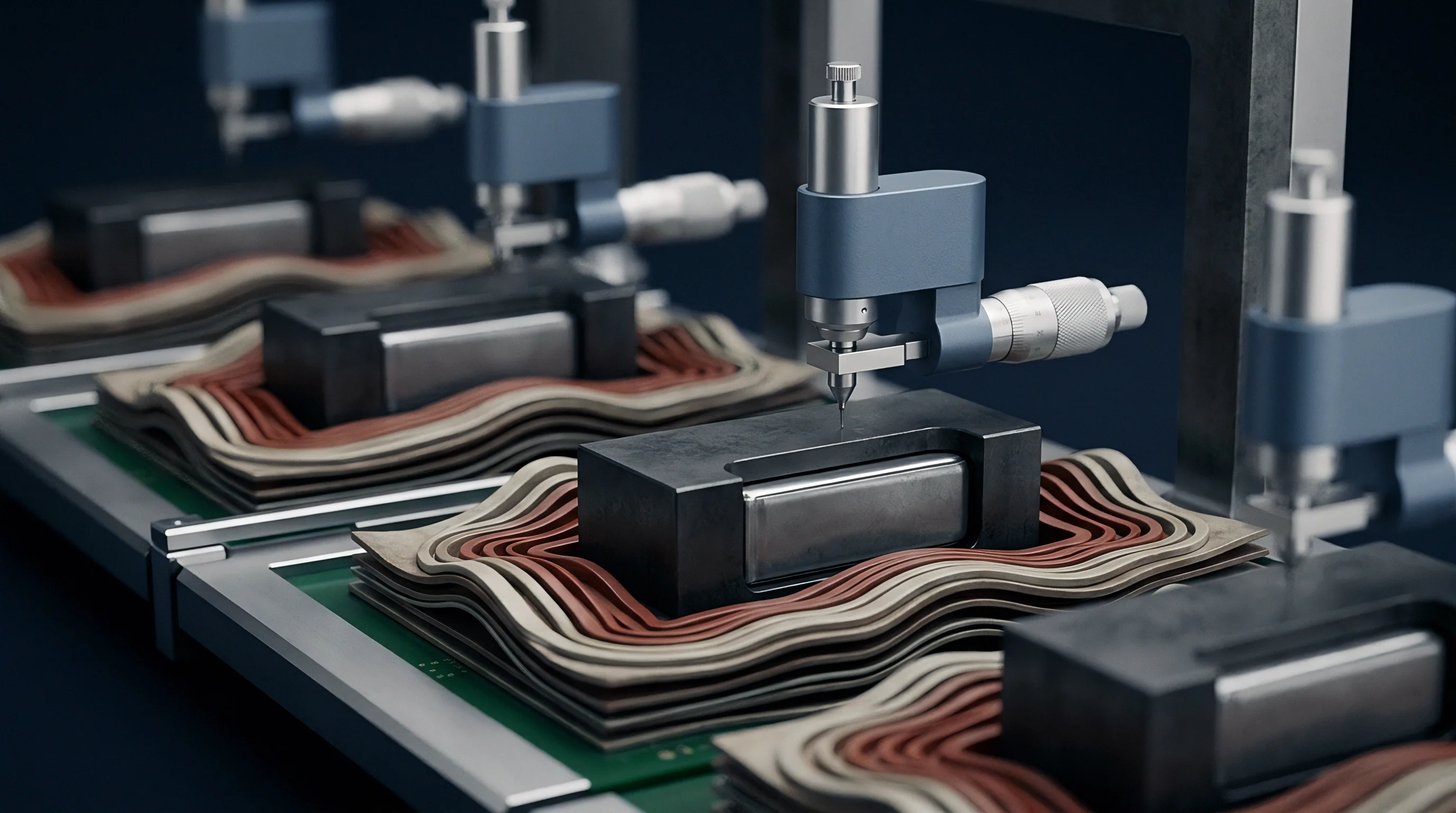
Czochralski and Hydrothermal Particle Morphologies under Stress
Synthetic routes determine crystal domain structures, orientation boundaries, and primary particle alignment within cathode aggregates. Hydrothermally synthesized monocrystalline NCM particles present smooth single-domain structures without grain boundaries, eliminating internal intergranular fracture paths. Polycrystalline spheres produced via co-precipitation consist of thousands of randomly oriented primary crystallites.
Random crystallographic orientation creates anisotropic volume changes during lithium extraction, causing radial stress concentration within polycrystalline primary grains.
Porosity falls below twenty percent.
Calendering dense electrodes fractures polycrystalline aggregates, opening secondary pathways for electrolyte ingress. Liquid electrolyte contacts freshly exposed crystal faces, triggering transition metal dissolution and oxygen evolution. Monocrystalline architectures resist calendering damage due to superior mechanical compressive strength.
Solid state diffusion within single crystals remains restricted by the physical domain size, requiring sub-micron particle sizing to achieve rate capability comparable to polycrystalline aggregates.
Cathode vendors frequently assert that minor localized state-of-charge discrepancies across dense coatings average out during ambient dwell periods prior to pack integration.
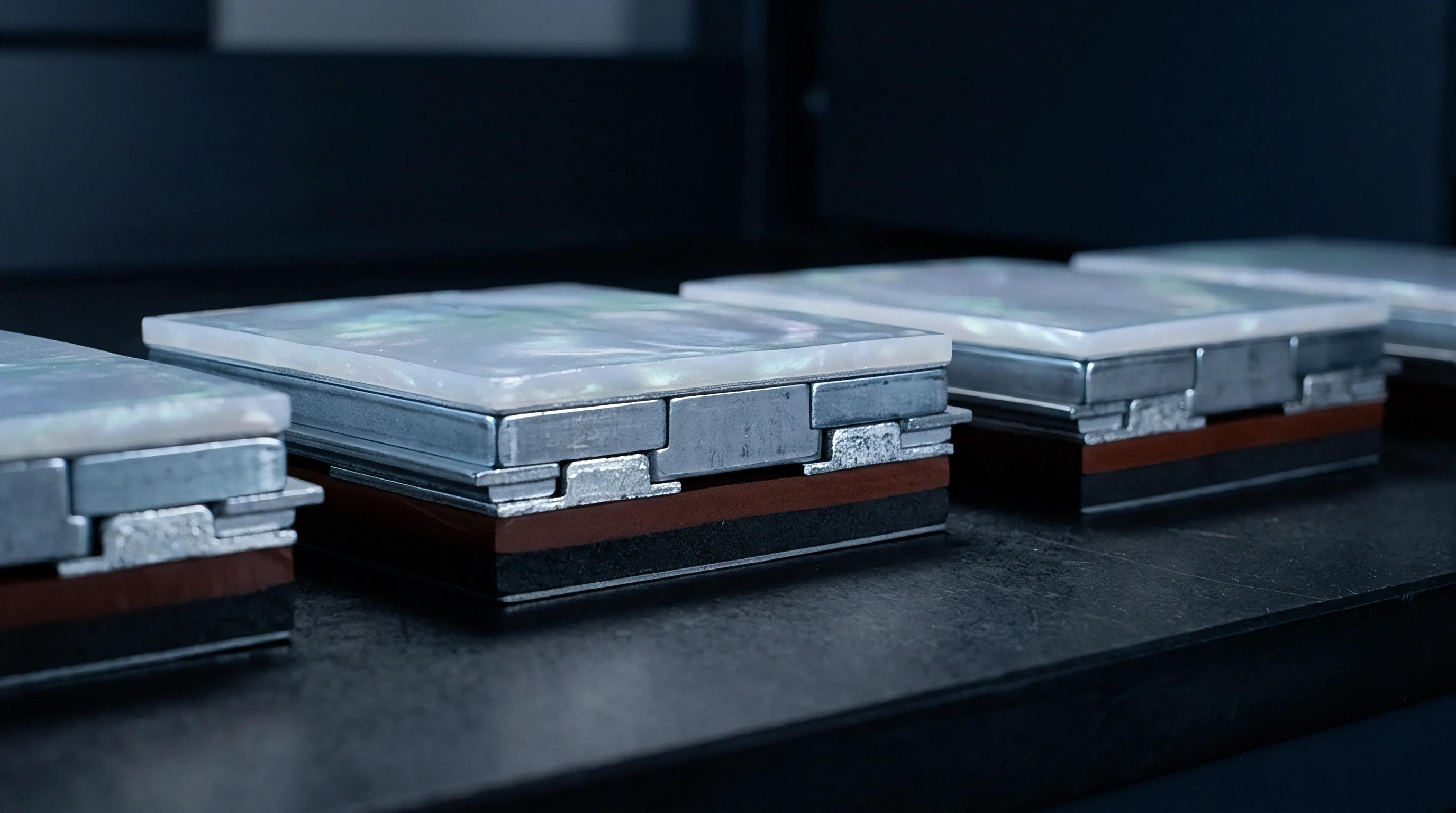

Grain
Solid-state diffusion inside single-crystal nickel-rich particles follows crystalline directions, creating anisotropic flux profiles during lithium extraction. Lithium ions migrate along two-dimensional planes within the layered rock-salt crystal structure. Transport along the crystallographic c-axis remains virtually non-existent under standard operating conditions.
Primary particle alignment within cathode aggregates dictates the macroscopic ionic flux through active particles during high-power operation.
Particle cracking increases surface area.

Solid State Lithium Transport along Anisotropic Crystallographic Axes
Rapid lithium removal along specific crystal directions generates intense internal lattice stress. As lithium leaves the layer structure, the unit cell dimension contracts along the a-axis while expanding along the c-axis at high states of charge. This directional mismatch creates internal lattice strain exceeding one point five percent in high-nickel formulations.
Intergranular cracking occurs when adjacent grains expand against opposing crystal orientations during high C-rate cycling.
Local overpotential drives lithium plating.
Operando X-ray diffraction maps show that lattice parameter shifts occur heterogeneously across individual particles. Boundary regions lose lithium faster than core domains, establishing steep internal chemical potential gradients. The apparent chemical diffusion coefficient of lithium within NCM-811 drops from ten to the minus ten square centimeters per second at fifty percent state of charge to ten to the minus twelve square centimeters per second above four point two volts.
Low diffusion rates at high oxidation states lock lithium ions inside particle cores, reducing deliverable capacity.

Why Does Local Phase Transformation Accelerate Impedance Growth?
Structural shifts from hexagonal to monoclinic phases alter internal unit cell volumes by more than three percent. The phase boundary moves inward from the particle surface as lithium de-intercalation progresses. Rapid phase boundary propagation generates mechanical shear forces that cleave primary particles along crystallographic planes.
Microcracks disrupt internal electronic conductivity, isolating crystallite domains from the carbon additive matrix.
| Cathode Active Material | Particle Morphology | Apparent Diffusion Coefficient (cm²/s) | Overpotential Threshold (mV) | Lattice Strain Limit (%) |
|---|---|---|---|---|
| NCM-811 Polycrystalline (3.5 g/cm³) | Aggregated Spheres | 1.2e-11 | 45 | 1.8 |
| NCM-811 Single Crystal (3.5 g/cm³) | Monocrystalline Monoliths | 4.8e-12 | 70 | 0.6 |
| NCM-900505 Polycrystalline (3.6 g/cm³) | Radial Nanorods | 2.5e-11 | 38 | 2.2 |
| LFP Dense Coating (2.4 g/cm³) | Carbon-Coated Nanoparticles | 3.1e-14 | 110 | 4.1 |
Electrode thickness limits mass transit.
Progressive mechanical degradation alters internal ionic transport pathways according to a predictable sequence during continuous cycling:
- High discharge rates establish steep chemical potential steps across particle surfaces.
- Internal mechanical stress initiates microcracking along primary boundary interfaces.
- Liquid electrolyte infiltrates newly generated internal cracks, forming resistive interface layers.
- Active transition metals dissolve into solution, accelerating capacity fade and cell imbalance.
Electrolyte decomposition products fill microcracks, consuming active lithium and forming insulating surface films. Dissolved manganese and nickel cations cross the separator, degrading the solid electrolyte interphase at the graphite anode. This crosstalk mechanism doubles cell impedance growth over two hundred cycles under high voltage storage conditions.
Non-compliance with UN 38.3 T.7 overload testing requirements voids air shipment eligibility across all standard commercial cargo aircraft routes.
Uniform crystal orientation throughout active particles reduces mechanical fracturing during rapid high-power cycling.


Hysteresis
Voltage profiles during charge diverge significantly from discharge paths due to slow solid-phase transport and structural phase transitions. Asymmetry between lithium insertion and extraction kinetics yields substantial polarization energy losses. Kinetic hysteresis widens at elevated discharge rates, reducing energy efficiency from ninety-four percent at 0.2C to eighty-one percent at 3C in ultra-high density cells.
Lattice strain induces structural breakdown.

Thermodynamic and Open-Circuit Polarization Disparity
Measured equilibrium potentials vary depending on whether the state of charge is approached from oxidation or reduction states. Relaxation periods required to reach true open-circuit voltage exceed twenty-four hours in electrodes with press densities above three point five grams per cubic centimeter. Diffusion limitations lock metastable phase configurations within active particles during short relaxation windows.
Diffusion delays create current distortion.
Calculations evaluating solid-state diffusion time constants illustrate the physical scale of transport limitations. Diffusion time scales with the square of particle radius divided by the lithium diffusion coefficient. For a polycrystalline aggregate with a five-micrometer radius and a diffusion coefficient of five times ten to the minus twelve square centimeters per second, characteristic diffusion time equals fifty seconds.
Increasing particle radius to twelve micrometers in single-crystal formulations increases diffusion time to two hundred eighty-eight seconds under identical temperature conditions.
Consider a worked construction evaluating a high-loading NCM-811 cathode electrode:
Assume an areal capacity of four point two milliamp-hours per square centimeter, a press density of three point fifty-five grams per cubic centimeter, and a coating thickness of seventy-eight micrometers. Under a 2C continuous discharge current density of eight point four milliamps per square centimeter, electrolyte concentration within the porous electrode drops according to Fickian porous media transport laws. The liquid-phase concentration of lithium ions at the current collector foil drops from one thousand mol per cubic meter to one hundred twenty mol per cubic meter within forty seconds of current discharge initiation.
Current density concentrates at surfaces.
Simultaneously, the lithium concentration at the surface of a five-micrometer single-crystal particle approaches full stoichiometric occupancy while the particle core remains seventy percent delithiated. The resulting solid-phase concentration gradient produces an internal concentration overpotential of eighty-five millivolts. Summed across the total electrode thickness, combined liquid and solid-phase polarization causes the cell terminal voltage to reach the three point zero volt cutoff threshold when only seventy-six percent of total theoretical state of charge is extracted.
The remaining twenty-four percent of capacity stays trapped inside particle cores due to diffusion limitations.
Uncertainty surrounding low-temperature diffusion coefficients complicates predictive degradation modeling. Published literature values for lithium diffusivity in NCM-811 range across two orders of magnitude, from ten to the minus eleven to ten to the minus thirteen square centimeters per second at twenty degrees Celsius. This wide variance stems from differences in analytical methods, including Galvanostatic Intermittent Titration Technique, Electrochemical Impedance Spectroscopy, and Operando XRD.
Buyers evaluating supplier cell life models must account for this baseline analytical uncertainty when projecting winter operational performance.
Mechanical strain generated by non-uniform lithium transport drives specific physical failure modes within high-density cathode films:
- Lattice Microcracking originates from repetitive lattice volume changes that fracture particle boundaries under high rate conditions.
- Impedance Spikes develop as electrolyte decomposition products block ion channels within dense active layers.
- Lithium Plating Risk intensifies when cathode polarization drives negative electrode potential below zero volts against lithium reference.
- Active Material Dissolution occurs as local overpotentials destabilize transition metal cations within high nickel frameworks.
Thicker electrode coatings always trade power delivery capabilities for raw volumetric capacity.
Operational techniques capable of eliminating phase transition lags inside single-crystal particles without altering bulk cell energy density remain unidentified across current literature.


Audit
Quality inspection protocols for high-density electrodes target variations in coating thickness, porosity distribution, and active material mass loading. Inline beta-gauge sensors monitor mass per unit area across high-speed roll-to-roll coating lines. Non-destructive X-ray absorption profiling measures density variations across calendered electrode widths to detect edge-compression anomalies prior to cell slitting.
Calendering reduces electrolyte wetting rate.

Electrode Thickness Variations and Porosity Verification Standards
Precision thickness gauges monitor slurry application across double-sided continuous coating rolls. Variance exceeding two micrometers across a coating web alters localized current densities, driving non-uniform aging across jellyrolls or stacked pouch cells. X-ray computed tomography audits reveal localized low-porosity zones where calendering pressure exceeded material yield limits.
Impedance growth reduces energy efficiency.
| Inspection Metric | Acceptable Tolerance Band | Diagnostic Standard / Method | Non-Conformity Risk Level |
|---|---|---|---|
| Calendered Mass Density | +/- 0.05 g/cm³ | X-ray fluorescence density scan | High: Cell impedance variance |
| Coating Thickness Uniformity | +/- 1.5 micrometers | Laser micrometer profiler | Critical: Local overcharge potential |
| Solid State Diffusion Rate | +/- 15% baseline | Operando electrochemical impedance spectroscopy | Medium: Rate capability loss |
| UN 38.3 T.5 Short Circuit Test | Pass under 55 deg C | External dead short connection | Critical: Shipment rejection and liability |
Thermal runaway risks escalate exponentially.
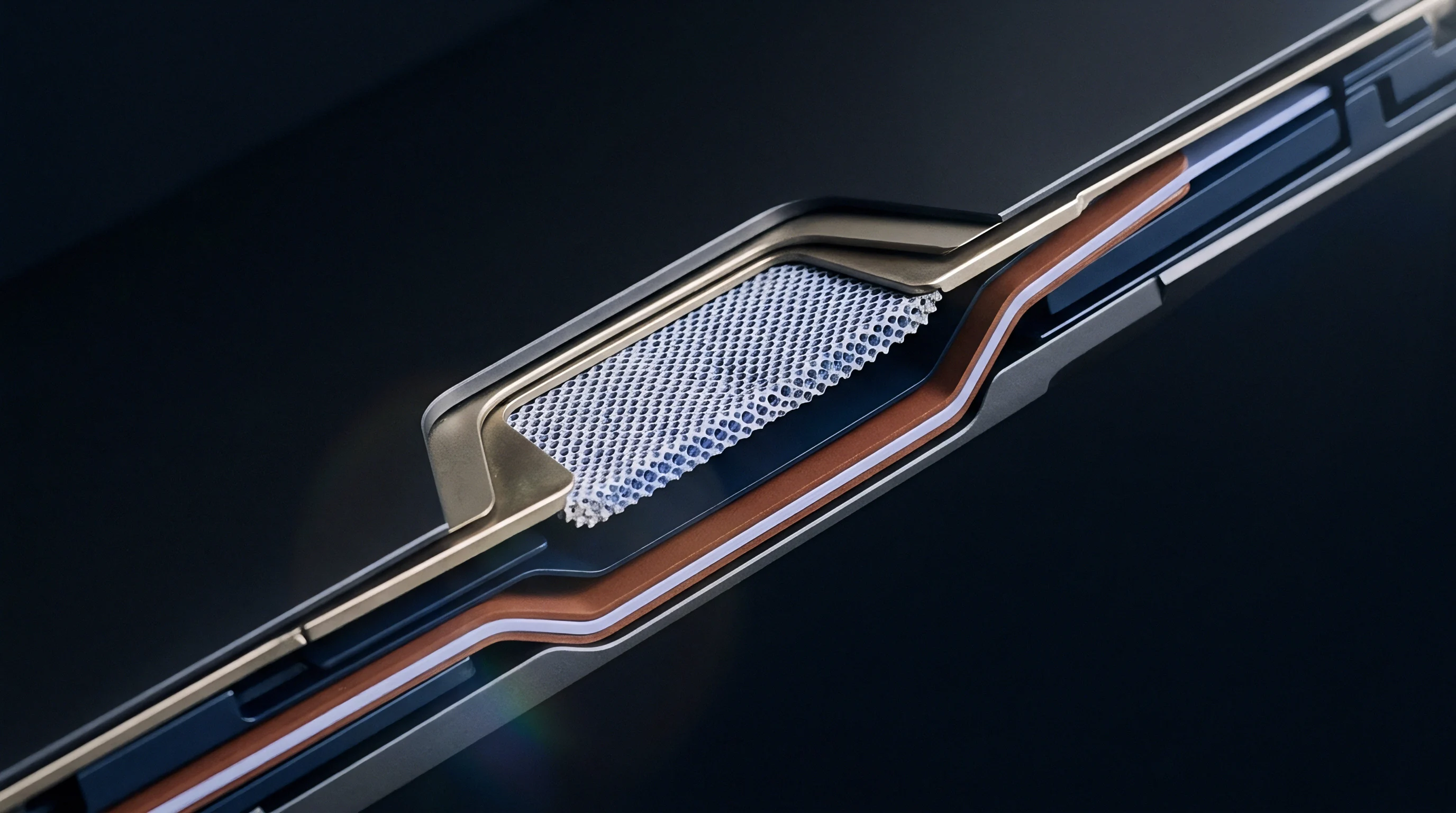
Battery Transport Certification and Thermal Runaway Risk Mapping
Transport regulations compel rigorous testing of cells containing dense cathode formulations. The UN Manual of Tests and Criteria Section 38.3 mandates eight distinct safety tests before commercial lithium cells enter international transportation networks. Cells utilizing ultra-high density cathodes with high nickel fractions exhibit heightened sensitivity to Test T.5 (External Short Circuit) and Test T.7 (Overcharge) due to reduced electrolyte volume and lower thermal decomposition thresholds.
Warranty reserves absorb early degradation.
Regulatory compliance files must contain verifiable test summaries backed by accredited third-party laboratories. Shipping dangerous goods requires full traceably bound documentation to avoid customs seizure and port detention:
- UN 38.3 Test Summary Report confirms that cell designs pass vibration, thermal shock, short circuit, and mechanical impact requirements without thermal breakdown.
- IEC 62133-2 Safety Certificate validates battery assembly safety against internal shorting and forced discharge under international electrical guidelines.
- EU Battery Regulation Passport establishes material provenance, recycled content levels, and verified carbon intensity metrics for European distribution.
- Dangerous Goods Declaration provides legally binding freight documentation detailing state of charge limits, UN packaging instructions, and emergency response parameters.
Cells exhibiting coating density variations above three percent fail UN 38.3 thermal impact testing at double the standard baseline rate.
Standard procurement contracts implementing Section 6.2 of IEC 62660-3 permit buyers to reject entire production lots when cell internal impedance variation exceeds eight percent across a ten-thousand-unit sample.


Exposure
Financial liabilities tied to cell degradation originate from accelerated capacity loss under uneven current loads. Warranty obligations for commercial energy storage systems typically guarantee seventy percent capacity retention over ten years or four thousand full cycles. Kinetic heterogeneity causes early capacity knee points, shifting cycle life decay curves from linear to exponential regimes before year five.
Unchecked polarization destroys cell balance.

Warranty Reserve Calculations under Accelerated Degradation Rates
Field failure risk models project substantial capital losses when solid-state diffusion limitations accelerate capacity fade. A system integrator deploying a one-hundred-megawatt-hour energy storage facility assumes direct financial risk if cathode kinetic limitations are ignored during cell selection. If actual cell degradation accelerates at double the contractually modeled rate due to operando kinetic mismatch, warranty replacement reserves increase from two percent of initial capital expenditure to fourteen percent over the project lifespan.
Batch variance creates financial liability.

Contractual Risk Allocation for Non-Uniform Aging Batches
Supply agreements determine whether cell manufacturers or pack builders absorb warranty claims resulting from kinetic non-uniformity. Standard supplier warranties cover defect rates based on initial capacity and internal resistance measurements taken at twenty-five degrees Celsius. Standard factory testing misses transport limitations that manifest only under high C-rate demands or sub-ambient operating conditions.
Buyers must write explicit rate-capability aging clauses into cell supply contracts to protect against premature degradation driven by solid-state diffusion limits.
Testing confirms solid transport speed.
Procurement practices that overlook cathode transport limitations incur severe warranty reserves, higher shipping freight rates, and rapid brand degradation across commercial energy storage markets.