Spectroscopic XPS Depth Profiling for Cathode Active Material Aging Models
XPS depth profiling quantifies nanoscale rock-salt reconstruction on aged cathodes, parameterizing localized solid-diffusion resistance for predictive models.


Crust
Aging in cathode active materials initiates within the outer ten nanometers of the secondary particle. Depth-profiled X-ray photoelectron spectroscopy resolves the chemical stratification that develops across this boundary during cycling. In high-nickel layered oxides like LiNi0.8Mn0.1Co0.1O2 and LiNi0.85Co0.10Mn0.05O2, delithiation past 4.1 volts versus Li/Li+ triggers surface oxygen release, driving a spontaneous structural reconstruction.
The native rhombohedral layered lattice (R-3m symmetry) collapses into a defective spinel-like intermediate (Fd-3m) and ultimately forms a disordered rock-salt phase (Fm-3m) at the electrolyte interface. This reconstructed inorganic phase combines with electrolyte decomposition products to form the cathode electrolyte interphase, and quantifying this layered shell defines the true impedance boundary of the cell.
Standard laboratory datasheets omit these interfacial gradients, reporting bulk capacity metrics that hide rapid impedance growth. When secondary particles fracture under anisotropic lattice strain along the c-axis during repeated H2-to-H3 phase transitions, newly exposed surfaces undergo identical reconstruction. The rock-salt layer consists mostly of reduced transition metals ~ predominantly divalent nickel (Ni2+) ~ alongside inactive monoxides.
Divalent nickel blocks lithium diffusion pathways because its ionic radius (0.69 angstroms) sits close to that of lithium (0.76 angstroms), favoring site exchange and cation mixing. The resulting surface layer exhibits an ionic conductivity four orders of magnitude lower than the bulk layered oxide. A cell showing normal discharge capacity at a C/10 screening rate can fail operating requirements at a 2C pulse rate within two hundred cycles solely due to this surface boundary resistance.
A rock-salt reconstruction depth of six nanometers on LiNi0.8Mn0.1Co0.1O2 increases charge-transfer resistance across the cathode interface from 12 ohms to 84 ohms at minus ten degrees Celsius.
Incoming inspection procedures relying on open-circuit voltage checks or C/5 capacity verification miss this degradation mechanism. The chemical distribution through the cathode electrolyte interphase and the underlying transition region follows a distinct elemental sequence. Near the outer surface, decomposition products of lithium hexafluorophosphate and alkyl carbonates dominate the spectral survey.
Sputtering inward past two nanometers reveals a steep decline in organic carbonates and an increase in metal fluorides, leading into the transition metal oxide matrix. Quantifying this profile requires exact calibration of sputter rates against standardized physical reference materials.
| Phase Identification | Space Group | Dominant Cations | Layer Depth Range | Lithium Diffusion Coefficient |
|---|---|---|---|---|
| Disordered Rock-Salt | Fm-3m | Ni2+, Mn2+, Co2+ | 0.0 to 3.5 nm | 1.2e-15 cm2/s |
| Defective Spinel Intermediate | Fd-3m | Ni3+, Co3+, Mn4+ | 3.5 to 8.0 nm | 4.5e-13 cm2/s |
| Bulk Layered Matrix | R-3m | Ni3+/Ni4+, Co3+, Mn4+ | Greater than 8.0 nm | 2.8e-10 cm2/s |
Electrochemical models treating active material grains as homogeneous spheres fail to predict high-rate power fade. Standard degradation models calibrate solid-state diffusion constants against bulk titration measurements, mischaracterizing the rate-limiting transport step. In aged material, the primary kinetic barrier is concentrated almost entirely inside the outer eight nanometers.
Engineering teams calculating thermal runaway thresholds from pristine material constants underestimate self-heating rates because reduced interfacial rock-salt domains lower the onset temperature for exothermic oxygen liberation. Designing safety containment systems around pristine particle dynamics leads directly to field failures and warranty claims.

Sputter
Depth profiling cathode active materials requires ion beam milling that strips surface layers without altering the oxidation state of underlying transition metals. Traditional monoatomic argon ion (Ar+) sputtering delivers kinetic energies between 500 electron volts and 4 kiloelectron volts to the sample surface. That impact velocity breaks metal-oxygen bonds, preferentially ejects lattice oxygen, and artificially reduces trivalent and tetravalent nickel cations down to Ni2+.
Consequently, monoatomic argon ion milling registers an artificial rock-salt signature even on uncycled, pristine cathode particles. Gas cluster ion beam (Ar-GCIB) technology bypasses this issue by distributing kinetic energy across large aggregates of argon atoms.
A gas cluster ion beam accelerates clusters of one thousand to five thousand argon atoms across potential drops between 2.5 and 10 kilovolts. Dividing that energy yields an effective kinetic energy of just 1 to 5 electron volts per atom upon surface impact. This low per-atom energy strips organic surface films, polymeric binder residues, and solvent reaction products without disrupting the inorganic crystal lattice.
Fragmentation is confined to the immediate collision interface, leaving the underlying structure intact and preserving the native chemical states of nickel, cobalt, and manganese for spectroscopic analysis. Switching from cluster etching to low-energy monoatomic etching becomes necessary only when penetrating the dense inorganic oxide core.
Gas cluster ion sputtering at 5 kilovolts with argon clusters of two thousand atoms maintains tetravalent nickel integrity while stripping organic interphase components.
Sputter depth calibration introduces measurement error if analysts simply apply silicon dioxide erosion rates to mixed-phase battery electrodes. Porous composite cathode coatings contain active material particles, conductive carbon black, and polyvinylidene fluoride binder, each exhibiting a distinct sputter yield under identical beam flux. Establishing valid depth scales demands calibration against atomic force microscopy step-height measurements or cross-sectional transmission electron microscopy performed on identical particle cohorts.
- Target Erosion Differential creates artificial step heights between the dense oxide grains and the soft polymeric binder domains during prolonged ion milling.
- Secondary Ion Redeposition transports sputtered conductive carbon and fluorinated binder fragments onto adjacent clean active material facets.
- Charge Neutralization Instability induces binding energy shifts up to 2.8 electron volts across non-conductive rock-salt shells unless compensated by targeted low-energy electron flood guns.
- Thermal Desorption Transients alter volatile electrolyte salt residues when stage cooling fails to hold sample temperatures below minus twenty degrees Celsius during high-current bombardment.
Interfacial impedance data is sometimes discounted during contract qualification audits by attributing observed divalent nickel fractions to beam-induced reduction.
Shift
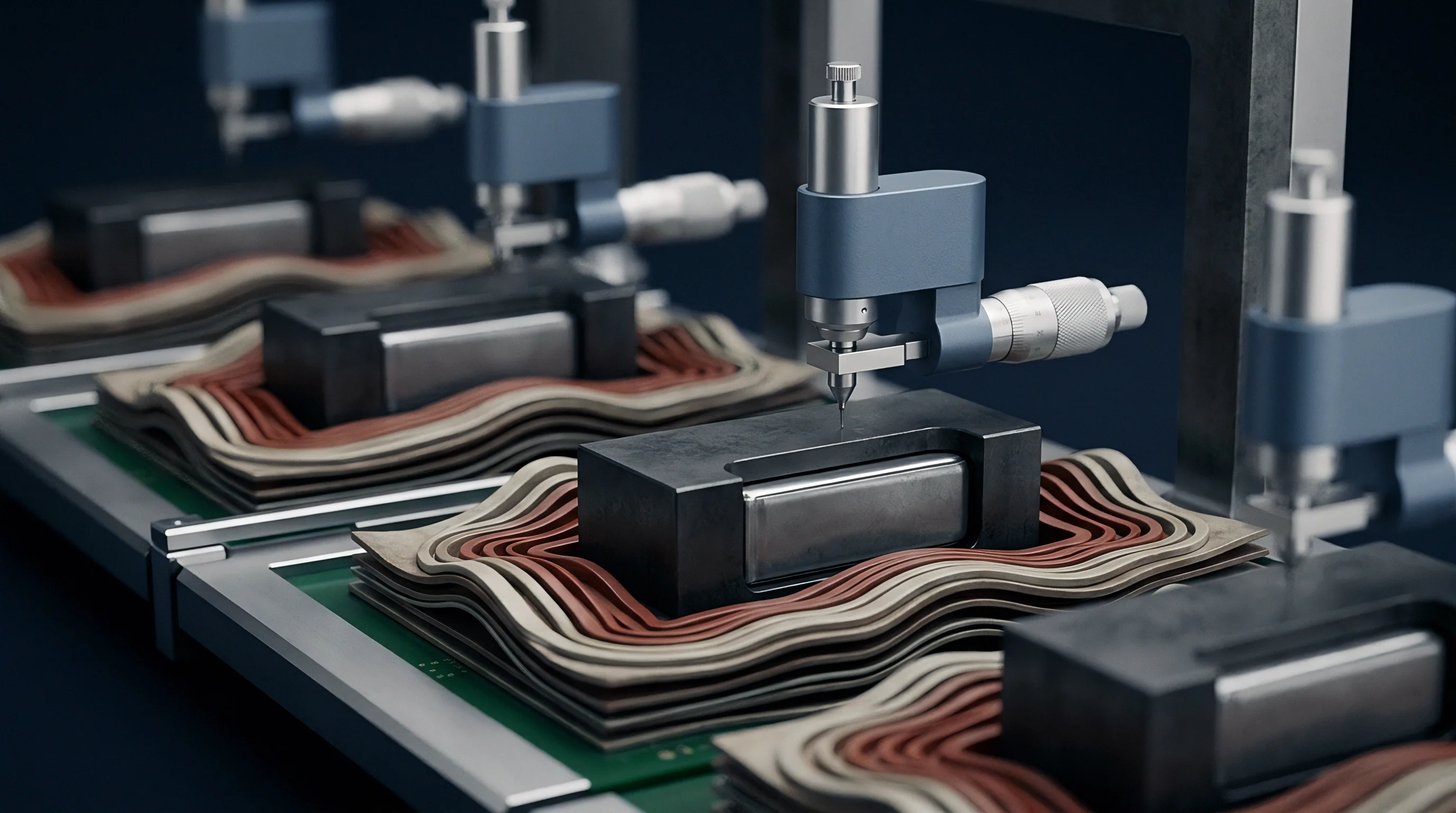
Resolving binding energy shifts in core-level photoelectron spectra separates genuine chemical aging from physical surface contamination. The Ni 2p3/2 spectral envelope presents a complex multiplet structure shaped by electrostatic coupling and crystal field interactions. Pristine layered cathode active materials exhibit a primary Ni 2p3/2 peak at 855.8 electron volts, corresponding to Ni3+ states within octahedral oxygen coordination.
Delithiated states show a distinct shift toward 857.1 electron volts, signaling oxidation to Ni4+. Aged secondary particles that have undergone impedance fade reveal an intense component at 853.8 electron volts, accompanied by a pronounced satellite feature at 861.2 electron volts ~ a spectral signature confirming localized reduction to Ni2+ within the rock-salt lattice framework.
Oxygen 1s spectra deliver corroborating evidence regarding the decomposition of the cathode lattice. Pristine material displays a sharp, dominant peak at 529.3 electron volts, originating from lattice oxide ions (O2-) bonded directly to transition metal cations. As interfacial aging advances, this lattice peak attenuates, while two higher-energy components develop at 531.5 electron volts and 533.2 electron volts.
The 531.5 electron volt peak reflects deficient oxygen coordination sites and surface carbonate species such as lithium carbonate (Li2CO3). The 533.2 electron volt peak captures alkyl dicarbonates and polyether chains generated through solvent oxidation at high cell potentials.
| Core Level Orbital | Binding Energy (eV) | FWHM Range (eV) | Assigned Chemical State | Degradation Implication |
|---|---|---|---|---|
| Ni 2p3/2 | 853.8 | 1.4 to 1.8 | Ni2+ (NiO rock-salt) | Lithium-blocking inactive surface barrier |
| Ni 2p3/2 | 855.8 | 1.9 to 2.3 | Ni3+ (R-3m lattice) | Active reversible charge-transfer state |
| Ni 2p3/2 | 857.1 | 2.1 to 2.5 | Ni4+ (Delithiated matrix) | Unstable, oxygen-depleting surface site |
| O 1s | 529.3 | 0.9 to 1.2 | O2- (Lattice metal oxide) | Intact host crystal framework |
| O 1s | 531.5 | 1.3 to 1.7 | Defective O / Carbonate | Oxygen vacancy formation and electrolyte degradation |
| F 1s | 685.0 | 1.2 to 1.5 | LiF / Metal Fluorides | Transition metal dissolution precursor |
| F 1s | 687.8 | 1.6 to 2.0 | C-F / P-F complexes | Polymeric binder and salt residue |
Fluorine 1s spectra track electrolyte salt breakdown and the leaching of structural metals. Pure lithium fluoride exhibits a binding energy of 685.0 electron volts. When transition metals dissolve into the electrolyte and reprecipitate at particle interfaces, they form transition metal fluorides whose binding energies overlap this domain.
Deconvoluting transition metal 2p signals alongside the fluorine signature exposes the severity of lattice corrosion. In an uncycled cathode, the organic fluorine signal from the binder accounts for eighty percent of the integrated fluorine area. Following five hundred cycles at 45 degrees Celsius, inorganic fluorides expand to seventy-five percent of the total fluorine signal within the outer four nanometers, as dissolving metal ions leave the host crystal while insoluble fluoride salts seal the electrode’s pore structure.
Manganese and cobalt core levels verify the stabilization or breakdown of the secondary framework. The Mn 2p3/2 spectrum exhibits a primary peak at 642.2 electron volts, representing Mn4+. A shift toward 641.0 electron volts indicates reduction to Mn3+ or Mn2+.
Trivalent manganese undergoes Jahn-Teller disproportionation, converting into soluble Mn2+ and solid Mn4+. Soluble manganese ions migrate across the separator and deposit onto the graphite anode, poisoning the solid electrolyte interphase and consuming active lithium inventory. High-resolution XPS depth profiles reveal that manganese dissolution correlates directly with the disappearance of the 529.3 electron volt lattice oxygen peak within the outer three nanometers of the cathode grain.
Whether the initial driving force for transition metal reduction originates from spontaneous surface oxygen release or from nucleophilic attack by electrolyte solvent molecules remains a point of active discussion.

Model
Electrochemical aging models require physical parameterization derived from depth-resolved chemical quantification. Standard physics-based continuum models, such as the Doyle-Fuller-Newman framework, treat solid-state diffusion as a single effective constant across a uniform particle radius. In reality, diffusivity varies spatially, plunging across the reconstructed surface zone.
Integrating XPS depth profiling data into continuum models converts empirical fade fitting into predictive degradation transport simulation.
The parameterization workflow translates the atomic ratio of divalent nickel to total nickel into a local diffusion suppression factor. Let r represent the radial coordinate of a spherical secondary particle of radius R. The outer boundary layer between r equals R minus delta and r equals R represents the rock-salt and spinel reconstruction zone, where delta is measured by depth-resolved XPS. Across this boundary layer, the lithium diffusion coefficient decreases exponentially as the divalent nickel fraction rises.
Consider an operational case involving an 811-chemistry cathode material. Depth profiling reveals that after six hundred full equivalent cycles, the rock-salt zone extends 5.2 nanometers into the particle, characterized by a divalent nickel concentration of sixty-eight percent. The effective solid diffusion coefficient inside this 5.2-nanometer shell drops from 1.0e-10 cm2/s to 3.2e-14 cm2/s.
Incorporating this localized shell into solid-phase transport equations reproduces the non-linear high-rate voltage drop observed in experimental discharge curves.
A surface layer with reduced lithium diffusivity shifts the primary overpotential from liquid electrolyte transport to solid interfacial migration at high discharge rates.
Growth of the reconstruction shell correlates directly with upper cutoff voltage and operating temperature. XPS depth profiling across controlled cycling matrices establishes the kinetic rate laws governing phase transformation depth. Sputter calibration demonstrates that delta grows proportionally to the square root of time under continuous storage at elevated state of charge, indicating diffusion-limited transport of oxygen vacancies toward the particle core.
Under active cycling conditions, mechanical particle cracking introduces fresh surfaces, accelerating the overall volume fraction of converted material.
- Electrode Extraction isolates aged cathode discs under moisture-free argon atmospheres inside a glovebox running below 0.1 parts per million oxygen and moisture to preserve surface phases.
- Solvent Washing cleans residual electrolyte salts using dimethyl carbonate with controlled immersion intervals to eliminate free lithium salts without dissolving the native cathode interphase.
- Vacuum Transfer moves samples from the preparation glovebox into the XPS introduction chamber without airborne atmospheric exposure, preventing surface carbon dioxide absorption.
- Spectral Acquisition measures core-level spectra using monochromatic aluminum K-alpha radiation with charge compensation at a base pressure below 5e-9 millibar.
- Iterative Etching records core-level spectra between controlled gas cluster ion beam milling steps until reaching the bulk lattice oxygen baseline.
- Parameter Extraction converts raw binding energy areas into atomic depth profiles, computing the spatial boundary thickness and the diffusion suppression coefficient for continuum life models.
Surface reconstruction depth scales with cumulative exposure time above 4.1 volts rather than total charge throughput.
Exposure
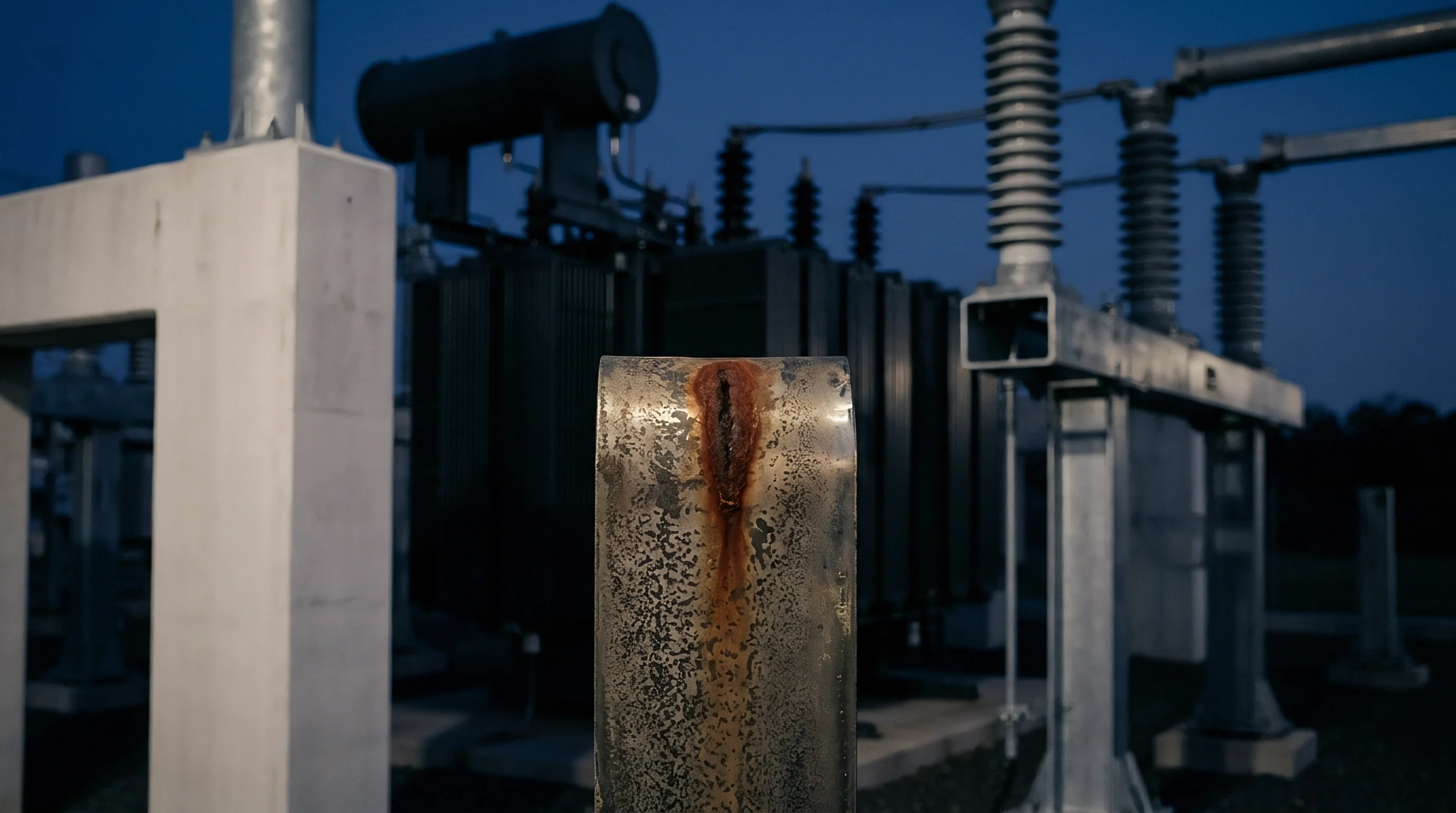
Degradation models lacking depth-resolved interfacial parameters produce inaccurate warranty life projections. When an energy storage system operator calculates cell replacement intervals using uncalibrated bulk models, projected pack lifespans diverge from physical field performance. In commercial grid storage applications, an unmodeled impedance jump at year five triggers capacity throttling and liquidated damages.
The financial consequence of premature replacement falls on the party identified as the manufacturer or importer under local jurisdictional statutes.
The regulatory framework governing battery durability establishes direct financial liability for inaccurate aging models. Under the European Union Battery Regulation (Regulation EU 2023/1542), manufacturers of stationary battery energy storage systems and industrial batteries exceeding 2 kilowatt-hours must supply verified durability parameters. Article 10 mandates documented technical documentation declaring capacity fade, internal resistance rise, and energy efficiency degradation over expected lifecycle profiles.
An importer signing a declaration of conformity based on supplier datasheets that mask interfacial rock-salt growth assumes full commercial exposure when field units experience unpredicted capacity loss.
Procurement contracts for high-nickel cells protect the buyer by incorporating chemical verification thresholds into incoming quality agreements. Standard capacity guarantees fail to provide legal relief because a cell degrades chemically at its particle surfaces long before bulk capacity drops below eighty percent. Sophisticated purchasing agreements bind suppliers to physical degradation limits validated through XPS depth profiling of aged qualification cohorts.
Cell supply contracts enforce these protections by specifying that five hundred full equivalent cycles at forty-five degrees Celsius shall not produce a rock-salt reconstruction depth exceeding seven nanometers across the secondary particle exterior, as measured by calibrated gas cluster ion beam depth profiling under standardized test criteria, entitling the buyer to reject the manufacturing lot upon breach.