Meaning
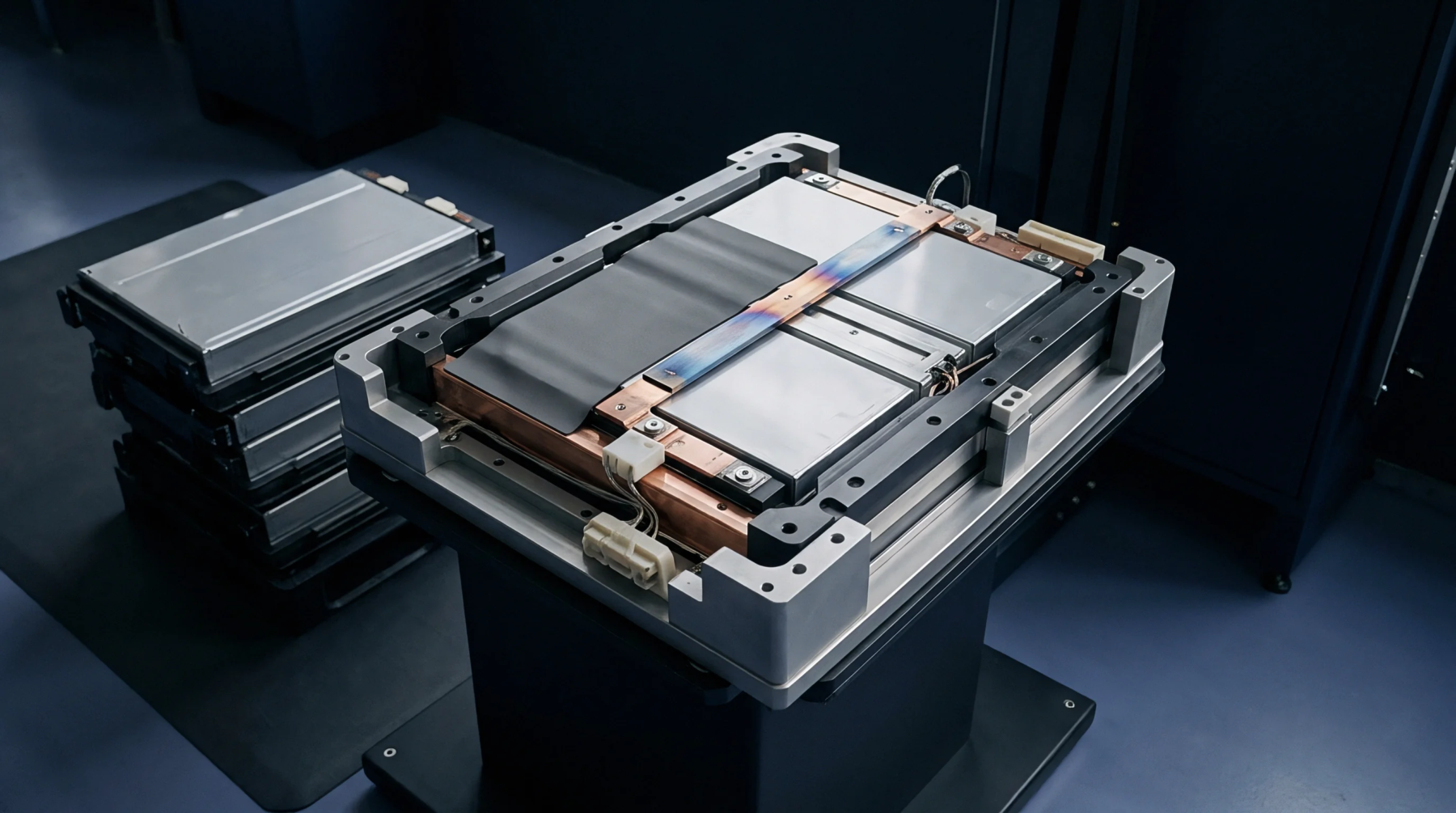
Manganese-alloyed non-heat-treatable alloy provides the base material for lithium-ion cell casings due to its balance of formability and moderate strength. Manufacturers use 3003-h14 aluminum in deep-drawn battery cans because it resists corrosion and withstands internal pressure without premature failure. The material is strain-hardened and partially annealed to achieve a stable temper.
Chemical Composition
Primary alloying elements determine the electrochemical stability and physical response of the metal during assembly operations. This alloy consists primarily of aluminum with approximately one percent manganese added to increase the tensile strength above that of pure metal series. Iron and silicon are restricted to low concentrations to prevent the formation of coarse intermetallic particles.
These controlled limits ensure that the alloy maintains its ductility during the high-speed stamping of prismatic cell housings.
Mechanical Resistance
Strain hardening yields a material that resists deformation under the mechanical stress of cell assembly and operation. The strain-hardened state of 3003-h14 aluminum offers a yield strength of at least one hundred megapascals, allowing thin-walled designs to maintain their structural integrity. It prevents the bulging of prismatic walls during initial electrolyte filling and subsequent formation cycles.
Cell designers rely on this mechanical resistance to reduce casing thickness while maintaining a high safety margin against rupture.
Weldability Profile
Joining characteristics of the metal influence the choice of laser parameters during the sealing of cell caps. Laser welding of 3003-h14 aluminum requires precise energy delivery because the high thermal conductivity of the alloy dissipates heat away from the weld zone. The presence of manganese helps stabilize the weld pool and reduces the occurrence of solidification cracks.
High processing speeds prevent excessive softening in the heat-affected zone.