Meaning
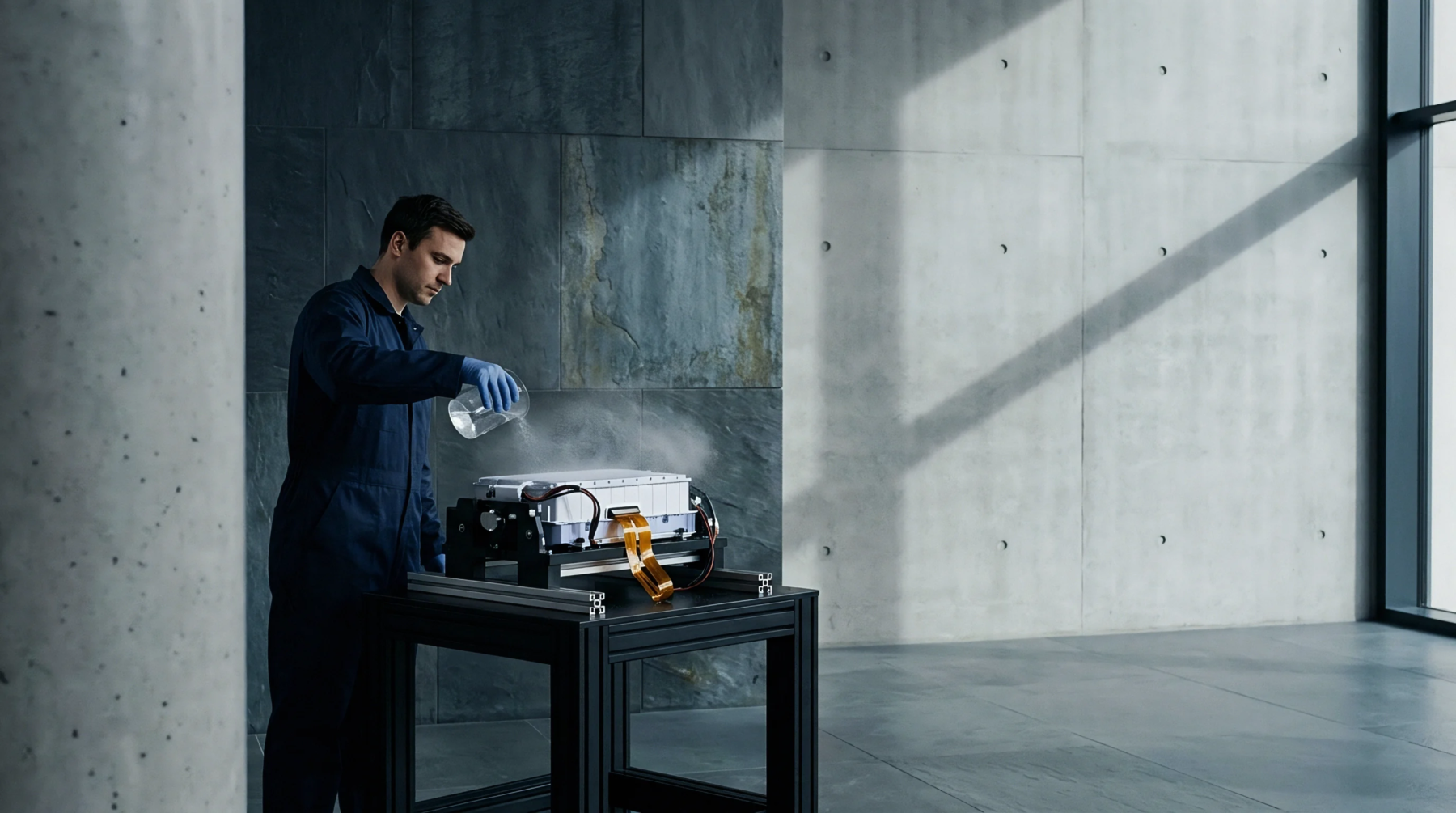
Localized degradation of metal surfaces represents a severe failure mode occurring when protective oxide films or passive barriers break down in highly acidic liquid environments. This phenomenon, termed acid pitting corrosion, creates narrow cavity structures that penetrate deep into the material substrate. It threatens the structural integrity of steel casings and lead-acid battery components during prolonged electrolyte exposure.
Corrosive Action
Microscopic anode regions form at sites of protective film disruption while the remaining surface acts as a cathode. This localized electrochemical action drives the accelerated dissolution of metal ions within the pits, deepening them rapidly. The concentration of hydrogen ions inside the pit increases, further accelerating the local breakdown.
Industrial Consequence
Mechanical failure occurs when these microscopic holes propagate through structural plates or hermetic seals, causing electrolyte leaks and cell dry-out. Material selection must prioritize high-alloy steels or nickel coatings to resist such localized attack.
Prevention Strategy
Surface finishing techniques and protective polymer coatings prevent the initial localized breakdown of the metal oxide layer. Regular monitoring of electrolyte acidity levels ensures the metal surfaces remain outside the pitting potential zone.