Meaning
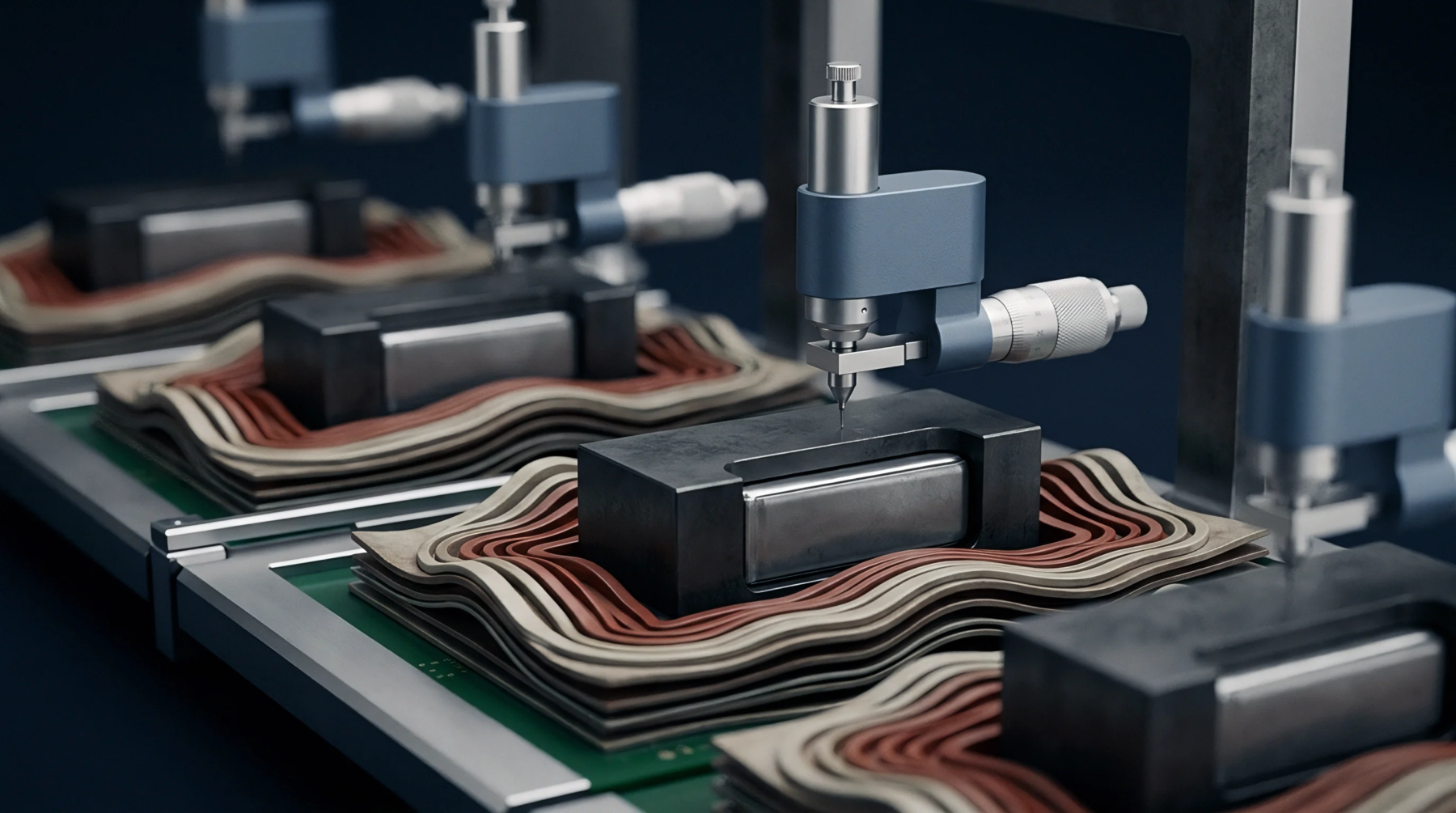
Electrochemical phase changes and ion intercalation cause reversible and irreversible dimensional volume growth within battery electrodes during charge cycles. Silicon anodes experience active material expansion reaching three hundred percent, whereas graphite exhibits volumetric changes below ten percent. This physical shift exerts mechanical pressure against separator and current collector assemblies.
The scope of this phenomenon excludes external housing deformation caused by gas evolution or thermal expansion of structural pack components.
Volumetric Strain
Mechanical stress generates microcracking inside particle matrices when lithiation forces lattice parameters to stretch. Continuous active material expansion fractures the solid electrolyte interphase layer, causing fresh electrolyte consumption and accelerating capacity loss over repeated cycling. Module designers apply external restraint plates to constrain cell thickening within fixed spatial allowances.
Interphase Fracture
Continuous breaking of protective surface films depletes lithium ions from liquid electrolyte solution. When active material expansion ruptures the passivating boundary, secondary parasitic reactions consume active solvent species and raise internal resistance. Cell lifespan drops sharply under high state of charge retention.
Mechanical Retraint
Structural pack housing must withstand sustained compressive forces without exceeding yield limits. Mechanical engineers configure elastic foam cushions between pouch cells to absorb active material expansion while maintaining baseline pressure to prevent interlayer delamination.