Meaning
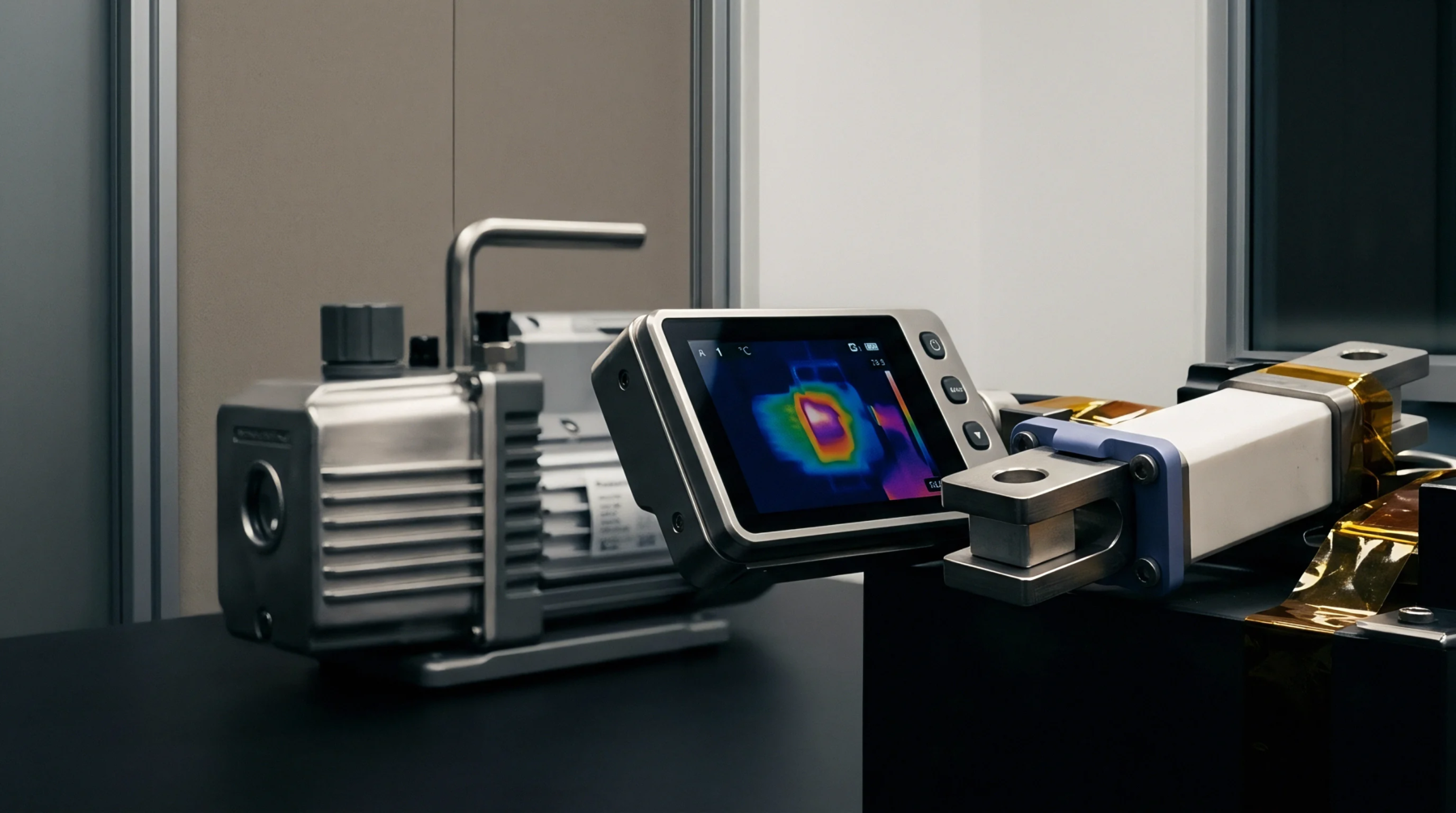
Environmental stress procedures evaluate the structural integrity and seal quality of secondary lithium cells during exposure to low atmospheric pressures. An altitude simulation test subjects a sample to a pressure of 11.6 kilopascals or less for a minimum of six hours at ambient temperature. Exposure to this environment identifies potential leakage, venting, mass loss, or rupture caused by the pressure differential between the cell interior and the external environment.
Vacuum Requirement
Internal pressure within a hermetically sealed battery container remains constant while external air pressure drops during ascent. The altitude simulation test creates a force that pushes against gaskets and crimped seals from the inside out. If the seal is compromised, electrolyte vapor escapes into the test chamber, which can be detected by mass measurement or visual inspection for residue around the terminals and vent ports.
This measurement is a standard part of the quality assurance process for cells destined for international distribution.
Structural Deformation
Soft pouch cells undergo measurable expansion when external counter-pressure is removed. This expansion might lead to tab disconnects or internal short circuits, so the altitude simulation test helps designers evaluate casing strength. Hard-case prismatic or cylindrical cells resist these forces through rigid wall construction.
Logistical Clearance
Successful completion of this procedure is a prerequisite for air transport of lithium ion products. Certification agencies verify that no mass loss or voltage drop occurs during the exposure. Products failing the altitude simulation test require redesign of the sealing mechanism or reinforced housing to prevent catastrophic failure during flight.