Meaning
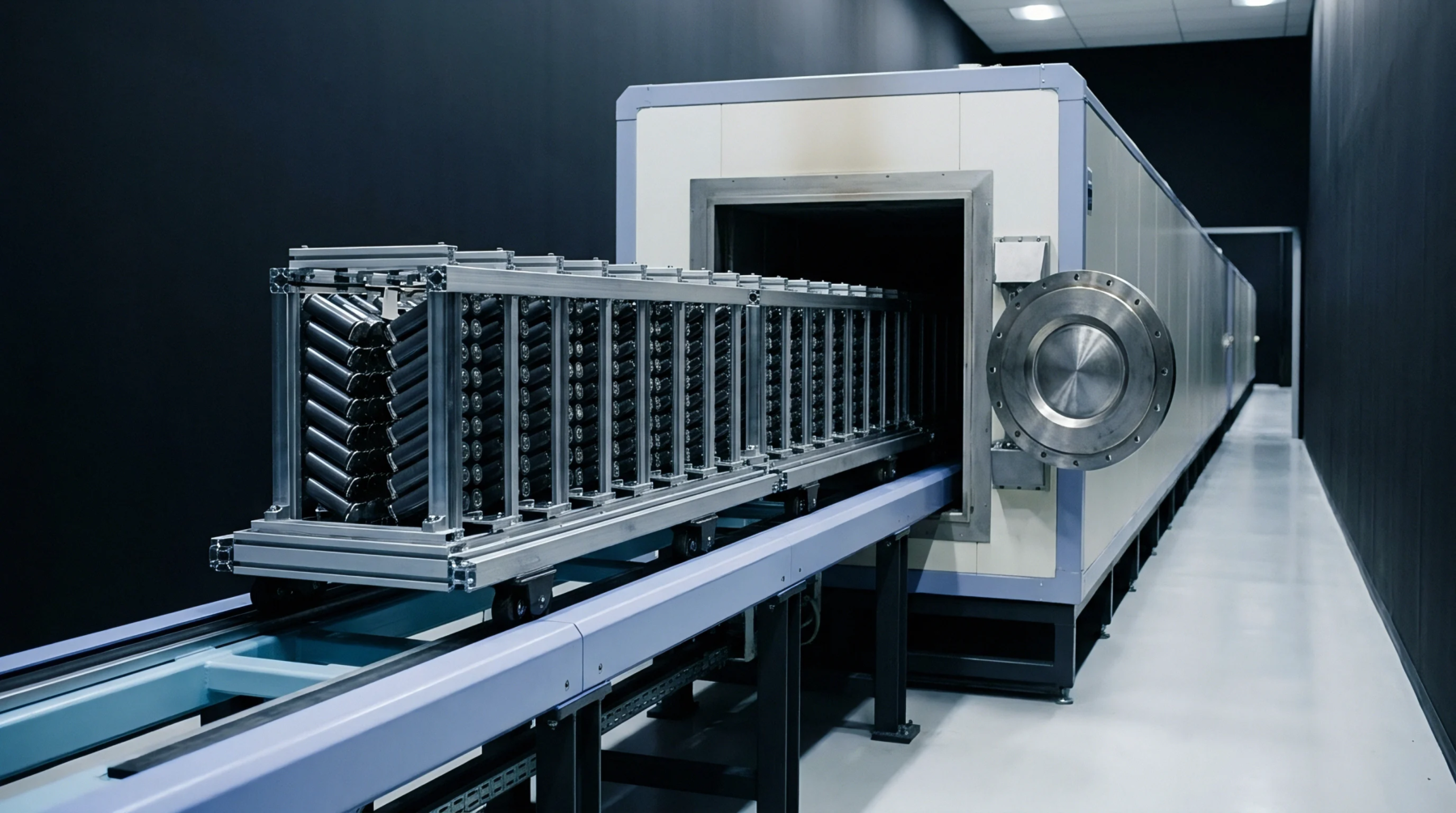
Thermal setpoints applied during cell conditioning govern the rate at which volatile contaminants leave solid surfaces under reduced atmospheric pressure. Specifying a bakeout temperature establishes the thermal energy imparted to wound or stacked electrode assemblies before electrolyte wetting, accelerating the desorption of surface water and volatile solvent fractions without inducing binder pyrolysis or separator shrinkage. Thermal monitoring measures the temperature across the oven hearth, gas stream or cell surface, defining thermal boundary conditions that prevent thermal degradation of polymer separators while driving moisture removal below target thresholds.
Degradation Threshold
Processing boundaries depend heavily on separator morphology and binder composition. Setting bakeout temperature above the glass transition point or melting temperature of microporous polyolefin separators causes pore collapse, destroying ionic conductivity across the barrier layer. Polyvinylidene fluoride binders also risk chemical softening or phase migration when heated excessively under deep vacuum, which degrades adhesion between active electrode coatings and metallic current collectors.
Thermal margins for crosslinked polyethylene separators tolerate higher thermal exposure than baseline polypropylene webs, giving process designers narrow operating windows that balance throughput with mechanical integrity.
Desorption Kinetics
Moisture removal exhibits an exponential relationship with applied heat, governed by Arrhenius-type desorption kinetics for physically and chemically bound water molecules. A higher bakeout temperature supplies the necessary activation energy to sever hydrogen bonds holding water to high-surface-area transition metal oxide cathodes and porous carbons. Vacuum levels enhance mass transport away from electrode pores, but thermal input remains the primary rate-controlling factor for clearing sub-surface adsorption sites.
Lowering thermal input by even twenty degrees Celsius often requires a tripling of the residence time inside vacuum chambers to achieve equivalent dryness levels.
Procurement Qualification
Supply contracts define thermal validation through multi-point thermocouple mapping within industrial drying chambers. The bakeout temperature appears in process failure mode and effects analysis sheets as a critical process parameter, requiring statistical process control tracking for lot release. Audits verify that production ovens maintain uniform thermal distribution across entire carrier trays, preventing edge-to-center thermal variations from generating uneven residual moisture distributions across consecutive cell lots.
Traceability documentation links each finished cell serial identifier to time-stamped temperature chamber logs, ensuring that deviations trigger immediate segregation of unverified electrode stock.