Quantifying Vacuum Bakeout Kinetic Thresholds for Preventing Prior Particle Boundary Oxide Networks
Vacuum bakeout kinetic thresholds require evacuating surface hydroxyls below 10⁻⁴ Pa before consolidation to prevent continuous boundary oxide networks.

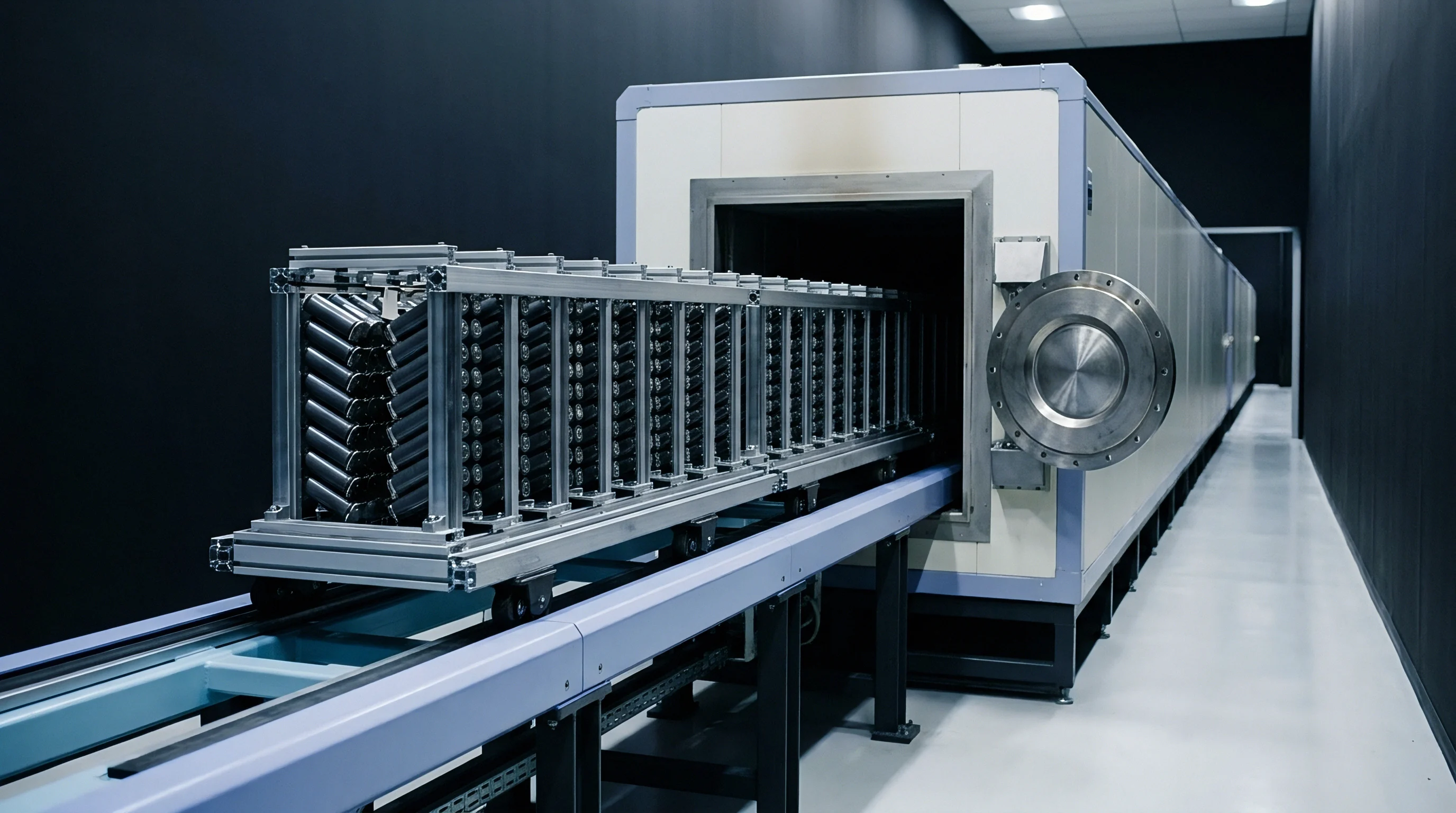
Efflux
Powder surfaces govern the ultimate fracture toughness of solid-state separators and consolidated current collector tabs. On gas-atomized nickel-rich powders as well as sulfide or oxide ceramic particles, moisture and atmospheric gases adsorb within seconds of exposure to ambient air. Both chemisorbed hydroxyls and physisorbed water coat these high-surface-area precursor beds.
If the particles are thermally consolidated under uniaxial or isostatic pressure without thorough degassing, those surface species react directly with alloying additions like aluminum, titanium, zirconium, or lithium. The consolidated material ends up with an interconnected envelope of refractory oxides, oxyhydroxides, and carbonates encasing each original particle.
These brittle shells form prior particle boundary networks. Inside finished battery components, such interfaces function as built-in cracks, thermal bottlenecks, and impediments to ionic or electronic transport. Preventing them requires tracking the desorption kinetics of surface moisture and volatiles before mechanical pressure seals the open pore network.
A desorption flux of 1.2 × 10⁻⁵ mbar·L/(s·cm²) at 480°C marks the kinetic boundary where residual surface oxygen drops below 80 parts per million.
Desorption proceeds through distinct temperature regimes set by the binding energies of the adsorbed species. Physisorbed moisture releases quickly between 80°C and 150°C under moderate vacuum below 1 Pa. Chemisorbed hydroxyls demand much higher activation energies, typically 120 to 260 kJ/mol depending on substrate chemistry, so stripping them requires temperatures past 380°C for metallic collector alloys and above 450°C for oxide ceramics. Applying consolidation pressure while desorption is still underway traps the outgassing species within closed pockets between particles.
Molecular transport out of a deep powder bed is limited by Knudsen diffusion rather than free effusion. Once the mean free path of water molecules exceeds the pore diameter between particles, wall collisions dominate flow resistance. Trays loaded to depths under 15 mm vent vapor quickly, whereas beds thicker than 50 mm build steep internal pressure gradients.
In deep beds, the partial pressure of steam at the core can stay orders of magnitude higher than the chamber vacuum, creating a local microclimate that drives hydrothermal oxidation while the furnace is still ramping.
At heating rates above 5°C per minute, outer powder layers hit reaction thresholds before internal vapor can escape the bed. The trapped vapor accelerates the growth of crystalline alumina, chromia, or lithiated oxide crusts that survive all subsequent thermal processing.
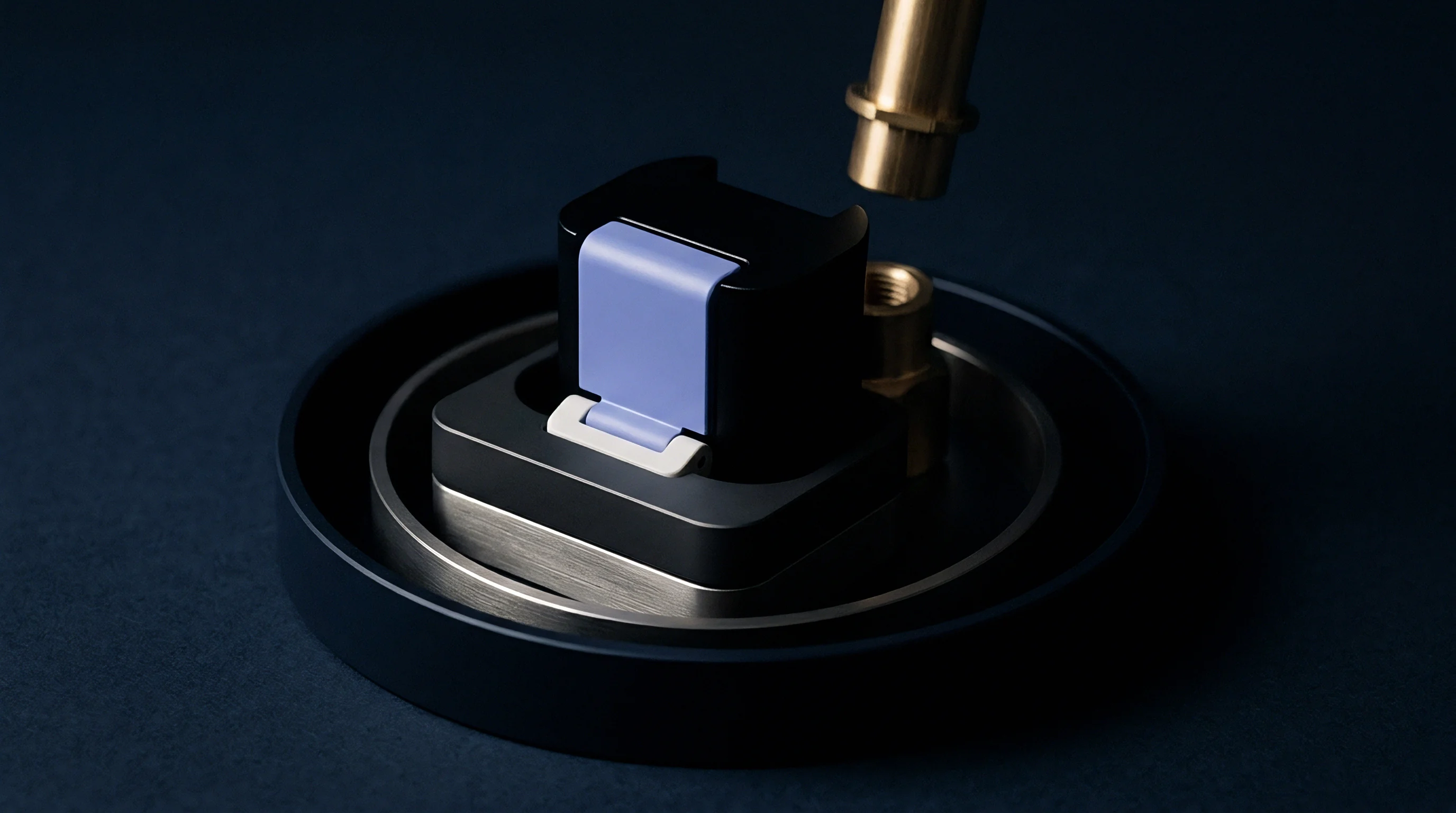
Trap
Conductance losses across vacuum plumbing explain why production degassing systems rarely replicate laboratory desorption data. Pumping throughput at the charge depends entirely on the geometry of the ports, baffles, and cold traps between the powder bed and the high-vacuum stack. During initial water release from multi-kilogram batches, the gas surge routinely swamps turbomolecular or diffusion pumps that lack liquid-nitrogen cryotrapping.
Condensation traps and refrigerated baffles placed right above the hot zone capture desorbed water before back-streaming or chamber-wall outgassing can recontaminate the preform. Restrictive forelines, sharp elbows, and undersized isolation valves throttle conductance, often leaving the effective pressure at the crucible lip ten times higher than the gauge reading at the pump inlet.
| Material System | Mean Particle Size (D50) | Desorption Activation Energy | Minimum Bakeout Temperature | Critical Pumping Threshold | Residual Interfacial Oxygen |
|---|---|---|---|---|---|
| Li7La3Zr2O12 (LLZO) | 1.8 µm | 185 kJ/mol | 520°C | 5.0 × 10⁻⁴ Pa | 42 ppm |
| Li6PS5Cl (Argyrodite) | 3.2 µm | 135 kJ/mol | 280°C | 1.0 × 10⁻³ Pa | 65 ppm |
| Ni-Cr-Mo Tab Preform | 18.5 µm | 210 kJ/mol | 650°C | 2.0 × 10⁻³ Pa | 28 ppm |
| Al-Zr Current Collector | 12.0 µm | 245 kJ/mol | 580°C | 8.0 × 10⁻⁴ Pa | 35 ppm |
| Ti-6Al-4V Enclosure Billet | 25.0 µm | 160 kJ/mol | 720°C | 5.0 × 10⁻⁴ Pa | 18 ppm |
| Data measured via residual gas analysis and inert gas fusion under dry argon carrier gas at steady-state vacuum flow. | |||||
Residual gas analysis tracks cleaning kinetics in real time during the bakeout. Watching mass-to-charge ratios 18 (water), 17 (hydroxyl), 28 (carbon monoxide), and 44 (carbon dioxide) shows exactly when peak desorption subsides into baseline chamber effusion. Thermocouples embedded in the powder core must verify that the center holds target temperature for at least two hours after the mass spectrometer signal for water drops to background.
Chamber pressure gauges reflect the pump throat environment rather than the gas density inside a packed powder crucible.
Equipment vendors rate pumping speeds against dry nitrogen at ambient temperature, but heavy water vapor loads cut effective volumetric displacement sharply as cryosurfaces ice over and mechanical pumps choke on condensables. If the vacuum line cannot clear the desorbed gas plume within its kinetic release window, the furnace atmosphere equilibrates with the bed, triggering secondary gas-solid reactions that coat particles in stable, high-melting-point oxides.
A furnace chamber base pressure of 10⁻³ Pa does not ensure protection against particle oxidation, because gas dynamics inside the packed bed diverge sharply from conditions in the free chamber.
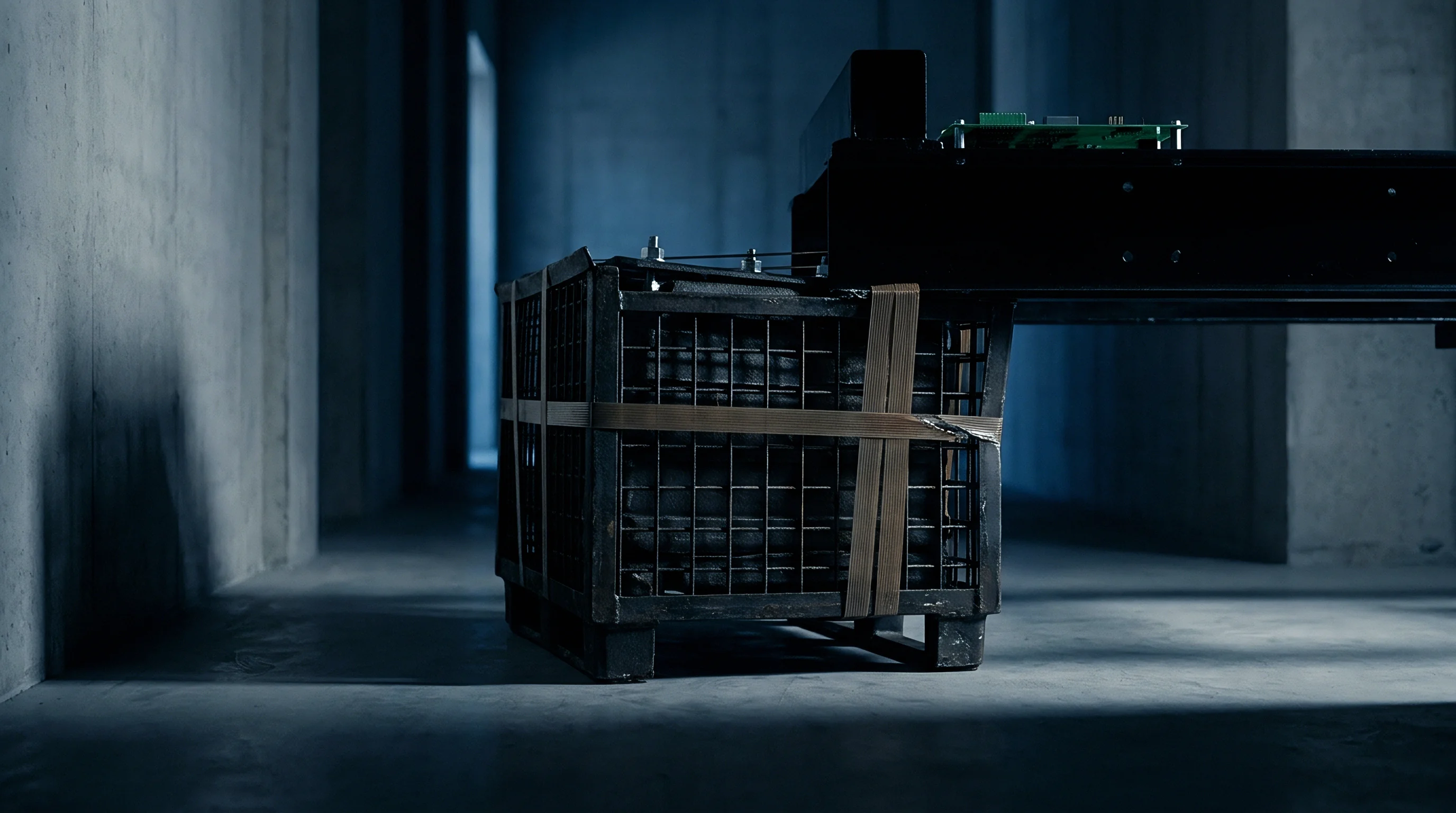
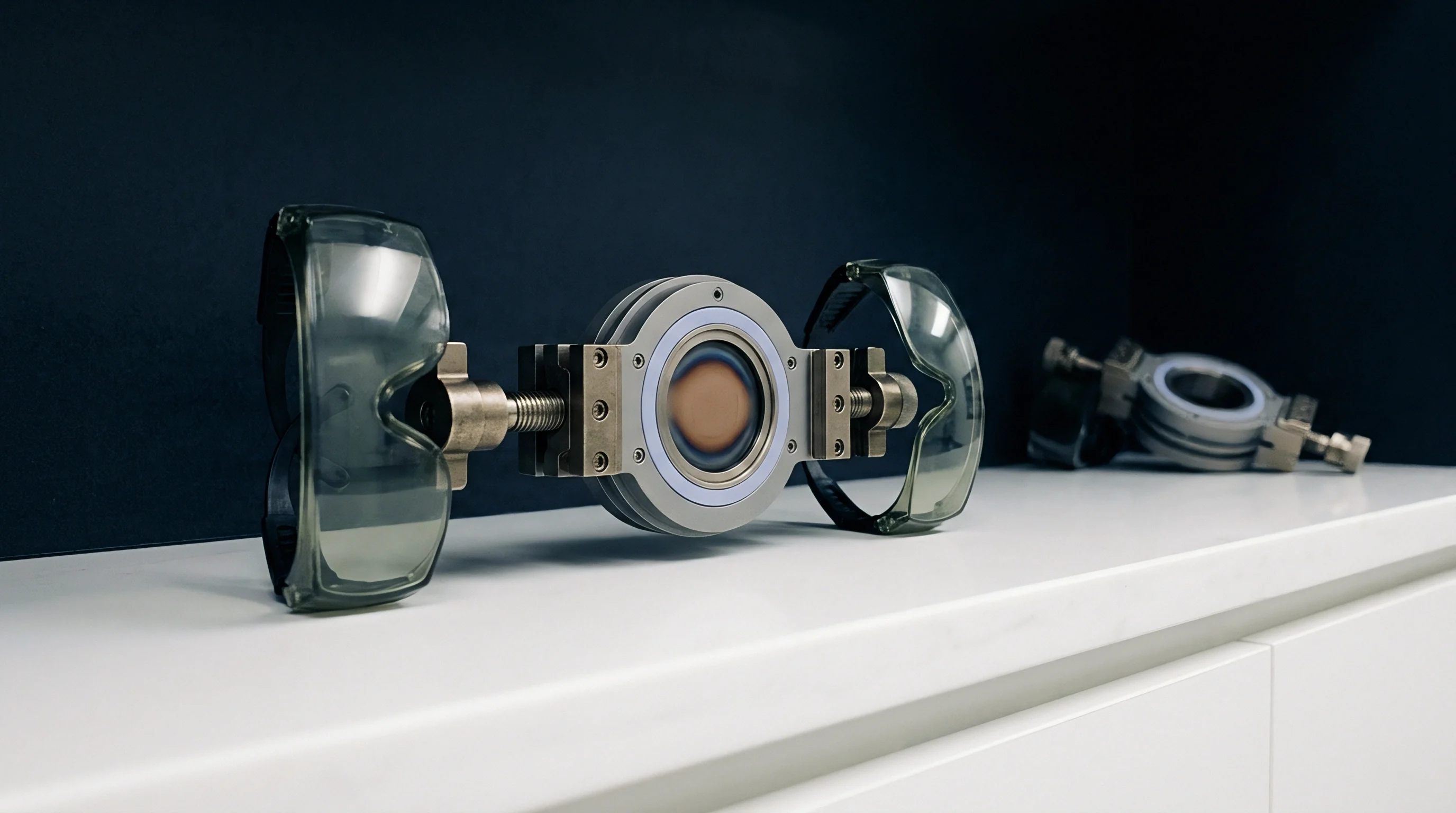
Grain
Surface oxide films preserve the original particle boundaries through every subsequent deformation and consolidation stage. In hot isostatic pressing, vacuum hot pressing, or warm roll compaction, plastic flow closes the voids between particles. Where clean interfaces meet under load, solid-state diffusion knits the boundary into continuous metallurgical grains; continuous oxide shells block that atomic transfer completely.
The mechanical and electrochemical defects caused by persistent prior particle boundaries follow predictable patterns:
- Intergranular brittle fracture develops across the rigid oxide network whenever tensile or shear stresses exceed the interface bond strength between the film and parent metal.
- Localized ionic blockage occurs in solid electrolytes where continuous non-conductive oxides constrict lithium-ion transport, crowding current through narrow percolation channels.
- Preferential chemical attack concentrates at contaminated boundaries exposed to reactive electrolytes, triggering stress-corrosion cracking and delamination during cyclic swelling.
- Interfacial void formation worsens during thermal cycling because thermal expansion mismatches between refractory oxides and the bulk matrix open micro-cavities at boundary triple points.
In solid electrolyte separators, prior particle boundary oxides cut the critical current density threshold by more than 60 percent. As lithium ions hit high-resistance boundary envelopes, the electric field spikes at microscopic defects, driving metallic lithium dendrites directly into boundary fissures and shorting the cell well below theoretical current limits.

Can Residual Hydroxyls Escape Closed Porosity?
Pore closure naturally precedes final densification. Once relative density passes 92 percent, open surface channels pinch off into isolated voids, sealing any remaining hydroxyls or volatile species inside. Under higher consolidation temperatures, this trapped moisture dissociates into hydrogen and oxygen, generating internal gas pressures that resist further compaction.
Driven along vacancy gradients, free oxygen reacts with adjacent electropositive elements to form fine oxide crystallites that pin dislocation movement. In nickel-based terminal assemblies, this grain-boundary oxide dispersion drops tensile elongation from an expected 35 percent to under 8 percent. Parts pass initial electrical continuity tests without issue, only to shear along particle boundaries during pack vibration testing.
When consolidation runs proceed without complete outgassing, the resulting pack structures risk catastrophic unzipping along terminal joints, forcing module write-offs and field containment campaigns.
Press
Hot consolidation presses require sealed vacuum transfer locks between the degassing retort and the press chamber to keep stripped preforms dry. Moving baked billets through air, even in dry rooms held below a minus 40°C dew point, recontaminates reactive surfaces within minutes. Freshly cleaned metal and ceramic particles have such high thermodynamic affinity for water that hydroxyl monolayers re-establish within three minutes of exposure.
Integrated vacuum hot presses sidestep transfer contamination by handling thermal bakeout and mechanical compaction in the same vessel. The trade-off is mechanical complexity: heating arrays, refractory dies, and dynamic vacuum seals must withstand mechanical loads over 50 MPa at temperatures above 600°C.
| Tooling Architecture | Pumping Speed (H2O) | Cycle Duration | Initial Tooling Investment | Throughput Limit per Day | PPB Defect Rate |
|---|---|---|---|---|---|
| Single-Chamber Vacuum Hot Press | 2,200 L/s | 8.5 h | $850,000 | 12 billets | < 0.05% |
| Decoupled Bakeout with Glovebox Transfer | 5,000 L/s | 4.2 h | $420,000 | 36 preforms | 0.8% – 2.5% |
| Continuous Vacuum Tunnel Furnace | 12,000 L/s | 2.1 h | $2,400,000 | 180 plates | < 0.02% |
| Cold Isostatic Press with Retort Bakeout | 1,200 L/s | 14.0 h | $310,000 | 8 canisters | 1.5% – 4.2% |
Bakeout kinetics dictate cycle times far more than the pressing stage itself. A cycle requiring only 30 minutes at peak load can easily consume six hours of slow heating under vacuum to ensure outgassing clears the target threshold. Forcing the ramp faster sets up internal thermal gradients that crack brittle ceramics or induce localized surface melting.
Tooling that compacts powder before residual outgassing drops below target levels permanently seals the defect inside the core.
Balancing capital cost against throughput leaves process engineers trading pumping capacity directly against cycle time. Adding oversized turbomolecular pumps and foreline cryotraps can double upfront equipment spend, but shaving 40 percent off the thermal dwell drops the net energy cost per finished piece.
Empirical diffusion data remains insufficient to predict the exact threshold where trapped boundary oxides break up from continuous films into isolated, benign inclusions under varying compaction shear fields.

Seam
Supply contracts for consolidated battery parts must define where responsibility for bakeout verification sits. Powder atomizers certify bulk chemistry and particle size distribution as a matter of course, but routinely disclaim liability for surface states, treating adsorbed moisture, carbonates, and volatiles as transit or storage contamination on the buyer’s end.
Purchase orders for pre-consolidated separator tiles, sintered electrodes, or current collector components require explicit quality gates. Qualifying any supplier demands direct review of furnace vacuum logs, mass spectrometer traces, and cross-sectional microscopy of grain boundaries on finished parts.
Whose Balance Sheet Absorbs Interfacial Fracture?
When battery packs fail in the field from interfacial cracking, warranty audits focus immediately on the metallurgical boundary. Disputes routinely stall over whether fractures originated from pack vibration profiles, assembly tolerances, or microscopic defects sealed in during powder consolidation. Without clear prior-particle-boundary limits in the component drawing, the pack assembler absorbs the warranty cost by default.
Establishing binding commercial specifications requires a structured qualification sequence:
- Material verification protocols establish baseline surface chemistry on incoming powder lots using X-ray photoelectron spectroscopy and inert gas fusion.
- Tooling sign-off records furnace pumping curves and residual gas analysis traces for every thermal degassing cycle to confirm water vapor levels clear contracted thresholds.
- Destructive inspection evaluates fracture surfaces from batch coupons under high-resolution scanning electron microscopy to measure boundary coverage.
- Electrochemical testing verifies that consolidated solid electrolyte plates sustain target critical current densities under stack pressure without impedance spikes.
Sourcing agreements that leave boundary cleanliness undefined create untraceable quality liabilities. When parts fail under thermal cycling or vibration, the lack of furnace run logs leaves the pack integrator holding the entire bill for field replacements.
A contract clause mandating delivery of calibrated residual gas analysis logs for every sintering heat creates direct supplier accountability.
Under section 7.4 of standard ISO 17025 accredited aerospace and energy component agreements, missing vacuum degassing records automatically void supplier warranty defenses, leaving the vendor directly exposed to consequential recall damages.