Meaning
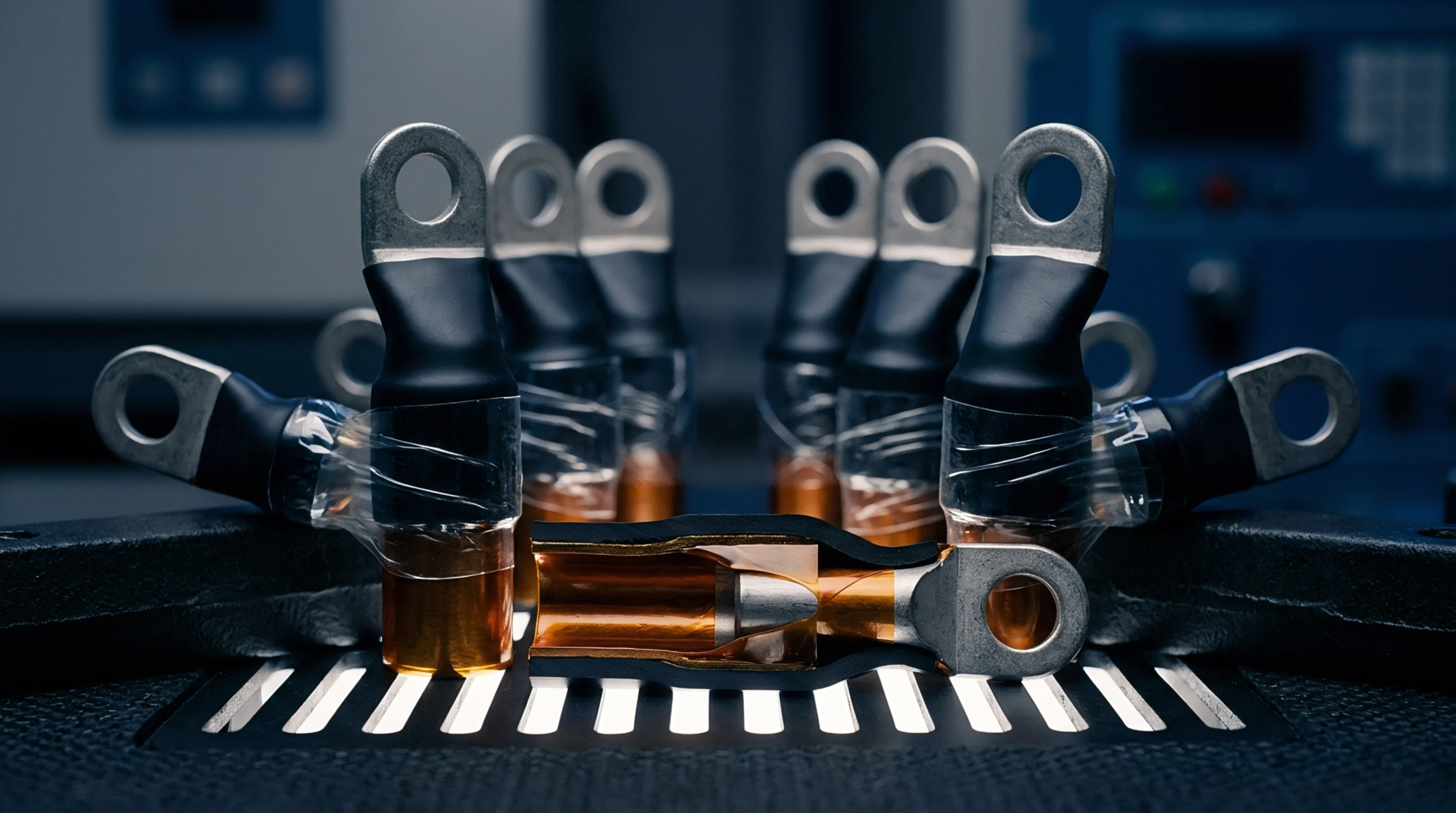
Electrical resistance in conductive distribution components results in the conversion of energy into waste heat during power transfer. Although copper and aluminum have low resistivity, busbar heating occurs as current densities increase in high power battery packs. Internal heat generation can lead to thermal imbalances between different cells in a module.
Managing this effect is necessary to prevent premature degradation of the surrounding plastic housings and insulation materials.
Ohmic Resistance
Material properties and cross sectional area dictate the amount of energy lost as heat. As busbar heating intensifies, the resistance of the metal increases, creating a feedback loop that requires careful thermal monitoring. Large format cells often use thicker connectors to mitigate this problem during rapid discharge.
Connection Integrity
Bolted or welded joints are the most frequent locations for localized temperature spikes. If busbar heating is not controlled at these interfaces, the thermal expansion and contraction can loosen fasteners or crack weld beads. High resistance at a single joint causes a disproportionate amount of heat to accumulate, potentially triggering a local melting of the insulation.
Engineers use infrared thermography during load testing to identify these hotspots before the pack enters production.
Safety Margin
Thermal sensors are often placed near the main terminals to detect abnormal temperature rises. Continuous busbar heating above eighty degrees celsius indicates an undersized conductor or a failing contact.