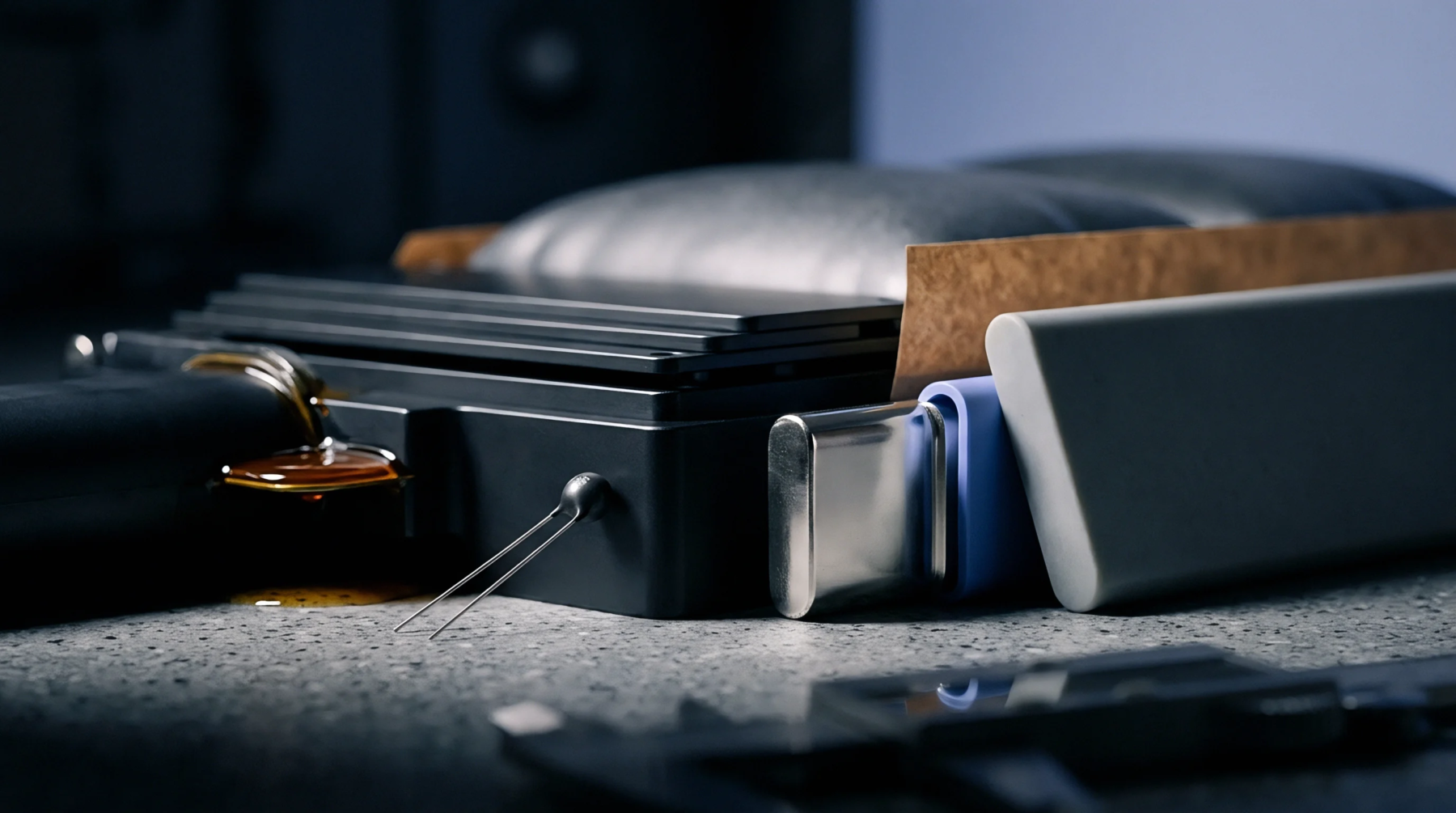
Sub-Zero Battery Cell Degradation Diagnostics and Adjudication Protocols
Sub-zero charging forces irreversible metallic lithium plating on graphite, demanding precise dQ/dV diagnostics and rigorous telemetry logging to enforce warranty remedies.
Analytical electron microscopy utilizing sub-zero sample transfer hardware and cold stages allows the direct observation of beam-sensitive, volatile, or highly reactive electrochemical materials. Implementation of cryo-transfer sem enables nanoscale characterization of pristine solid-electrolyte interphase layers, dendrite nucleation sites, and frozen liquid electrolytes by preventing ambient atmospheric exposure and thermal degradation. The apparatus governs morphological and chemical verification of lithium metal anodes and sulfide-based solid conductors under operational or plated conditions.
Its authority stops at the vacuum boundary of the microscope chamber, having no direct jurisdiction over macro-scale cell testing or bulk pack-level validation.
Reactive battery constituents degrade instantaneously upon exposure to trace moisture and oxygen, converting metallic lithium into hydroxides, carbonates, and oxides. Specialized vacuum transfer shuttles, submerged in liquid nitrogen or cooled by dry nitrogen gas, transport fragile specimens directly from an argon glovebox into the scanning electron microscope. Fast freezing preserves the spatial architecture of dendritic lithium deposits, which otherwise melt or collapse under the energetic electron beam at ambient temperature.
Freezing volatile liquid electrolyte components vitrifies the solvent matrix, preventing evaporation in high vacuum and enabling direct observation of the pristine electrode-electrolyte boundary. Secondary electron imaging at temperatures below minus one hundred and sixty degrees Celsius reveals authentic crystal facets, porous networks, and interfacial films without processing artifacts.
Solid-state battery development relies on cold electron microscopy to characterize interface degradation without triggering laser-induced or beam-induced phase transitions. Energy-dispersive X-ray spectroscopy performed under cryogenic conditions yields quantitative elemental distributions of sulfur, phosphorus, and lithium compounds across solid electrolyte boundaries. The reduced sample temperature minimizes beam-induced diffusion of mobile alkali ions, providing authentic spatial mapping of interphase evolution across repeated cycling.
High-resolution backscattered electron imaging distinguishes unreacted solid electrolyte particles from degraded interphase compounds based on atomic number contrast. These observations clarify the physical breakdown paths that generate interfacial resistance growth during high-voltage retention tests.
Supplier quality audits require cryogenic imaging to confirm the efficacy of artificial interphase coatings applied to advanced lithium metal foils. Micrographs confirm whether engineered protective layers remain uniform, continuous, and crack-free across commercial foil widths without pinholes that invite dendritic penetration. Contract specifications for high-energy cell chemistries mandate representative cold-stage cross-sectional views prepared by cryo-focused ion beam milling.
Cross-sections delineate the boundary between plated lithium and current collectors, verifying that void formation during stripping cycles does not compromise mechanical adherence. Image data from frozen samples directly validate the thermodynamic stability models submitted during supplier qualification.
Sub-zero charging forces irreversible metallic lithium plating on graphite, demanding precise dQ/dV diagnostics and rigorous telemetry logging to enforce warranty remedies.
Expertise is a utility, not a secret. sentiention™ publishes its working knowledge as open reference: intelligence layer covering the materials it sources, the markets it enters, and the reference that serves both.