Meaning
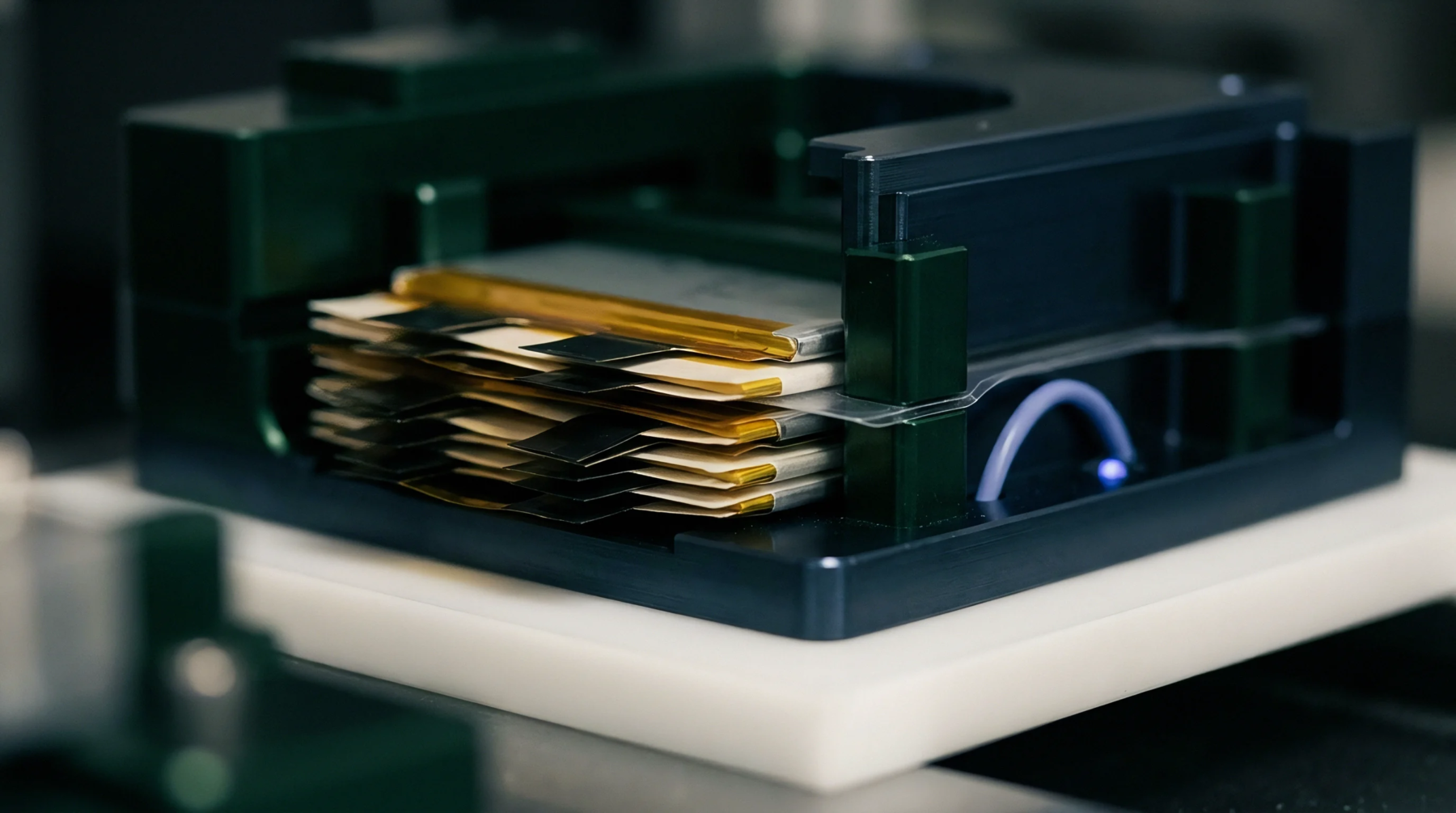
Solvent evaporation represents the release of volatile organic compounds from a lithium-ion cell during thermal stress or overcharge conditions. This dimethyl carbonate off-gassing occurs when the internal temperature of a cell exceeds the boiling point of the low viscosity solvent component in the electrolyte. It produces a flammable vapor that increases internal pressure and may lead to pouch swelling or venting.
Chemical Reaction
Decomposition of the solid electrolyte interphase layer often precedes the massive release of vaporized solvents. Once the protective layer fails, the dimethyl carbonate off-gassing intensifies as the solvent reacts with the exposed lithiated graphite. These reactions generate heat and further gas species such as methane or carbon monoxide.
Safety Assessment
Thermal stability testing measures the volume and composition of the gas released to determine the risk of fire. High rates of dimethyl carbonate off-gassing signal a need for more robust pressure relief valves or stronger pouch laminates. This data informs the design of thermal management systems and fire suppression protocols.
Pressure Impact
Pouch cells are particularly sensitive to the accumulation of internal vapors which cause delamination and loss of contact. Rapid dimethyl carbonate off-gassing can result in a sudden rupture of the cell casing. Engineers monitor this behavior to set the upper temperature limits for safe operation.