Ground Criteria for Evaluating off the Shelf Battery Assemblies
Off-the-shelf battery assembly selection requires auditing cell impedance matching, verifying continuous thermal limits, and locking the bill of materials.

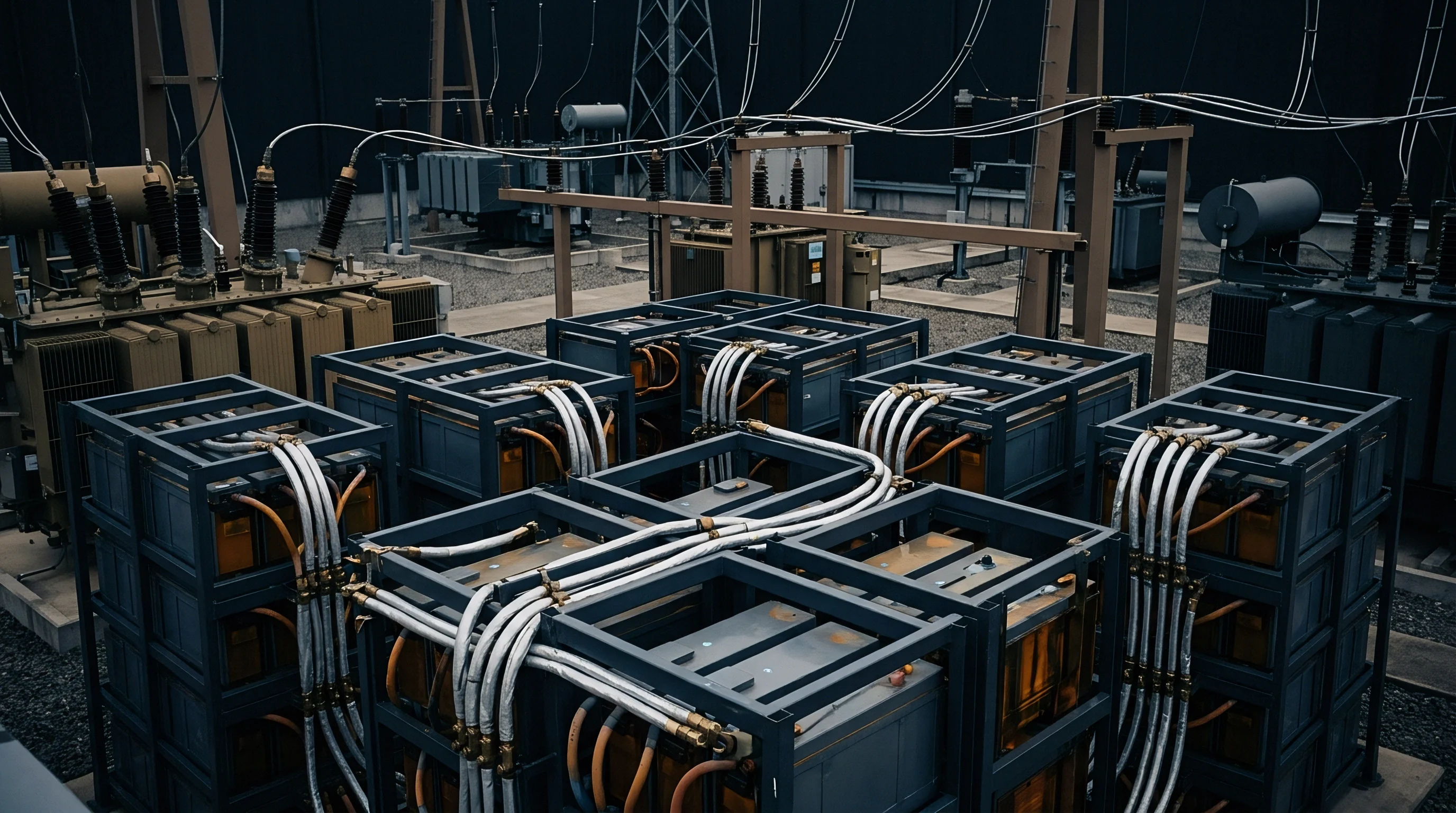
Integrity

Mechanical Housing Standards and Environmental Ingress
Off-the-shelf battery assemblies demand thorough verification of enclosure seals, fastener torques, and internal cell retention structures prior to electrical qualification. Plastic housings molded from polycarbonate or ABS blends require wall thicknesses above 2.5 mm to resist flexure from internal pressure build-up. Sheet metal enclosures using deep-drawn 5052-H32 aluminum alloy or powder-coated cold-rolled steel must maintain flange flatness within 0.3 mm across any 100 mm span, as insufficient rigidity causes gasket shear during thermal cycling.
Ingress protection ratings on supplier data sheets often reflect static bench testing rather than dynamic real-world operation. Seals certified to IP67 under IEC 60529 can leak under operational vibration and ambient temperature swings that draw outside air across elastomeric gaskets. Molded silicone gaskets with a shore hardness of 50 to 60 Durometer A preserve elastic recovery under thermal stress between negative 40 °C and 85 °C, whereas inexpensive polyurethane foam gaskets take a compression set within 500 thermal cycles.
Enclosures relying exclusively on perimeter adhesives complicate field servicing and fail when shear loads exceed 1.2 MPa.
| Format Type | Housing Material | Ingress Rating | Vibration Standard | Retention Method |
|---|---|---|---|---|
| Prismatic Module | Aluminum 5052-H32 | IP67 | UN 38.3 T3 (7 Hz to 200 Hz) | Structural Epoxy and End Plates |
| Cylindrical Pack | Polycarbonate/ABS | IP65 | IEC 62133-2 (10 Hz to 55 Hz) | Cell Holders with Silicone Potted Rails |
| Pouch Assembly | Sheet Steel SECC | IP54 | SAE J2380 (Random Vibration) | Foam Compression Pads and Frame Clamps |
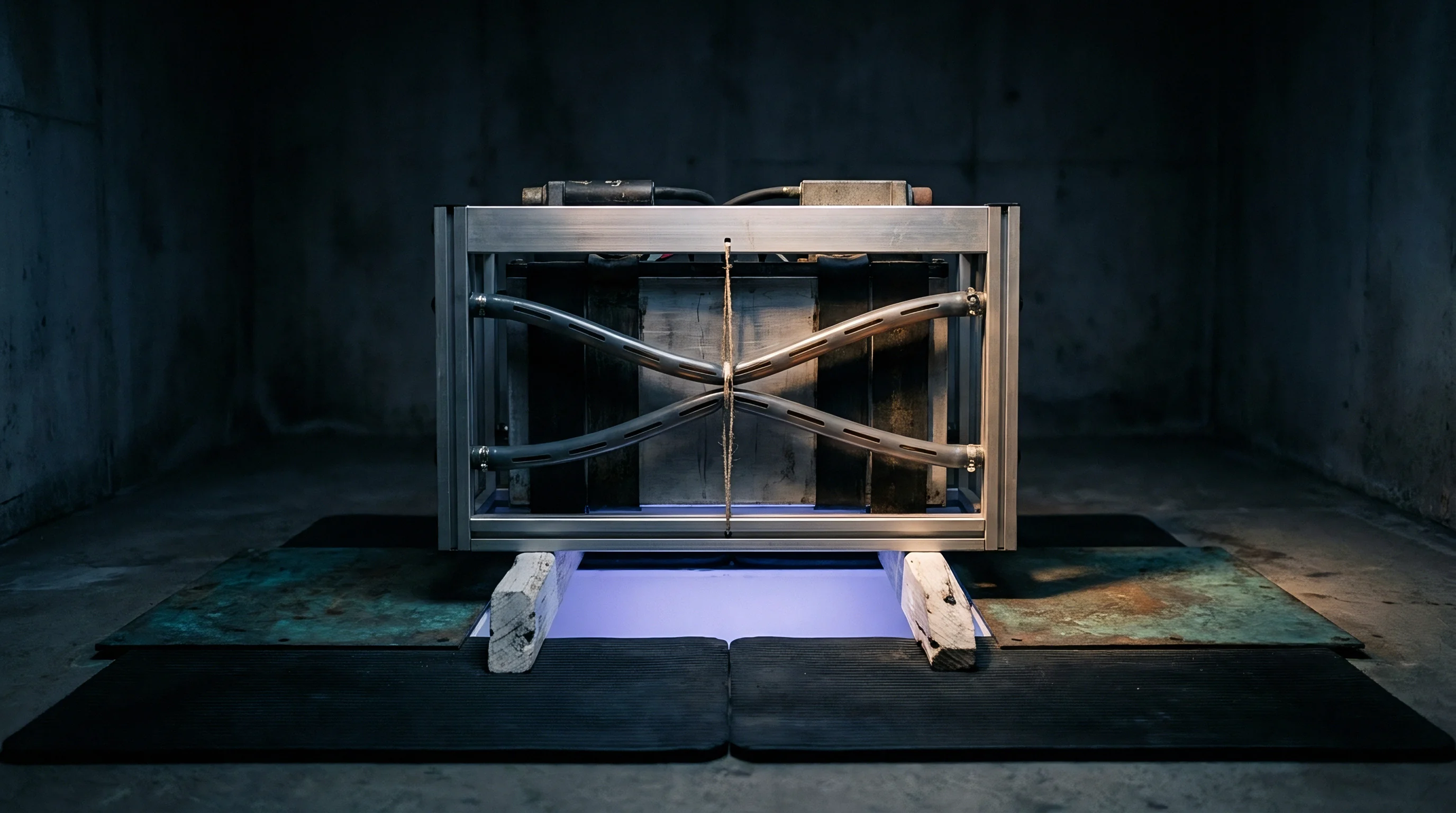
Busbar Interconnects and Joint Mechanical Fatigue
Internal interconnects endure heavy fatigue from differential thermal expansion between cell terminals and structural frames. Ultrasonic wedge bonding using 99.99 percent pure aluminum wire provides low electrical resistance, but thin wire bonds remain susceptible to resonant frequencies between 100 Hz and 500 Hz. Laser-welded nickel-plated copper busbars deliver far better fatigue life, provided weld depth reaches 1.2 times the busbar thickness without piercing the cell terminal cap. Micro-cracking at busbar solder joints drives up contact resistance over time, accelerating localized heating.
Creepage and clearance distances require strict enforcement to prevent high-voltage flashover in pack architectures above 60 V DC. Minimum creepage across printed circuit board surfaces must equal 3.2 mm under pollution degree 2 conditions, with clearance through air held at 2.5 mm minimum. Off-the-shelf assemblies built without conformal coatings on internal monitoring boards risk insulation failure whenever internal humidity condenses during rapid cooling cycles.
Failure to audit internal mechanical construction leaves product programs exposed to field vibration fractures that bypass initial incoming quality control checks.

Drain

Continuous Thermal Equilibrium and Rate Flattery
Discharge ratings printed on commercial specification sheets frequently represent peak burst capability rather than sustained operating thresholds. A pack advertised with a 3C discharge rating often hits its 60 °C thermal cutoff within four minutes of operation in a 25 °C ambient environment. Continuous rate capability represents the maximum current an assembly can discharge indefinitely without thermal runaway or exceeding internal temperature limits, generally demanding forced air or liquid cold plates to deliver published figures.
The continuous discharge rating of a battery assembly is the exact current level that sustains steady-state cell temperatures below 55 °C under unforced ambient airflow.
Internal cell resistance generates Joule heating equal to the square of current multiplied by internal resistance. Standard off-the-shelf packs built with high-energy 18650 or 21700 cells carry internal DC resistances between 25 mΩ and 45 mΩ per cell string. When four series strings operate at a continuous 20 A discharge, internal power dissipation reaches 18 W inside the confined enclosure, rapidly driving up cell temperature and accelerating solid electrolyte interphase breakdown.
- Thermal Layering Upper cell rows trap rising heat from lower rows, creating internal temperature differentials exceeding 12 °C across the string.
- Voltage Sag Internal DC resistance drops operating voltage under high current loads, triggering early low-voltage cutoff before rated energy is delivered.
- BMS Current Limiting Integrated protection boards automatically throttle output current when sensing leads detect temperatures over 55 °C, stopping system operation.
- Interconnect Degradation Continuous high-current operation elevates busbar temperatures, oxidizing mechanical contact points and increasing terminal resistance.
Suppliers routinely present discharge data recorded at liquid-chilled conditions as room-temperature operational ratings.
Vent
Pressure Relief and Mitigation Architecture
Thermal runaway in a single cell generates flammable gases, including carbon monoxide, hydrogen, and vaporized electrolyte solvents at temperatures exceeding 600 °C. Off-the-shelf pack enclosures must incorporate dedicated pressure relief vents to prevent explosive rupture. Spring-loaded mechanical valves or burst discs made of fluoropolymer membranes must rupture at internal pressures between 20 kPa and 50 kPa. Vents positioned adjacent to sensitive control electronics risk spraying conductive debris across low-voltage traces during an exhaust event.
Internal cell isolation prevents cascading failures during venting events. Aerogel insulation sheets or compressed glass-wool papers positioned between pouch cells absorb thermal energy and impede lateral heat transfer. Mica barriers of 0.5 mm thickness withstand direct flame exposure for 10 minutes, protecting adjacent cell banks long enough for system safety shut-down routines to complete.
IEC 62619 subclause 8.2.2 mandates that a single cell thermal runaway event within an industrial battery assembly shall not propagate to adjacent cells.
What Triggers Thermal Propagation in Modular Enclosures?
Propagation occurs when localized heat dissipation cannot prevent an adjacent cell from reaching its critical breakdown threshold, typically 130 °C for standard nickel manganese cobalt chemistries. In dense modular layouts, conductive heat transfer through shared nickel busbars serves as the primary propagation pathway. Thin aluminum oxide or ceramic isolation washers under busbar mounting screws reduce thermal cross-talk while maintaining electrical contact across terminals.
Venting channel paths require clear exit routes to ambient atmosphere outside the host device enclosure. Exhaust channels that turn through multiple 90-degree elbows create back-pressure during rapid gas expansion, blowing internal seals back into the primary electronics bay. Gas volume calculations for standard lithium-ion chemistries assume 1.5 to 2.5 liters of gas generated per amp-hour of cell capacity released in under 15 seconds.
How does an off-the-shelf assembly vent this volume without exceeding the structural deformation limit of its secondary outer shell?


Paperwork
Compliance Records and Shipping Documentation
Commercial deployment of off-the-shelf battery assemblies demands a complete compliance dossier before customs clearance or transit authorization. UN 38.3 transport testing certification serves as the universal prerequisite for commercial transport by air, sea, or ground. This dossier must contain official test records from an accredited laboratory detailing performance across eight distinct subtests: altitude simulation, thermal testing, vibration, shock, external short circuit, impact/crushing, overcharge, and forced discharge.
- Verify that the test report lists the exact model number, cell configuration, and mass of the battery assembly offered by the supplier.
- Confirm the testing lab holds ISO/IEC 17025 accreditation with battery testing included under its formal scope of competence.
- Cross-check the battery management system hardware revision on the compliance report against the assembly revision inside the shipment.
- Inspect the Material Safety Data Sheet to ensure compliance with current GHS standards and verified 14-point dangerous goods classifications.
- Validate the European Economic Area Declaration of Conformity against harmonized standards IEC 62133-2 for portable applications or IEC 62619 for industrial platforms.
| Standard | Mandatory Scope | Primary Failure Mode Tested | Required Documentation |
|---|---|---|---|
| UN 38.3 | Global Shipping | Thermal shock, low pressure, heavy impact | UN 38.3 Test Summary Report |
| IEC 62133-2 | Portable Equipment Safety | Internal short circuit, continuous charging | CB Test Certificate and Report |
| UL 1973 | Stationary / Motive Energy | Overcharge, endurance, thermal runaway | UL Listing Mark and Authorization Report |
| UN ECE R100 | Automotive Commercial Vehicles | Electric safety, structural crash resistance | Type Approval Certificate |
Paperwork errors halt customs clearance faster than physical defects stop incoming inspection lines. Missing test summaries under UN 38.3 section 38.3.5 result in impounded shipments at port terminals. The importer of record bears total legal liability for non-compliant dangerous goods declarations.
Under IATA Dangerous Goods Regulations Section IA, shippers presenting non-certified lithium batteries for air freight face commercial bans and statutory financial penalties.
Section 38.3.5 of the UN Manual of Tests and Criteria requires manufacturers and subsequent distributors to make the UN 38.3 test summary available to the supply chain without request prior to shipment dispatch.
Grading
Cell Binning Dynamics and Impedance Mismatch
Battery assembly lifespan depends directly on cell matching uniformity during module manufacturing. Premium pack integrators sort cells by capacity within a 1 percent tolerance band and internal DC resistance within a 1.5 mΩ margin. Low-cost assemblers frequently blend cell batches from different production runs or mix secondary grade cells.
This mismatch causes severe cell imbalance during high-current cycling.
To evaluate the impact of internal resistance mismatch, take a 13S4P pack assembly operating at a 48 V nominal output constructed with 2.5 Ah nominal cells. Assume three parallel strings hold an average internal resistance of 30 mΩ per cell, while the fourth string contains lower-tier cells averaging 42 mΩ. Under a 40 A total load, current splits unevenly across parallel branches.
The lower-resistance paths draw 11.2 A each, while the high-resistance string carries only 6.4 A. During recharge, the lower-resistance cells absorb higher current, causing accelerated capacity fade and localized overheating.
| Parameter Case | Branch 1-3 IR (mΩ) | Branch 4 IR (mΩ) | Branch 4 Load Share | Projected Cycle Life to 80% Capacity |
|---|---|---|---|---|
| Matched Grade A | 30.0 | 30.5 | 24.8% | 1,200 Cycles |
| Moderate Mismatch | 30.0 | 36.0 | 21.4% | 750 Cycles |
| Severe Mismatch | 30.0 | 45.0 | 17.6% | 400 Cycles |
Factory grading sheets must be verified by batch testing incoming assemblies using AC 1 kHz impedance measurements alongside 10-second DC pulse discharge tests. AC impedance highlights tab welding quality, while DC pulse tests expose true electrochemistry kinetics under load.
Capacity grading performed at 0.2C discharge flatters low-grade cells that show severe capacity drops when operated at 1C rates.
- Impedance Delta Discrepancies between AC 1 kHz reading and DC pulse resistance indicate poor internal foil welding or degraded electrolyte wetting.
- Self-Discharge Rate Cells showing a static open-circuit voltage drop exceeding 0.5 mV per day during storage indicate micro-shorts in the separator.
- Capacity Variance String capacity defaults to the performance of its weakest parallel block, making wide cell distributions wasteful.
Cell capacity distributions follow strict Gaussian curves only when harvested from single production lots.

Settlement
Commercial Boundaries and Non-Recurring Engineering Allocation
Off-the-shelf battery assemblies eliminate custom casing tooling costs, yet commercial contracts must clearly state where standard catalog specifications end and buyer liability begins. Purchasing an existing pack drawing avoids upfront Non-Recurring Engineering fees for housing molds, but leaves the buyer exposed if the supplier modifies internal components. Supplier engineering change notices frequently swap internal cell providers, alter BMS microcontrollers, or drop potting material density without altering the external catalog part number.
Supply agreements must explicitly lock the internal bill of materials. A formal Change Control Clause obligates the supplier to notify the buyer 180 days prior to any change in cell supplier, BMS circuit layout, wire harness supplier, or firmware version. Component alterations require full re-qualification under UN 38.3 and IEC 62133-2 at the supplier’s expense.
Without this clause, an off-the-shelf pack verified during design validation may contain completely different internal hardware during production ramp-up.
Warranty seams represent a critical financial exposure point. Cell manufacturers limit warranty obligations to 12 months under storage conditions between 15 °C and 25 °C at 50 percent state of charge. Pack integrators often pass this limited coverage directly to the buyer, even while host product warranties promise end users two to three years of continuous operational life.
When a pack fails in the field after 18 months, cell degradation is easily attributed to normal usage wear while cell warranties are rejected over unverified operating temperatures inside the housing.
Landed cost calculations must account for transport classification surcharges, dangerous goods ocean freight premiums, port hazard handling fees, and customs duty rates under specific Harmonized System tariff codes. Class 9 Dangerous Goods shipments carry freight surcharges ranging from 15 percent to 35 percent over standard dry container rates. Uncertified packs remain locked at customs.
Contractual boundaries settle risk ownership before capital moves to the supplier’s account.