Quantifying off Gas Flammability Risk during Large Scale Battery Warehouse Storage Fire Incidents
Quantifying battery off-gas flammability requires measuring volume yields, lower flammability limits, and deflagration vent areas to prevent explosion risk.


Venting
Internal thermal runaway in lithium-ion energy storage triggers rapidly expanding gas generation when internal cell pressure ruptures the current interrupt device or safety seal. Thermal decomposition of the solid electrolyte interphase layer initiates electrolyte breakdown, releasing volatile organic compounds, carbon oxides, and hydrogen gas into the cell container. As cell core temperatures exceed 180 degrees Celsius, positive electrode materials undergo exothermic breakdown, accelerating gas release rates.
Cylindrical cell designs typically release off-gas through localized end-cap vents at pressure thresholds between 0.8 and 1.5 MPa. Prismatic and pouch cell formats frequently experience seam rupture or seal tearing, producing lower-pressure but higher-volume volumetric gas discharges across larger surface areas.
The specific chemical formulation of a cell determines its total gas yield during failure.
Cathode active material formulations dictate both total gas volume and chemical composition during catastrophic breakdown. Nickel-manganese-cobalt formulations release significant carbon monoxide and carbon dioxide alongside vaporized linear and cyclic carbonate solvents. Lithium iron phosphate cells yield lower total thermal energy but generate substantial hydrogen proportions when thermal failure occurs under low state-of-charge or overdischarge conditions.
Total off-gas volume per energy unit spans a wide operational band based on state of charge, ambient temperature, and external mechanical confinement. At 100 percent state of charge, standard commercial cells produce between 1.0 and 2.5 liters of off-gas per nominal amp-hour of cell capacity.

Gas Composition Metrics across Cathode Chemistries
Off-gas generated during thermal failure contains both flammable gases and non-combustible diluents. Primary flammable constituents include hydrogen, carbon monoxide, methane, ethylene, and ethane, alongside misted electrolyte solvents like dimethyl carbonate and ethyl methyl carbonate. Non-flammable fractions consist predominantly of carbon dioxide and water vapor.
Toxic compounds such as hydrogen fluoride accompany gas release when fluorinated binder materials and electrolyte salts undergo pyrolytic decomposition.
| Chemistry Type | Off-Gas Yield (L/Ah) | Hydrogen Fraction (% Vol) | Carbon Monoxide Fraction (% Vol) | Hydrocarbon Fraction (% Vol) | Volumetric Heat of Combustion (MJ/m³) |
|---|---|---|---|---|---|
| Lithium Iron Phosphate (LFP) | 1.1 to 1.4 | 28.5 to 35.0 | 18.0 to 22.0 | 8.5 to 12.0 | 11.2 |
| NMC 622 | 1.8 to 2.1 | 22.0 to 26.0 | 28.0 to 34.0 | 14.0 to 18.0 | 14.8 |
| NMC 811 | 2.2 to 2.6 | 18.0 to 22.5 | 32.0 to 38.0 | 16.5 to 21.0 | 16.5 |
| Lithium Titanate Oxide (LTO) | 0.7 to 0.9 | 40.0 to 48.0 | 12.0 to 16.0 | 5.0 to 8.0 | 9.8 |
Gassing kinetics exhibit non-linear behavior during cell failure. Peak volumetric release rates occur during the initial 10 to 30 seconds following casing rupture, generating instantaneous gassing spikes between 50 and 300 liters per second for individual multi-kilowatt-hour commercial battery modules. Module-level confinement alters these rates by trapping gas until structural enclosures buckle, releasing concentrated fluid pulses into storage aisles.
Extreme off-gas volume spikes can stem from unapproved cell operating conditions as well as intrinsic cathode instability under thermal stress.
Limits
Evaluating combustible gas mixtures generated during battery failure requires mapping the boundary conditions where gas-air ratios sustain rapid oxidation. The Lower Flammability Limit defines the minimum concentration of combustible gas in air required to propagate a flame, while the Upper Flammability Limit represents the maximum concentration above which the mixture becomes fuel-rich and incapable of sustained combustion. Battery off-gas is a complex multi-component fluid, requiring dynamic calculation of flammability thresholds as composition shifts during thermal decomposition.
Thermal runaway rapidly alters the local atmospheric composition.
Applying Le Chatelier’s mixing rule allows determination of composite lower flammability limits for multi-component off-gas streams based on individual gas species volume fractions. For a standard NMC 811 cell off-gas mixture at room temperature, the calculated Lower Flammability Limit typically sits between 6.0 percent and 8.5 percent by volume in air. The Upper Flammability Limit for the same mixture spans 32.0 percent to 48.0 percent by volume, driven largely by the high upper boundary of hydrogen gas.
Nickel-rich NMC cells at 100 percent state of charge generate up to 2.4 liters of off-gas per amp-hour during forced thermal runaway testing at 180 degrees Celsius.

Environmental Dependencies and Burning Velocity
Elevated ambient temperatures lower the energy threshold required for ignition while widening the flammable envelope. As off-gas mixes with hot air inside a burning storage rack, local temperatures exceeding 200 degrees Celsius reduce the effective Lower Flammability Limit to under 4.5 percent volume. Minimum Ignition Energy drops rapidly as temperature increases, reaching values below 0.02 millijoules when hydrogen fractions exceed 30 percent volume.
Static electrical discharges, hot equipment surfaces, or electrical arcing from failing battery terminals readily ignite gas clouds inside this thermal regime.
Laminar Burning Velocity dictates the rapid rate of flame front propagation through unburned gas mixtures. Off-gas mixtures containing elevated hydrogen and ethylene fractions exhibit laminar burning velocities between 0.45 and 1.20 meters per second under stoichiometric conditions. High laminar burning velocities increase the severity of enclosed deflagration events by accelerating pressure rise rates inside warehouse volumes.
Lower explosive thresholds drop significantly whenever ambient gas temperature rises within confined storage racks.
Cloud
Thermal decomposition products exiting cell enclosures enter warehouse environments as buoyant, high-temperature fluid streams. Initial gas emissions emerge at temperatures between 300 and 700 degrees Celsius, creating strong thermal plumes that drive upward gas motion toward warehouse ceilings. Molecular weight variance among constituent gases causes distinct stratification patterns as the gas cloud cools and interacts with high-bay architectural features.
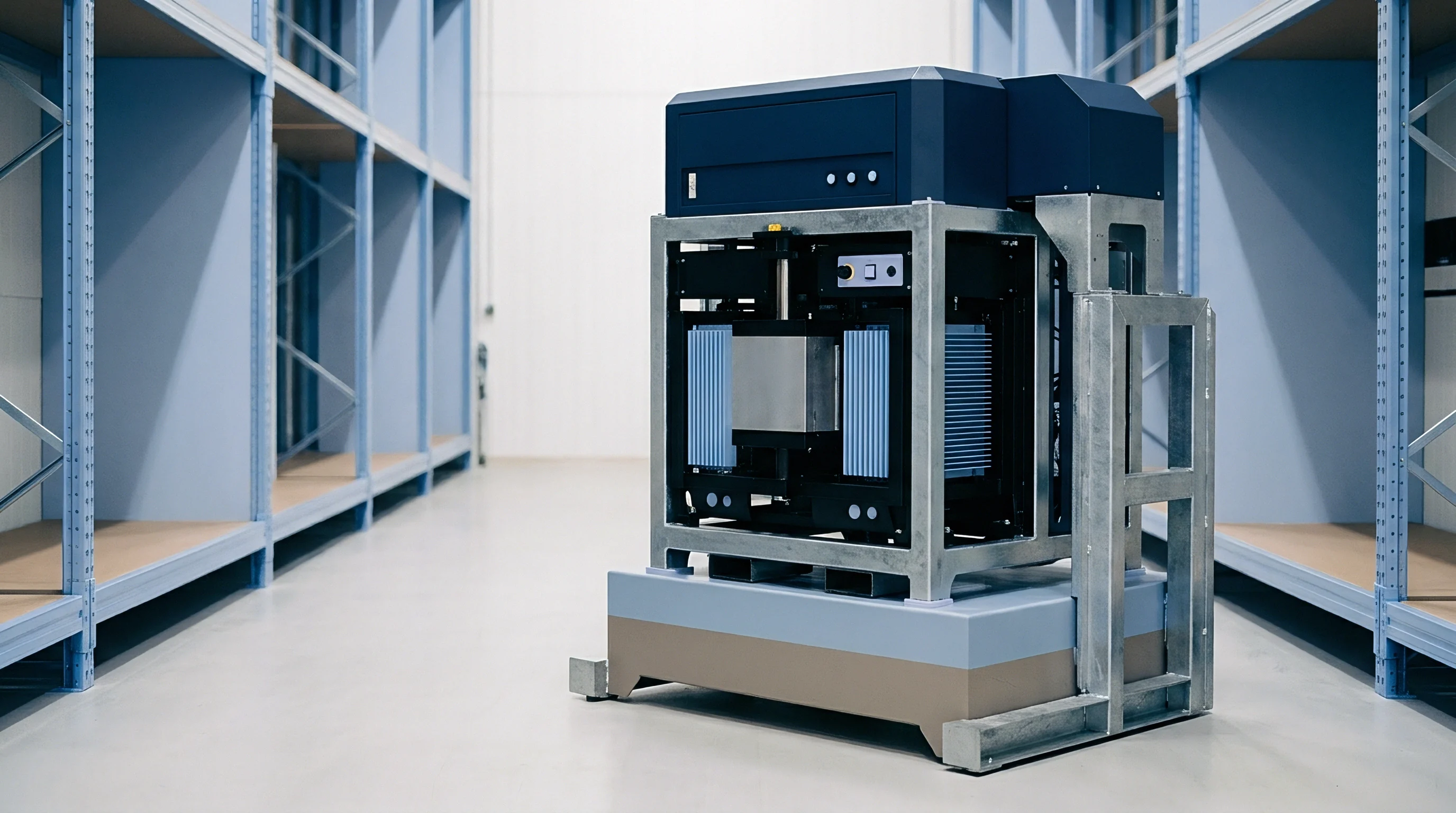
Where Does Combustible off Gas Collect during Rack Storage Fires?
Buoyancy dynamics dictate gas movement immediately after egress from failing battery packs. Light fractions such as hydrogen ascend rapidly, accumulating in unvented roof trusses, ceiling pockets, and structural purlin spaces. Heavy organic solvent mists and dense carbon dioxide fractions linger at intermediate storage rack levels or sink into floor-level aisles when cool air drafts dilute thermal upward motion.
Light gases tend to gather within structural ceiling pockets.
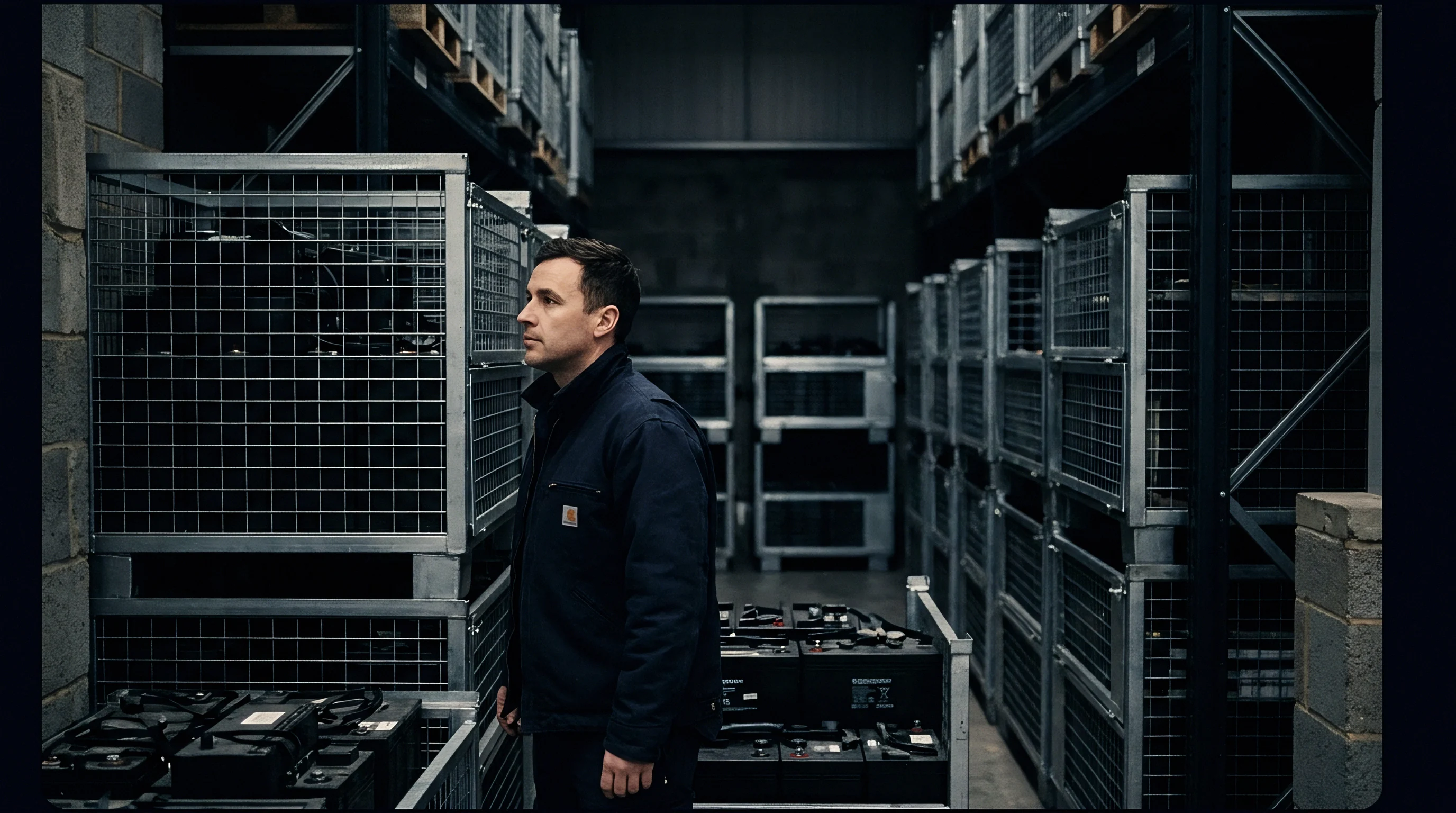
Automated storage and retrieval systems create complex vertical channels that alter plume expansion. High-density rack configurations impede lateral gas dispersion, forcing off-gas to accumulate within internal rack voids until local concentration reaches flammable thresholds. Continuous gas release without immediate ignition generates expanding vapor clouds that envelope surrounding storage tiers.
Hydrogen accumulation at ceiling apexes creates local explosion hazards long before bulk warehouse gas sensors register flammable concentrations.
Vapor cloud explosion hazards arise when unignited gas mixes with ambient air across large storage volumes prior to meeting an ignition source. Delayed ignition of a pre-mixed off-gas cloud produces destructive blast overpressures rather than localized jet flames. Obstructions within storage racks increase flame turbulence during cloud ignition, converting laminar deflagration into accelerated flame fronts.
- Hydrogen stratification creates localized explosive gas layers beneath roof decks while floor-level sensors register normal atmospheric conditions.
- Heavy vapor pooling traps dense aerosolized carbonate solvents inside lower rack levels, creating persistent flammability hazards around floor aisle pathways.
- Rack obstruction trapping prevents upward plume migration, forming concentrated fuel pockets within dense palletized storage arrays.
- Delayed spark ignition transforms dispersed off-gas clouds into high-energy vapor cloud explosions capable of breaching building perimeter walls.
The precise point at which high-bay rack turbulence transitions a buoyant gas plume into a fully mixed explosive atmosphere remains an active topic of empirical research.
Calculus
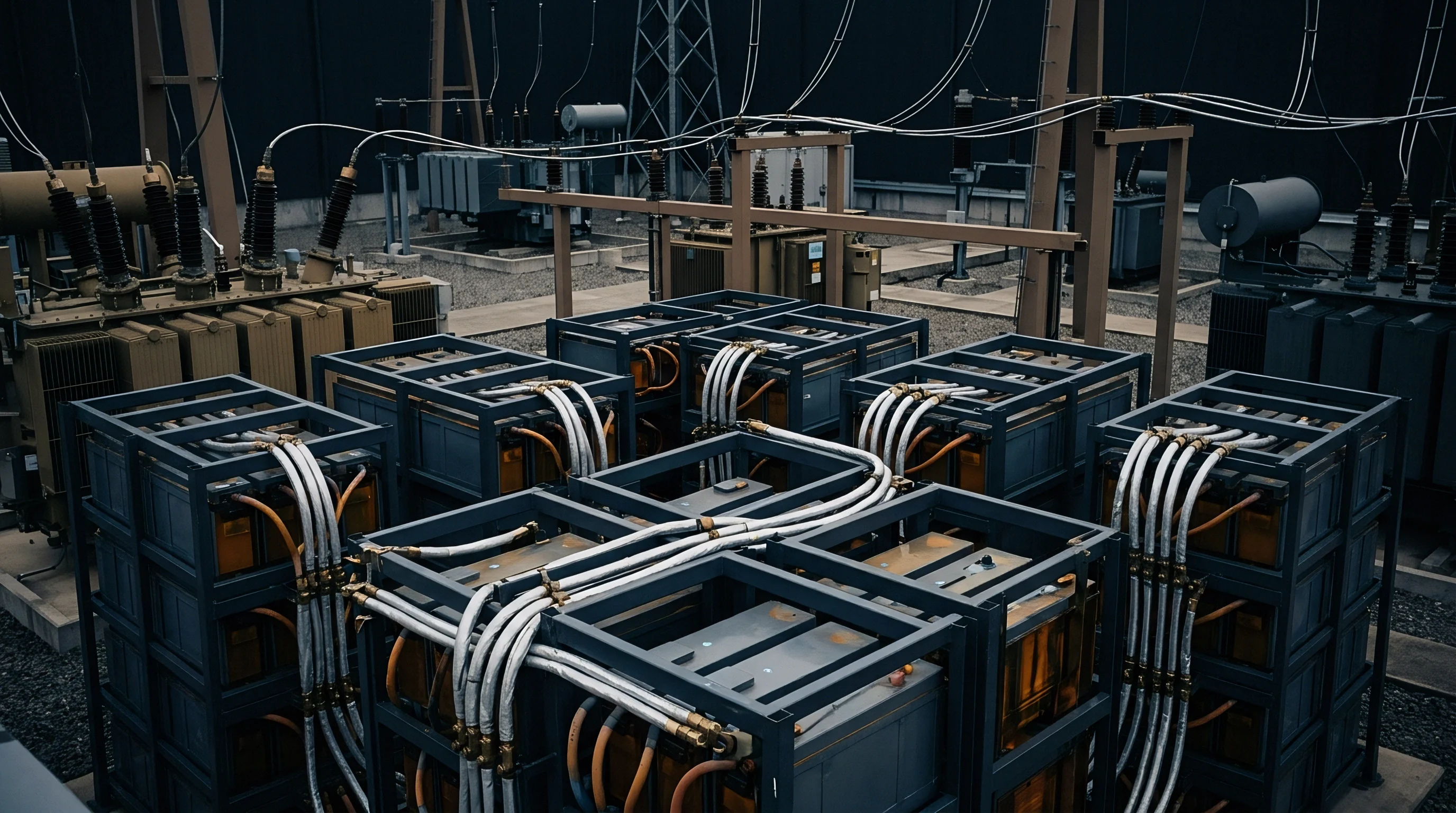
Predicting explosion overpressure inside enclosed storage modules relies on combining gas yield rates with containment volume geometry. Deflagration venting calculations utilize the gas deflagration index, designated as KG, which quantifies the maximum rate of pressure rise for a specific gas mixture inside a standard test sphere. Battery off-gas mixtures typically exhibit KG values between 80 and 180 bar-meters per second, placing them in the St-1 to St-2 equivalent flammability categories defined under ISO 6184-1 and NFPA 68 standards.
Pressure builds rapidly inside unvented enclosures.
Calculating peak overpressure and mandatory explosion vent areas requires established mathematical relationships that account for enclosure strength, vent panel opening pressure, and internal gas volume. NFPA 68 provides low-strength enclosure vent sizing equations based on maximum reduced pressure targets.
NFPA 68 calculations mandate that deflagration vent area scales directly with the square root of enclosure volume for low-strength warehouse structures.

Worked Calculation for Storage Bay Deflagration Vent Sizing
Evaluating a representative large-scale battery storage installation illustrates deflagration engineering procedures. Take a discrete battery storage bay possessing an internal net volume of 5,000 cubic meters, housing 1,000 kilowatt-hours of stored energy in packaged LFP battery racks at 100 percent state of charge. Assume a worst-case thermal failure scenario where 10 percent of total energy capacity undergoes concurrent thermal runaway, yielding 1.3 cubic meters of off-gas per kilowatt-hour over a 120-second venting duration.
Total gas yield equals 130 cubic meters of raw off-gas under ambient conditions.
Mixing 130 cubic meters of off-gas uniformly into the 5,000 cubic meter room volume produces a global gas concentration of 2.6 percent volume, below the room-scale Lower Flammability Limit. Localized rack-level volume calculation assumes gas remains trapped within a 400 cubic meter rack aisle volume, yielding a local concentration of 32.5 percent volume, well within the flammable regime.
To calculate required deflagration vent area (Av) for the 400 cubic meter localized containment module assuming a maximum allowable reduced enclosure pressure (Pred) of 0.1 bar (10 kPa) and a panel opening pressure (Pstat) of 0.05 bar, apply the low-strength enclosure formula:
Av = fracC · AssqrtPred
Where As is the internal surface area of the enclosure (320 square meters for the local aisle boundary frame), and C represents the venting equation constant derived from the gas KG value (0.026 for a KG of 100 bar-meters per second). Substituting values yields:
Av = frac0.026 · 320sqrt0.1 = frac8.320.316 = 26.33 square meters
Designing the physical storage enclosure requires installing certified low-mass explosion relief panels providing at least 26.34 square meters of vent area opening directly to a safe exterior discharge location.
| Module Energy Capacity (kWh) | Off-Gas Yield (m³) | Enclosure Volume (m³) | Peak Pressure Pmax (bar) | Gas Index KG (bar·m/s) | Required Vent Area Av (m²) |
|---|---|---|---|---|---|
| 100 | 13.0 | 50 | 7.8 | 100 | 5.85 |
| 250 | 32.5 | 125 | 8.0 | 110 | 10.42 |
| 500 | 65.0 | 250 | 8.2 | 120 | 17.80 |
| 1000 | 130.0 | 500 | 8.5 | 130 | 28.50 |
| Calculations assume target reduced pressure Pred = 0.1 bar, panel opening pressure Pstat = 0.05 bar, and low-mass insulation vent panels complying with NFPA 68. | |||||
Excessive overpressure can collapse concrete tilt panels.
Underestimating peak deflagration pressure leads directly to structural wall collapse and uncontrolled flame propagation through adjacent storage bays.

Exhaust
Active ventilation and fire suppression systems inside battery storage facilities manage two distinct hazards: thermal energy release and toxic gas accumulation. Standard automatic water sprinkler systems provide effective thermal cooling for exposed steel structures and outer packaging, but water spray interacts complexly with evolving off-gas clouds. Water application cools exterior battery casings without immediately halting anaerobic decomposition inside thermal runaway cell cores.
Water cooling alone does not eliminate unignited gas.
Continuous off-gas discharge under active sprinkler application produces saturated gas mixtures containing steam, hydrogen, and volatile organics. Water droplets absorb soluble hydrogen fluoride gas, forming corrosive hydrofluoric acid solution run-off, but water cannot dissolve non-polar hydrocarbon gases or hydrogen. Downward air currents driven by high-velocity sprinkler discharge push light hydrogen gas downward, disrupting ceiling plume collecting patterns and promoting uniform gas mixing across aisle pathways.
Water sprinkler discharge suppresses open flame while doing little to stop endothermic gas generation inside uncooled adjacent cells.
Emergency mechanical ventilation systems dilute gas concentrations below explosive thresholds during localized off-gas incidents. NFPA 855 and International Fire Code Section 1207 establish design standards for mechanical exhaust systems protecting indoor battery energy storage installations. Ventilation systems operate continuously or activate automatically upon gas detection, maintaining airflow rates designed to limit flammable gas accumulation below 25 percent of the Lower Flammability Limit.
- Compute peak volumetric off-gas evolution rates based on worst-case single-rack thermal runaway propagation models.
- Calculate mandatory mechanical exhaust air changes required to maintain concentration below 25 percent lower flammability limit.
- Configure dual-sensor gas detection arrays incorporating both electro-chemical hydrogen sensors and infrared hydrocarbon detectors.
- Integrate primary power failure back-up circuits to drive continuous emergency exhaust fans for 12 hours.
NFPA 855 Clause 4.3.1 mandates dedicated mechanical ventilation operating independently of building automation, changing standard HVAC interlock designs to continuous fail-safe isolation circuits.

Underwriting
Commercial insurance carriers and municipal building code officials evaluate battery storage facilities through strict hazard classification frameworks. Building codes classify bulk battery storage under High-Hazard Group H-2 or H-3 occupancies when stored energy totals exceed threshold quantities defined in International Building Code Chapter 3. Group H-2 occupancy applies to structures storing flammable gases or materials that present explosion hazards, imposing stringent structural fire resistance, spatial separation, and explosion venting mandates.
Deflagration risks directly shape building code requirements.
Securing property insurance coverage for large-scale battery warehouses demands comprehensive off-gas risk quantification. Underwriters utilize FM Global Data Sheets 8-9 and 5-4 to evaluate facility loss expectations, focusing on off-gas explosion exposure to building structures and inventory. Standard commercial property insurance policies contain explicit exclusions for industrial vapor cloud explosions and thermal runaway cascade damage unless facility operators provide verified engineering evaluations.
Facility compliance files consolidate cell-level test evidence to satisfy insurer loss control audits. The standard qualification dossier contains unit-level testing conducted under UL 9540A, which measures gas generation volume, lower flammability limits, maximum pressure rise rates, and explosion potential during forced thermal failure. Lacking certified UL 9540A reports, insurers impose substantial premium surcharges or decline property coverage entirely.
- Cell test documentation provides verified UL 9540A unit-level fire test report data detailing off-gas yield parameters.
- Hazard classification filing contains occupancy documentation defining storage limits under International Building Code Group H-2 provisions.
- Ventilation system audit includes physical air-velocity testing logs confirming mechanical exhaust performance across all storage aisles.
- Insurance policy review verifies explicit loss control endorsements covering off-gas deflagration and vapor cloud explosion hazards.
Insurance terms heavily influence warehouse design choices.
Retaining verified cell test reports alongside warehouse ventilation maintenance logs protects asset owners during annual insurance audits and loss prevention reviews.