Meaning
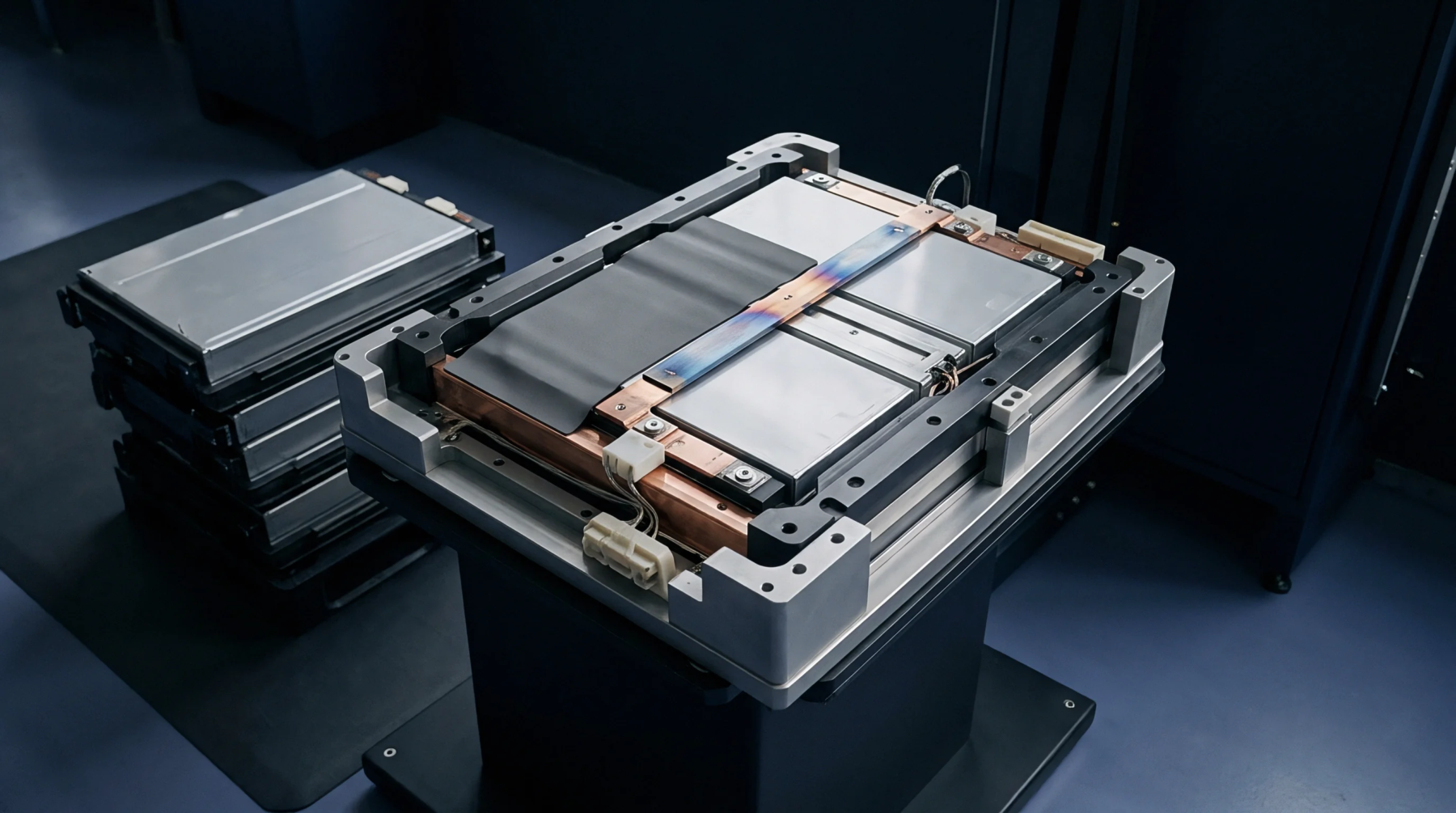
Deep-penetration fusion technique utilizes a high-power-density laser beam to vaporize metal and create a narrow, stable vapor cavity during the joint formation. This laser keyhole welding method allows for high aspect ratio welds with minimal thermal input and distortion. It is widely employed for sealing the heavy copper or aluminum terminals and top covers of prismatic battery cells.
The process achieves high speeds, which are essential for automotive-scale production.
Process Mechanism
Intense electromagnetic radiation focused onto the metal surface exceeds the threshold required to initiate localized vaporization. This vapor pressure pushes the molten metal aside to form a deep cavity that absorbs almost all the incident laser energy. As the beam translates along the joint, the molten metal flows around the vapor column and solidifies at the rear to form a continuous weld bead.
This mechanism allows for deep weld penetration with a narrow heat-affected zone.
Joint Integrity
High welding speeds and low heat input reduce the risk of thermal damage to sensitive internal components such as the plastic separators and gaskets. However, instabilities in the vapor cavity can lead to the formation of trapped gas pockets or weld spatter. These defects are controlled by using single-mode fiber lasers and oscillating the beam path to stabilize the keyhole.
Industrial Control
Real-time optical monitoring systems track the emissions from the keyhole to detect any deviations in weld depth.